

Post-merger, nutrition giant dsm-firmenich zeroes in on preventative healthcare
The Dutch-Swiss company aims to carve out animal health and nutrition unit amid China’s slow recovery

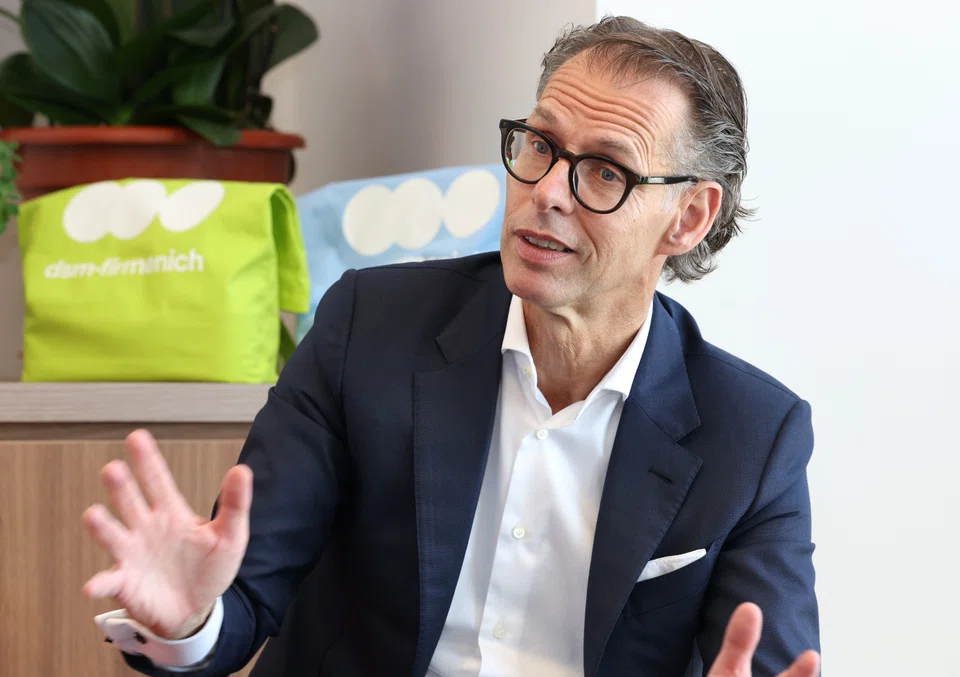
JUST over a year since Dutch nutrition company DSM merged with Swisse fragrance and flavour business Firmenich to become dsm-firmenich, the combined entity is focusing on capturing a growing market for preventative healthcare.
There has been a shift from healthcare services that cure to those that prevent the onset of diseases, said dsm-firmenich’s chief executive officer Dimitri de Vreeze.
“At this moment in time in the world, 80 per cent of healthcare is spent on curing. We wait for people to become ill, then we start thinking of ways to solve the ageing population – and spending money to do so.
“Financially, that’s not sustainable.”
He believes that the industry is likely to trend towards 50 per cent spending on preventative healthcare and 50 per cent on curative healthcare.
In this vein, the company’s health, nutrition and care business, which includes products such as dietary supplements, vitamins and other related areas, is poised to capture this market opportunity with its range of offerings.
For instance, it produces fortified rice – where vitamins, minerals and other nutrients are added to the staple food to reinforce its nutritional value.
Of course, this business unit does not work in isolation. Listed on the Euronext Amsterdam, dsm-firmenich has three other segments – perfumery and beauty; taste, texture and health; as well as animal nutrition and health – which come together in the development of various products.
De Vreeze cited recovery drinks, where nutrition and taste segments come together. When consumed after exercise, these beverages tend to be sweet. Even as manufacturers develop healthier alternatives to suit changing consumer tastes, the flavour of the product must remain appealing, he said.
“Humans have 400 receptors in their noses and mouths. They basically send signals to your brain, on whether it’s good food, nice food, or sweet. You can add ingredients to influence the receptors – and we have competencies to do that,” he told The Business Times, referring to the group’s taste and texture unit.
This was also a reason why DSM, where de Vreeze was co-chief executive prior to the merger, went on the hunt for a suitable partner in the flavours and fragrance business.
“(DSM) was making nutritional and healthy products, but consumers didn’t particularly like the product (in terms of taste). Firmenich was really good at fragrances and flavours, and saw that there was a trend in the market towards healthcare, where (perfumery and beauty) products also wanted to have a healthy or active ingredient component,” he said.
In the merger, DSM shareholders took 65.5 per cent of the shares in dsm-firmenich, while the owners of then-unlisted Firmenich received a 34.5 per cent stake of the combined entity, plus 3.5 billion euros (S$5.1 billion) in cash from DSM.
The deal was completed in May last year.
‘Rehoming’ animal health and nutrition
With an expanded portfolio, de Vreeze recognised the importance of rejigging the company’s business units. The group decided to carve out the animal health and nutrition unit, and “find it a new home” in 2025.
The animal health and nutrition segment involves three areas – performance solutions, which refer to enzymes and gut health solutions that help farmers reduce emissions; animal vitamins; and pre-mix, which are feed additives for livestock.
While the business of reducing emissions for farmers is “strong”, animal vitamins and premixes are more volatile, said de Vreeze.
This is largely due to the slow recovery in the world’s biggest protein market – China. During the Covid-19 pandemic, “demand in China went down, coupled with 80 per cent of vitamin production”, he noted.
“Normally, the Chinese vitamins were sold in the Chinese domestic market. When that market went down, vitamins were sold all around the world… and that had enormous price pressure on vitamins,” he said.
The “unprecedented” low vitamin prices affected the group’s sales. Net loss from continuing operations was 636 million euros, compared to a net profit from continuing operations of 475 million euros the previous year.
The figures included results from Firmenich as at the merger date of May 8, 2023.
In its first-quarter results, the group noted it had begun the process of spinning off the animal health and nutrition unit. De Vreeze did not state how the company planned to carve out this segment, but said it would “no longer be part of the future of dsm-firmenich”.
The company intends to spend its money on its businesses that are “very resilient, which is growing and more consumer-related”, he said, referring to its remaining business units.
Sustainable food development
Despite its European base, dsm-firmenich has partnered several Asia-based companies, using Singapore as its Asia-Pacific headquarters.
These consumer brands include Singapore-listed Thai Beverage and Nasdaq-listed Mondelez, where its product is used in Clorets gum in Japan. On the supplements side, it works with Catalist-listed Hyphens Pharma to create an Omega-3 supplement from microalgae, instead of the usual fish oils.
In Singapore, the company has close to 600 employees across six locations. These include a site in Tuas that houses a perfumery manufacturing plant and food innovation offices, and manufacturing plants in Woodlands and Senoko.
Its entrenched position here comes as the Republic serves as a “gateway to the rest of Asia-Pacific” and has a great eco-system of innovation, said de Vreeze.
dsm-firmenich works with local agencies and industries to boost Singapore’s sustainable food production. De Vreeze has a keen interest in Singapore’s 30 by 30 strategy – producing 30 per cent of its nutritional needs locally by 2030 – and believes the initiative can spur companies to innovate.
For the group, this means creating ingredients that are better for the planet, as well as supporting the local food systems.
The company supports fish farms in Singapore by testing for mycotoxin – a toxic substance produced by fungi – in fish feed, as well as developing methods to analyse the presence of certain mycotoxins in biological tissue.
Locally produced seafood is a key part of 30 by 30, and is crucial to ensuring the security of Singapore’s food supply chain.
Alongside aiding the sustainable production of food, dsm-firmenich continues to make strides towards preventative healthcare by focusing on nutritional needs, which differ across age groups.
Ten years ago, ingredients and vitamins were the same for everyone, said de Vreeze, adding: “Now you have these same items specifically for infants, toddlers, different genders… it’s focused and tailored.”
“This is really the way we are moving towards, year by year,” he said.
Fast facts on dsm-firmenich
- Listed on: Euronext Amsterdam; market capitalisation of 29.5 billion euros
- Revenue for FY2023: 10.6 billion euros
- Growth focus: Preventative healthcare including dietary supplements, vitamins
- Singapore operations across six locations include food innovation offices, perfumery manufacturing plant in Tuas; production facility, warehouse in Woodlands; manufacturing plant in Senoko
TRENDING NOW

Could stablecoins be the future of money?

Vietnam’s northern provinces, not Hanoi or Ho Chi Minh City, are powering near 10% GDP growth

The Assembly Place expands beyond co-living as it targets 10,000 keys by 2030

Once staunchly pro-China, Malaysian Chinese businesses are now distancing themselves from Beijing

