Putin lets consumers feel the pain as slump deepens in Russia
Little help as Russia's public finances have deteriorated with plunge in oil prices
Moscow
RUSSIAN households are bearing the brunt of the blowback from the crisis in Ukraine and a tailspin in oil prices, setting the stage for the biggest drop in consumption in more than two decades that will deepen the country's recession.
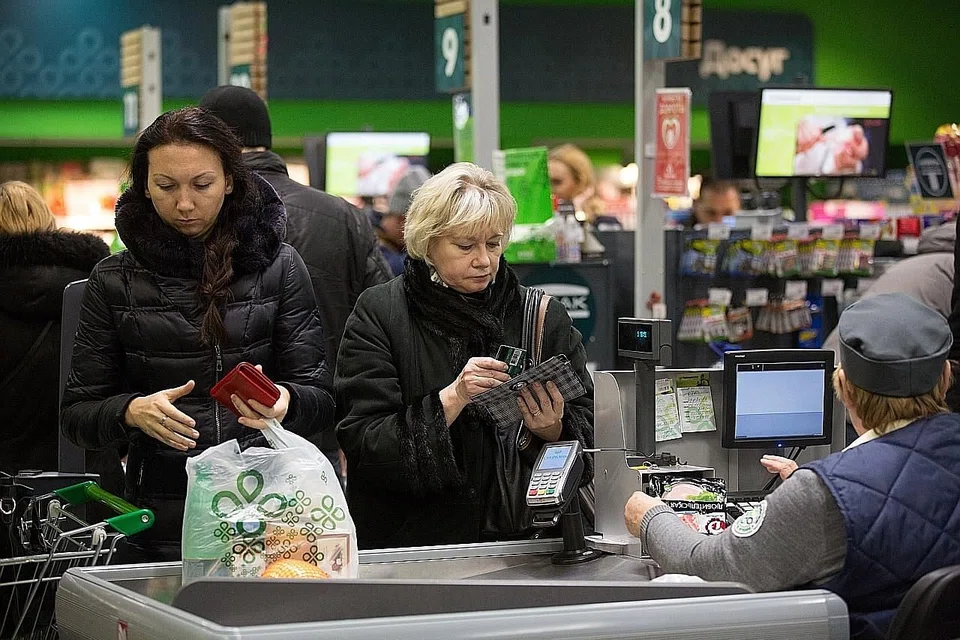
Crushed by a 44 per cent slump in the rouble in the past year as prices soar, retail sales are set for what Otkritie Capital predicts will be their biggest decline since the breakup of the Soviet Union in 1991, when savings were wiped out and households endured food shortages and hyperinflation. That has unnerved consumers like Svetlana Korotkova, who is stockpiling cereals and canned goods to build up what she calls her "safety cushion" - a lesson she learned from perestroika-era deprivation in the 1980s.
"Government resources are very limited now, so I don't expect strong help," said Ms Korotkova, 42, an accountant who was browsing in a shopping mall in Tula, about 200km south of Moscow.
Six years after presiding over a one-third increase in pensions at the height of the last crisis, President Vladimir Putin, whose approval rating is near a record high, is now pegging changes in retirement payments to last year's inflation as he steers the bulk of a 2.3 trillion rouble (S$50 billion) programme to support lenders and industry, almost half of it to recapitalise banks. As prime minister in 2009-2010, Mr Putin deployed what Goldman Sachs Group Inc estimated to be the largest stimulus package among Group of 20 nations, totalling 9.8 per cent of economic output.
That stands in stark contrast to current government plans to battle a recession that economists predict will last for four quarters. With little relief in sight for consumption, which accounts for about half the economy, Russia risks a more drawn-out crisis, according to Natalia Akindinova, director of the Development Center of the Higher School of Economics in Moscow.
"Now the anti-crisis plan is more focused on banks and industrial sectors, but not the sectors that are suffering the most," Ms Akindinova said. "The ones that suffer the most are trade, construction and services."
Consumers are retrenching after the rouble lost almost half of its value against the dollar in the past 12 months. The rouble's one-month implied volatility jumped to almost 90 at the beginning of January before paring the increase to 38 on Monday. That's still almost double the level of the next most volatile emerging-market currency, the Brazilian real.
Inflation, which soared to 15 per cent from a year earlier in January, is forecast by the Economy Ministry to peak at as much as 17 per cent this spring - a level not seen since 2002.
That would push price growth above the central bank's benchmark interest rate, currently at 15 per cent after a surprise cut in January. Bank of Russia governor Elvira Nabiullina said the move was warranted because the recession-bound economy will take a bite out of inflation in the second half of the year.
With Mr Putin considering another run for the Kremlin in three years, "this year is an opportunity to curb income-growth expectations in order to surprise on the upside by 2018", Alfa Bank economists Natalia Orlova and Dmitry Dolgin said in a report.
Support for the Russian leader matched a record 88 per cent last October and was at 85 per cent last month, compared with 65 per cent in January 2014, according to a Jan 23-26 survey of 1,600 people by the Moscow-based polling company Levada Center. The results have a margin of error of 3.4 percentage points.
For 2015, the Economy Ministry predicts a decline of more than 9 per cent in real wages after a one per cent drop in 2014. That compares with an average annual increase of more than 10 per cent in monthly wages in the past 15 years. Disposable incomes will probably shrink more than 6 per cent, with retail sales set to slide 8 per cent, according to the ministry's updated forecasts, released last month.
If Mr Putin has fewer policy levers to help consumers, that's partly an acknowledgment of just how far Russia's public finances have deteriorated. In the years that followed Russia's last recession in 2009, the oil price the government needs to balance the budget has more than tripled from US$30, according to Finance Minister Anton Siluanov.
Pressure on Russia's finances is growing amid US and European sanctions and a global oil glut that drove crude prices almost 50 per cent lower last year. The government ran a deficit of 0.5 per cent of economic output last year. With crude prices at US$50 a barrel, the shortfall may widen to 3.8 per cent, according to Economy Minister Alexei Ulyukayev.
After a rebound in the economy in 2010, growth decelerated every year since then. Consumer spending formed the backbone of the brittle recovery in the run-up to the crisis in Ukraine and the oil price freefall in 2014.
Household consumption accounted for most or all expansion in GDP between 2010 and 2013, according to a World Bank report published last year. It contributed 3.8 percentage points to GDP gains in 2012 and 2.3 percentage points the following year, when the broader economy gained 3.4 per cent and 1.3 per cent, respectively, the lender estimates.
Now most consumer indicators are flashing red. Consumer confidence plunged last quarter to the lowest in five years. The Russia Services Business Activity Index last month shrank to the weakest reading since May 2009, sapped by a drop in incoming new contracts, outstanding business and employment. WP