

Quiet casualty of Sri Lanka's political crisis: A sugar tax
[COLOMBO] Constitutional crisis. Economic uncertainty. Fist fights in Parliament. These are among the consequences of the Sri Lankan president's recent move to dismiss the country's sitting prime minister.
Public health advocates now fear another effect: an increase in diabetes and obesity.
In October, President Maithripala Sirisena appointed Mahinda Rajapaksa, a former president accused of human rights abuses, as the new premier, which some government ministers denounced as illegal. Despite being rejected by lawmakers, Mr Rajapaksa is still in his post, and the government has been announcing plans to lower fuel prices and income taxes in an apparent bid to increase public support for him.
But Mr Rajapaksa's latest populist gesture - ordering a 40 per cent reduction in a tax on sugary drinks - has incensed experts who say the policy was mitigating sugar's adverse effects on public health.
The original tax, introduced in November 2017, was 50 Sri Lankan cents for every gram of sugar in sweetened beverages. Such taxes, along with outright bans on junk food or soft drinks, are often seen by health experts around the world as a sensible way of reducing the incidence of a number of noncommunicable diseases.
Such diseases account for an estimated 83 per cent of all deaths in Sri Lanka, according to the World Health Organization. Diabetes alone accounts for 9 percent of deaths in the country.
But over the weekend, the Finance Ministry ordered the sweetened beverage tax immediately reduced to 30 Sri Lankan cents per gram of sugar from 50 Sri Lankan cents, the local news site EconomyNext reported.
"This is highhanded and wrong, and we do not like it," Dr Mahen Wijesuriya, an expert on diabetes and the executive director of the Non Communicable Diseases Alliance Lanka, a nonprofit group in the city of Rajagiriya, said of the revised beverage tax.
Though Mr Rajapaksa lacks parliamentary support, he can still legally tweak some tax rules outside the normal parliamentary process, EconomyNext reported.
But Dr Wijesuriya said the decision to reduce the sweetened beverage tax had been made without consulting the country's medical community.
Representatives for the offices of the Sri Lankan president and the prime minister did not immediately respond to requests for comment Monday.NYTimes
Share with us your feedback on BT's products and services
TRENDING NOW
Simba admits exceeding spectrum limits amid failed M1 deal; full-year profits surge 277%
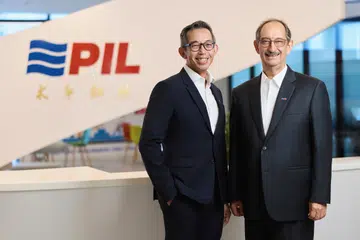
Temasek’s Wan Chee Foong to helm PIL, Lars Kastrup to be board adviser

He built the Vingroup empire. Now South-east Asia’s richest man is handing some key roles to his sons
One-third of Singapore-listed firms at risk in severe AI downturn: MAS

