Shiseido faces tough turnaround after costly cosmetics stumbles
The company has embraced a turnaround plan that involves drastic cost-cutting and a refocus on its luxury brands
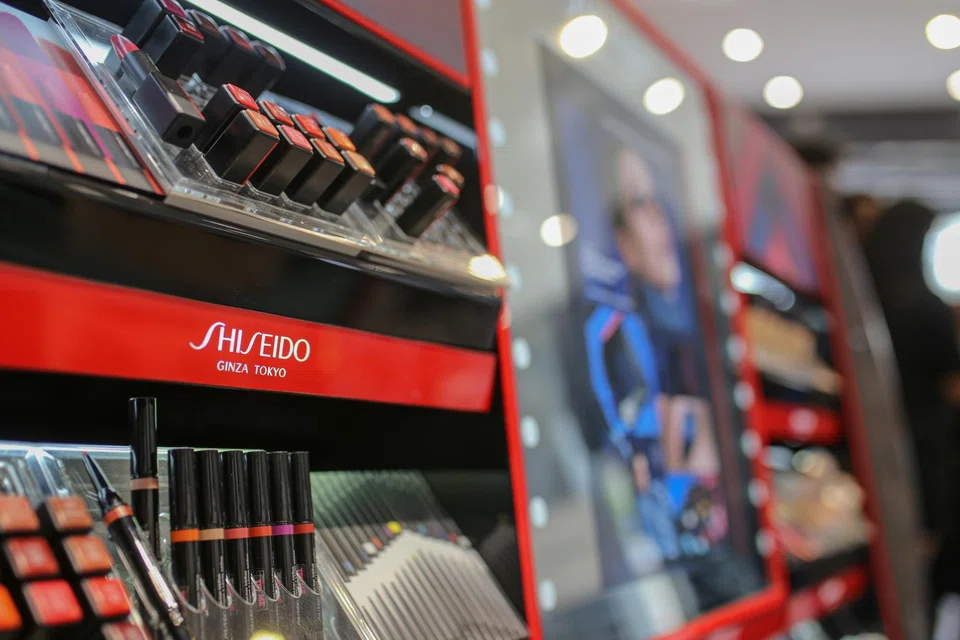
[TOKYO] Shiseido, once a formidable challenger to L’Oreal and Estee Lauder Companies, is navigating its biggest challenge in decades, hurt by a costly misfire in North America and loss of market share to agile Asian rivals.
After spending US$845 million six years ago to buy American brand Drunk Elephant to gain entry into a younger customer segment, the Japanese cosmetics maker has had to write off more than half of the investment on declining profits and sales.
Shiseido’s stumble shows how quickly beauty brands can lose ground as social trends, faster product cycles and Korean and Chinese rivals reshape the global cosmetics market. Amorepacific, Kolmar Korea and other South Korean companies have outflanked Shiseido and now comprise the biggest exporters to the US.
Seeking to regain its footing after the pandemic, the management of the 154 year-old provider of makeup, sunscreens and skincare lotions has embraced a turnaround plan that involves drastic cost-cutting and a refocus on its luxury brands, such as Cle de Peau Beaute.
So far, investors have been unimpressed, with Shiseido’s stock stuck at just a third of its value since sales peaked in 2019, with a current market capitalisation of 1.1 trillion yen (S$9 billion).
“The Chinese players, Korean players and even the US companies are not sitting on the sidelines,” said Masakazu Takeda, portfolio manager at Sparx Asia Investment Advisors. “Before, it was easy. You slap the brand on the container – Shiseido, Kao, etc – and they sold well, flying off the shelves. But that’s no longer the case.”
A spokesperson for Shiseido said that the company is pursuing its strategic growth plan, with its latest business update due in February when it reports full-year earnings.
Shiseido warned investors last year that it expects to post its first operating loss in decades when it reports full-year results in February, mainly due to a writedown in the value of Drunk Elephant.
The big-ticket acquisition was supposed to bolster its appeal to among younger consumers seeking out Instagram-friendly products with natural ingredients, but instead, the brand soured quickly in the highly competitive skincare space.
SEE ALSO






Supply chain disruptions, marketing that was criticised for being too focused on teenagers, and an influx of more affordable brands that had the same “clean” ingredients caused a slide in sales, with revenue shrinking 49 per cent for the nine months ended September.
“We can’t look to buy back or reconsider an investment anytime soon,” said Hisashi Arakawa, head of Japan equities at Aberdeen Investments who held the stock for a decade before fully exiting in March 2024.
The stumbles also underscore how little progress Shiseido has made on long-standing challenges, namely rejuvenating its brand lineup and reducing its reliance on China. High fixed costs and a lack of agility are not just unique to Shiseido, but rather reflect inefficiencies common among large Japanese companies with a long history.
To put itself back on track, the company is cutting costs by 25 billion yen this year by improving production-line efficiency, reining in spending on outside vendors and streamlining corporate functions. Chief executive officer Kentaro Fujiwara unveiled a plan in November to grow sales by 2 to 5 per cent annually till 2030, with a core operating profit margin of at least 10 per cent.
At the same time, Shiseido says it will focus on strengthening luxury brands such as Cle de Peau Beaute, while growing mid-priced brands such as Nars, and building a broader fragrance portfolio with brands such as Max Mara. The company is also looking to expand into the medical and dermal cosmetics space.
After making progress on cost control, the key for Shiseido will be to improve top-line growth through recovery in China and Drunk Elephant, while also focusing on core brands, according to Takashi Miyazaki, analyst at Goldman Sachs Japan.
“For a company the size of Shiseido, it makes sense to narrow down brands and concentrate limited resources rather than buying more,” Miyazaki said.
Shiseido has also had to wean itself from Chinese demand, which has significantly slowed down post-pandemic, along with overall economic growth. Recent geopolitical tensions between the countries show no signs of abating, and Chinese beauty brands are growing more popular, worsening the outlook for Japanese companies.
As activist fund Oasis Management turns up the heat on Kao, demanding the offloading of underperforming brands and a sharper focus on global marketing, Shiseido could itself become a target if Fujiwara’s turnaround fails to yield results.
Independent Franchise Partners, known for its push in 2020 for Kirin Holdings to restructure, is now Shiseido’s second-largest shareholder with a stake of approximately 8 per cent, according to data compiled by Bloomberg.
“Given that the management’s approach itself is still not quite right and has not been translating into actual performance, there may be room for activists to dig into and challenge management,” said Ikuo Mitsui, fund manager at Aizawa Securities. “Even then, it’s questionable it will have any positive impact on the share price.” BLOOMBERG
Decoding Asia newsletter: your guide to navigating Asia in a new global order. Sign up here to get Decoding Asia newsletter. Delivered to your inbox. Free.
Share with us your feedback on BT's products and services