

SodaStream struggles to keep afloat in bubbly water business
New York
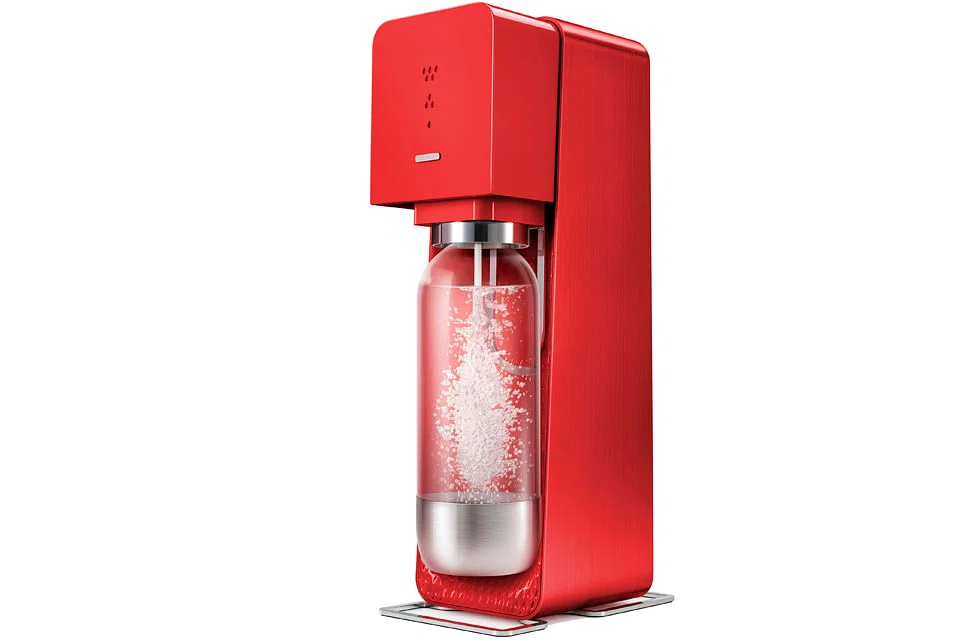
SODASTREAM, the once-hot gadget for do-it-yourself sodas, is betting on the growing thirst for bubbly water to bring some sparkle back to its business.
And in an effort to tap into the interest for enhanced waters, the company last month unveiled a new line of fruit flavourings, such as pomegranate açaí, green tea lychee and yuzo mandarin, that users of its machines can add to water during the carbonation process.
"There is a blurring of the space between soda and water, and we're in the perfect position to capitalise on that," said Daniel Birnbaum, the company's chief executive.
Sales of water are increasing strongly, according to data from Beverage Digest. Sales of bottled flat water in supermarkets grew 11 per cent in 2014, while sales of sparkling waters without any sweetener grew 20 per cent.
Still, even Coca-Cola and PepsiCo have struggled in the water business, where there are so many competitors selling bottled water, flat and sparkling, at cheap prices. And SodaStream's canisters for carbonation are prohibitively expensive for many families and often cumbersome to recycle.
Mr Birnbaum is trying to restore his company's sales in the United States, which have declined since reaching a peak in 2013. In a conference call with investment analysts last October, he also warned of a similar pattern starting to infect SodaStream's European business.
Sales fell roughly 13 per cent to US$125.9 million for the quarter that ended on Sept 30, and sales of soda makers in the United States plunged 60 per cent to just 160,000. Flavourings sales dropped 28 per cent, and sales of the gas canisters used to aerate water were level.
Profits peaked in 2012 at US$43.9 million, and sales crested in the quarter that ended Sept 30, 2013.
SodaStream machines have been far more popular in Europe, particularly in Germany and Scandinavia, where soft drinks are expensive and consumers are much more attuned to the impact of packaging on the environment.
In the US, soft drinks are still cheap - and even so, are losing sales as a category as consumers here work to reduce sugar in their diets and have increasing concerns about aspartame and other artificial sweeteners used in low-calorie soft drinks. Investment and industry analysts say it is now clear that SodaStream will never go head-to-head with Coca-Cola and Pepsi.
"I have never believed that SodaStream was going to be a soda company in the US," said John Faucher, an investment analyst at JPMorgan Chase.
At a conference in December sponsored by Beverage Digest, Indra Nooyi, chief executive of PepsiCo, was asked whether she thought home dispensers such as SodaStream would become a major source of beverage consumption. PepsiCo is doing a test in Florida that allows SodaStream users to make homemade versions of Pepsi and Sierra Mist.
"When you go to 'make your own', it's very hard to replicate the taste of the original product," Mrs Nooyi said. "And so what happens is people taste the products they make at home and say, 'Hmmm, it doesn't taste as good as Pepsi.'" Moreover, she added, "if it takes 45 seconds to make a Pepsi at home as opposed to three seconds to pop open a can, they think that's 42 seconds wasted."
So much for the rumours that Pepsi is going to buy SodaStream. And so in June, the gadget company will begin selling its own fruit flavours, although it had paired with Crystal Light flavourings before. (It will continue to have a relationship with Crystal Light.) Some of the new offerings will be low in calories, others will have added vitamins, fiber and protein. Some will be sweetened with a combination of fructose and stevia, a natural low-calorie sweetener, while others will have no calories.
"I don't think we have it all figured out yet," Mr Birnbaum said. "We're not perfect, but we're on the right path." He said, for instance, that the company had not yet settled on how to tell its new story - despite its knack for generating free publicity.
It spent handsomely on a commercial to air during the 2013 Super Bowl, only to have CBS ban it, perhaps because the ad poked too much fun at Coke and Pepsi, which are major sponsors. CBS never commented.
The same thing happened the following year, when SodaStream came up with a Super Bowl ad featuring its new spokeswoman, actress Scarlett Johansson. Fox, which broadcast the game, banned the ad, never commenting on its reasons for doing so.
Then Johansson was forced to resign from the board of Oxfam, an international aid organisation, because SodaStream had a factory in an industrial zone in the West Bank. The factory had long been the target of protesters who contended that it legitimised Israeli settlements in the disputed territory. Last fall, the company said it would close that plant and one other as part of a consolidation effort.
"No more Super Bowl," Mr Birnbaum said. "We don't belong there - or need one scandal after another." He said the company had no plans for a major advertising campaign around its reintroduction as a sparkling water business and instead would rely on social media such as Instagram and Facebook in hopes of reaching "influencers".
The real challenge for SodaStream, analysts say, is selling more of its machines - and in turn, more of the canisters of carbon dioxide gas used to aerate water, where the real profits lie.
"The broader issue for them is that our numbers show machines in about 2 per cent of households in the US - and that penetration has been stagnant for the last year and a half," said Bill Schmitz, an investment analyst at Deutsche Bank. NYT
TRENDING NOW

Nvidia reinstates Jensen Huang as CEO; Trump says move poses no national security risk

Indonesia’s coal tycoon Low Tuck Kwong replaced as Bayan Resources president-director

Nvidia surges 33% after reinstating Jensen Huang, reviving AI trade; stocks soar in US and Europe

Consider lowering homeownership barriers for some non-resident foreigners

