

Sony may sell camera parts to smartphone competitors
Tokyo
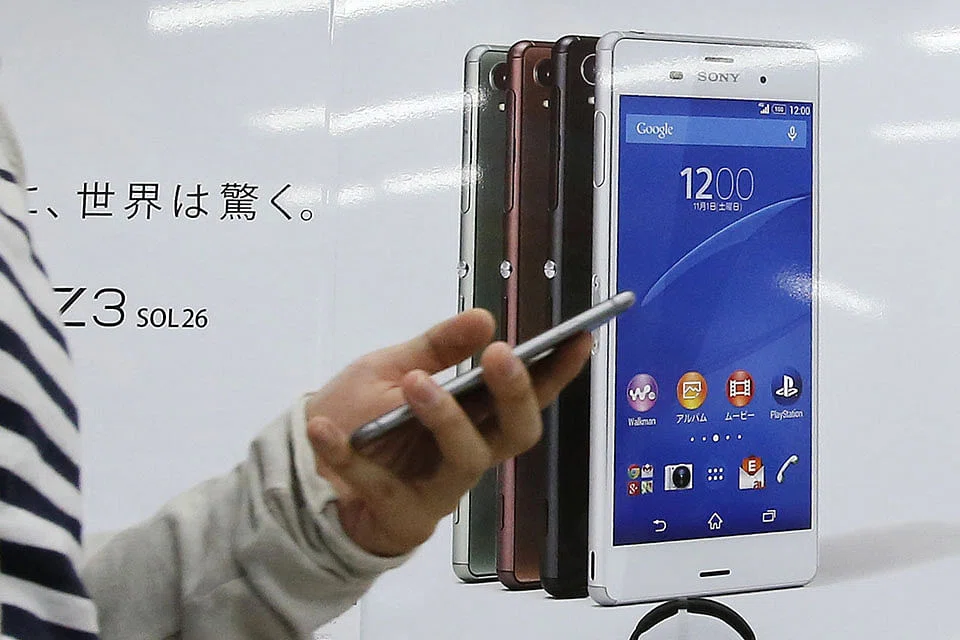
SONY Corp said it can still make money from smartphones - by selling camera components to competitors of its own Xperia models.
Revenue from the business that makes sensors, camera modules and memory storage will rise to 1.3 trillion yen (S$14.4 billion) to 1.5 trillion yen in the year ending March 2018, the company said on Tuesday. That compares with a forecast of 890 billion yen for the current year.
Chief executive officer Kazuo Hirai is culling the number of Xperia smartphones the company produces as it struggles to compete with Apple Inc and Samsung Electronics Co. In September, Sony widened its net loss forecast for the current year fourfold while writing down the value of its faltering mobile phone business.
"Smartphones is a commoditised market," Atul Goyal, a Singapore-based analyst at Jefferies Group LLC, said before the announcement. "Apple is the only company that managed to create a brand and an ecosystem."
Shares of Sony surged 6.1 per cent to close at 2,582.50 yen in Tokyo on Tuesday, the highest since April 2011. The stock has gained 41 per cent this year, compared with a 8.2 per cent increase in the benchmark Topix.
Jefferies this week raised its share price forecast target to 3,520 yen citing chief financial officer Kenichiro Yoshida's efforts to reduce the company's exposure to low-profit-margin consumer electronics.
Camera modules and image sensors will generate about 63 per cent of Sony's device unit revenue in fiscal 2017, the company said. Sony plans to build on its position as a top supplier of image sensors for smartphones to expand into automotive and wearable markets, the Tokyo-based company said in the release as it held an investor briefing on its electronics operations.
Revenue from the games and network business could reach as much as 1.6 trillion yen in 2018, a 24 per cent increase over this year's forecast. Home entertainment sales, which includes TVs and speakers, would be one trillion yen to 1.1 trillion yen, down as much as 17 per cent.
Sony didn't release the sales outlook for its mobile unit, which the company will announce before the fiscal year ends in March.
The company last month reported a quarterly loss that was seven times greater than a year earlier as it lost ground in the smartphone market to Apple and Chinese rivals. Sony's net loss widened to 136 billion yen as it took a 176 billion yen writedown at the Xperia phone business and cut its phone sales forecast for the second time this year.
The company is ending development of new models for China, the world's biggest smartphone market, and focusing its marketing on retaining customers.
Sony this year sold its Vaio personal computer division and has put its TV manufacturing unit into new structure as Mr Hirai tries to end losses at the business.
Last week, Sony said new Spider-Man movies and content based on PlayStation video games would help drive revenue growth of as much as 36 per cent at its pictures unit during the next three years.
Sales at the film unit would rise to between US$10 billion and US$11 billion in the 12 months ending March 2018, compared with US$8.1 billion now, the company said on Nov 18. Music business revenue would be US$4.8 billion to US$5.2 billion in the same period, representing growth of between zero and 8.3 per cent from the current year.
In another development, Sony's computer network was hacked in what may be a blackmail attempt, according to a person with knowledge of the matter.
The breach of the company's systems is under investigation, said the person, who wasn't authorised to speak publicly and asked not to be named. In a statement, Sony said it was investigating "an IT matter".
The incident began when a picture of a skull appeared on company computer screens, the entertainment website Deadline.com reported on Monday. The image was accompanied by a message that read Sony had been hacked by #GOP and that private data would be released at 6pm New York time on Monday if its undisclosed demands weren't met. The hack is being linked to a group called "Guardians of Peace", the person said.
Sony declined to comment beyond its statement.
Many large global companies have fallen prey to computer hackers. JPMorgan Chase & Co, Home Depot Inc and Target Corp have all been subject to hacks. BLOOMBERG
TRENDING NOW
Motoring tycoon Peter Kwee is back in court: Here are his previous legal battles

Peter Kwee’s Ridley Park bungalow on the market with S$100 million asking price

Demand, tech capabilities position Apac and AI as Skyscanner’s next growth frontiers: CEO Bryan Batista

South-east Asia has lost Nvidia’s best salesman

