

S'pore's first vending machine cafe goes on trial in Sengkang
Success of VendCafe pilot will lead to roll-out of machines island-wide, says Tharman

Anita Gabriel
Singapore
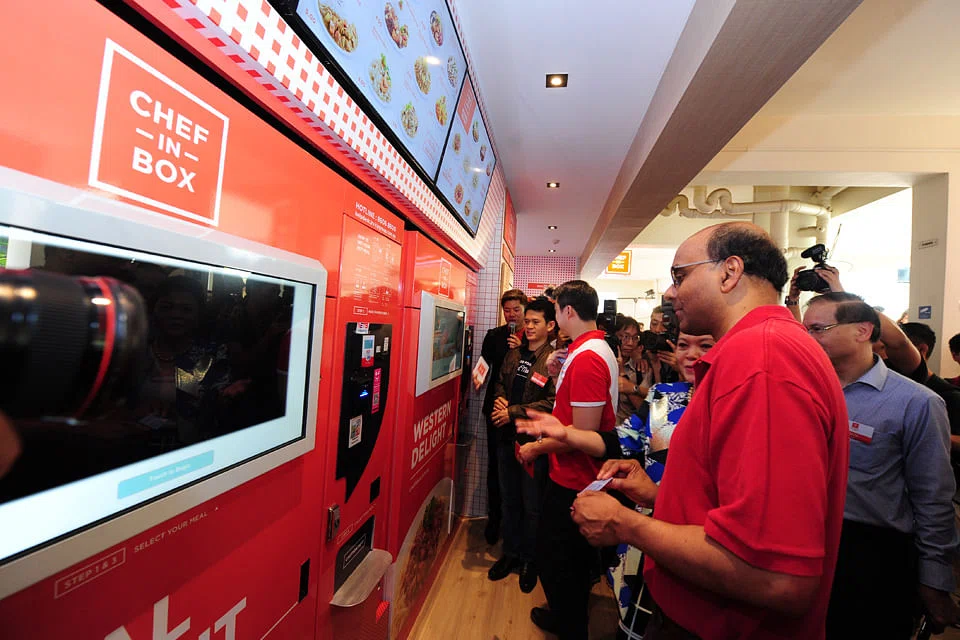
SINGAPORE's first food vending machine cafe serving a variety of food and beverages (think piping hot seafood hor fun or curry rice or chicken carbonara) round the clock was launched at Block 320C Anchorvale Drive on Sunday.
The "VendCafe", comprising six vending machines and stand-up dining tables, allows residents to enjoy a no-fuss, tasty (and healthy) hot meal in less than three minutes at any time of the day, according to a joint statement by Spring Singapore and the Housing & Development Board (HDB).
The pilot project launched over the weekend is jointly facilitated by Spring Singapore and the HDB and will be operated by JR Vending. The plan is for more food vending machines to be rolled out at other sites too.
"If successful here in Sengkang and a few other pilot sites where we will try out the VendCafe concept, it will be replicated around the island," said Deputy Prime Minister Tharman Shanmugaratnam who launched the Anchorvale VendCafe on Sunday morning.
It is hoped that the food vending machines will open up a new distribution channel in Singapore's food services industry beset by manpower constraints, rising wage bills and high rental costs. A 2015 study commissioned by Spring Singapore concluded that vending machines use 70 per cent to 90 per cent fewer workers than a typical food stall.
Food preparation is done off-site, removing the need for a kitchen and minimising the need for any on-site manpower. A VendCafe can be built within weeks to provide quick meals in locations where dining options are limited.
"The VendCafe is an example of how the food services sector is being transformed to become less reliant on manpower while meeting consumer demands for quality, convenience and nutrition," said Mr Tharman, who is also Coordinating Minister for Economic and Social Policies.
Ready meals are common in Japan, Taiwan and the UK where they are available in convenience stores. For example, 8 per cent of meals in Japan are sold as ready meals versus just 0.5 per cent in Singapore.
"What's important is that the food should be not only tasty but safe to eat," said Mr Tharman, adding that JR Vending's central kitchen - where the food is prepared, packaged and delivered to the vending machines - has been awarded several certifications for meeting high standards of food safety and hygiene.
The vending machine operator is also working with the Health Promotion Board to identify and include healthier offerings by year end.






