

A third of global food production goes to waste, says report
Food waste, costing US$400b a year, becoming serious economic, environmental issue
Washington
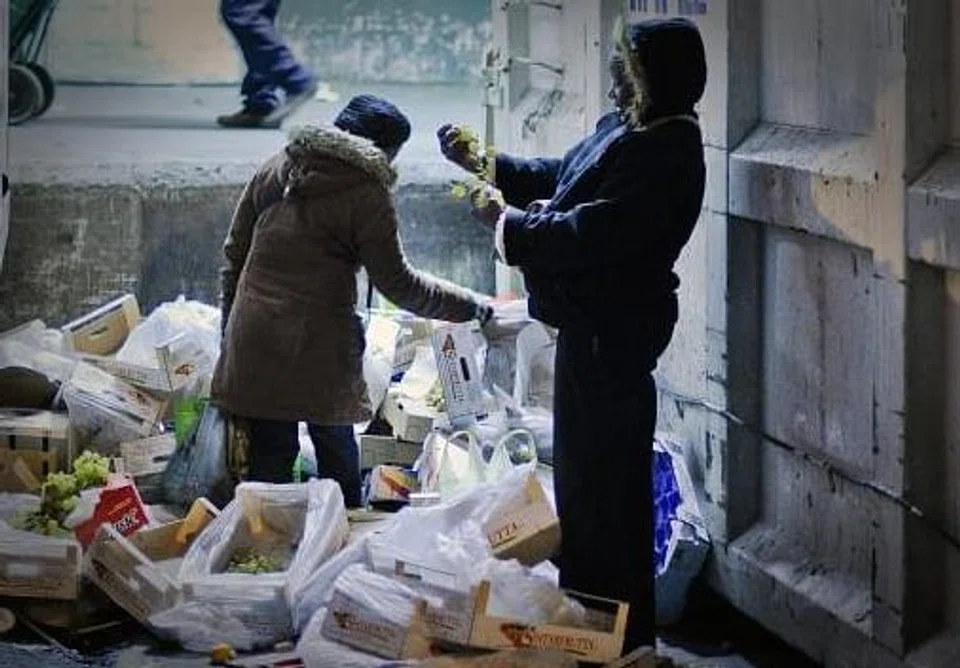
WITH millions of US households struggling to have enough to eat, and millions of tonnes of food being tossed in the garbage, food waste is increasingly being seen as a serious environmental and economic issue.
A report released on Wednesday shows that about 60 million tonnes of food is wasted a year in the United States, with an estimated value of US$162 billion. About 32 million tonnes of it end up in municipal landfills, at a cost of about US$1.5 billion a year to local governments.
The problem is not limited to the United States.
The report estimates that a third of all the food produced in the world is never consumed, and the total cost of that food waste could be as high as US$400 billion a year. Reducing food waste from 20 to 50 per cent globally could save US$120 billion to US$300 billion a year by 2030, the report found.
"Food waste is a global issue, and tackling it is a priority," said Richard Swannell, director of sustainable food systems at the Waste and Resources Action Program, or WRAP, an antiwaste organisation in Britain that compiled the new report. "The difficulty is often in knowing where to start and how to make the biggest economic and environmental savings."
The food discarded by retailers and consumers in the most developed countries would be more than enough to feed all of the world's 870 million hungry people, according to the Food and Agriculture Organisation of the United Nations.
But it is not just those countries that have problems with food waste. The report showed that it is also an issue in African countries like South Africa.
The problem is expected to grow worse as the world's population increases, the report found. By 2030, when the global middle class expands, consumer food waste will cost US$600 billion a year, unless actions are taken to reduce the waste, according to the report.
Food waste is not only a social cost, but it contributes to growing environmental problems like climate change, experts say, with the production of food consuming vast quantities of water, fertiliser and land. The fuel that is burned to process, refrigerate and transport it also adds to the environmental cost.
Most food waste is thrown away in landfills, where it decomposes and emits methane, a potent greenhouse gas. Globally, it creates 3.3 billion tonnes of greenhouse gases annually, about 7 per cent of the total emissions, according to the report.
The UN agency points out that methane gas from the world's landfills are surpassed in emissions by only China and the United States.
"Seven per cent is not the largest contributor of greenhouse gasses, but it's not an insignificant amount," said Helen Mountford, the director of economics at the World Resources Institute. "But this is one area - reducing food waste - where we can make a difference."
Over the past several years, some US cities and counties, including New York City, have started programmes to tackle the issue. Hennepin County, Minnesota, the state's most populous county, provides grants from US$10,000 to US$50,000 to local business and nonprofits to help recycle food products or turn them into compost.
"There is still a lot in the waste stream," said Paul Kroening, supervising environmentalist at Hennepin County Environmental Services. "We are just scratching the surface."
A coalition of food industry trade groups, the Food Waste Reduction Alliance, has also increased efforts to combat food waste. Meghan Stasz, the director of sustainability for the Grocery Manufacturers Association, a member of the alliance, said the group was working with supermarket chains to reduce waste by clarifying expiration dates and selling smaller portions of food.
Ms Stasz said the group was also getting its members to donate more food and make changes in manufacturing processes to reduce the amount of wasted food. One member, the giant food company ConAgra, changed the way it placed dough in shell for its potpies and saved 235 tonnes of dough in a year.
Mr Swannell of WRAP applauded those efforts but said more still needed to be done.
"Awareness of food waste has risen, but we need to do more to tie that awareness to actions on the ground," he said. "We need to find better ways to deal with food waste, but we need to prevent it in the first place." NYT
TRENDING NOW
US dollar falters after Iran’s offer to reopen Hormuz sends oil lower

He built the Vingroup empire. Now South-east Asia’s richest man is handing some key roles to his sons
Floods compound Philippine growth woes from public-works scandal

Tokyo reverses baby bust with AI matchmaking and generous subsidies

