US campaign coverage a boon to cable networks
Leading news outlets will reap unprecedented profits this year, thanks to an audience surge driven by nearly round-the-clock reporting
Washington
DONALD Trump and Hillary Clinton have been very, very good for the cable news networks.
Thanks to an audience surge driven by nearly round-the-clock campaign coverage, the leading news networks will reap unprecedented profits this year.
According to people intimately familiar with CNN's finances, the network and its related media businesses will approach US$1 billion in gross profit in 2016, a milestone unseen in its 36-year history. The internal estimate reflects a double-digit increase over 2015; it includes CNN's international network, its popular website and the smaller HLN network, but is driven primarily by its domestic channel, according to people at CNN.
Fox News, the long-time ratings leader among cable news outlets, was already in the billion-dollar profit club before 2016. Despite a tempestuous patch this summer when its parent company ousted Fox's chairman and co-founder, Roger Ailes, Fox News is projected to have its most financially lucrative year. Its gross profit will top US$1.67 billion, according to SNL Kagan, a media research company.
Third-ranked MSNBC, which falls under the larger NBC News umbrella, will have projected earnings of US$279.6 million this year, according to Kagan. MSNBC is growing faster in percentage terms than its two much-larger competitors; its projected profits reflect a 19 per cent growth rate over 2015, compared with 14 per cent for CNN and 11.3 per cent for Fox, according to Kagan.
The common thread for all three organisations has been improved ratings because of the presidential campaign, said Scott Robson, a research analyst at Kagan.
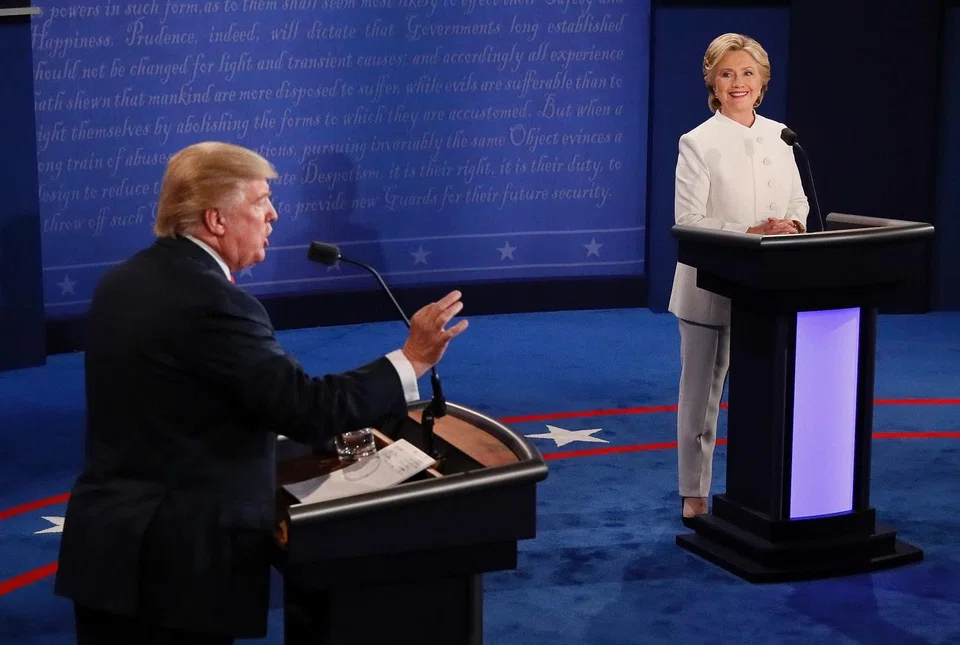
Mr Trump, in particular, seems to have been a magnet for attracting viewers. The first Republican debate in August of 2015, carried by Fox, attracted 24 million viewers, the most ever for an event during the primaries. That was bookended by the first presidential debate featuring Mr Trump and Mrs Clinton in late September, which attracted 84 million viewers, a record audience for such an event.
In between, the networks have larded their airwaves with copious coverage of Mr Trump's rallies and events, leading to criticism that all the attention propelled Mr Trump to the Republican nomination. Jeff Zucker, chairman of CNN Worldwide, recently acknowledged that at least some of CNN's coverage was excessive, but he denied that it vaulted Mr Trump to the nomination.
People have stayed tuned to cable's coverage of more debates, candidate "town hall" meetings, campaign-trail news coverage and the ever-present panel discussions among pundits and hosts.
So far this year, all three networks have seen double-digit gains in their audiences, with each reporting all-time highs.
Fox's daily audience has averaged 1.32 million viewers, 11 per cent more than throughout 2009, its previous best year, and 15 per cent ahead of the last campaign year in 2012, according to Nielsen data.
The 2016 figure has made Fox the top-rated basic cable network of any kind, a first in its 20-year history. The network still easily beats its news competitors, both among all viewers and the 25 to 54-year-olds who are the prime target of TV-news advertisers.
However, CNN said that it has narrowed the audience gap with Fox to its closest margin in eight years. It has attracted an average of 748,000 viewers on a daily basis this year, Nielsen said.
The election surge has also lifted MSNBC, which jettisoned its liberal talk-show format during daytime hours last year to put a greater emphasis on campaign news. The network calls itself the fastest growing of the three, although it is rebounding from unusually low ratings last year. To date this year, MSNBC has averaged 597,000 viewers per day, Nielsen said.
The brimming profits at all three networks validate their strategy of concentrating on political coverage nearly to the exclusion of other stories, starting in 2015. Many news organisations began expanding their political-reporting staffs last year, even as they were laying off journalists who cover other subjects. WP