

US deca-millionaire rocket scientist sets sights on your phone
Washington
A HEADLINE on a story on a Twitter feed a few days ago said that if you're not rich by 45, it probably isn't going to happen.
Rocket scientist Marc Wallace made it with years to spare.
At 44, the Cornell-educated aerospace engineer has been a deca-millionaire since he was 38, thanks to the 2008 sale of a cloud storage company he helped invent called SwapDrive.
About a year after he sold SwapDrive, the serial entrepreneur funded a neighbour's dream to own a restaurant, applying startup technology to the taco business. They launched District Taco, which has five profitable Washington-area locations, a food truck and ambitious expansion plans.
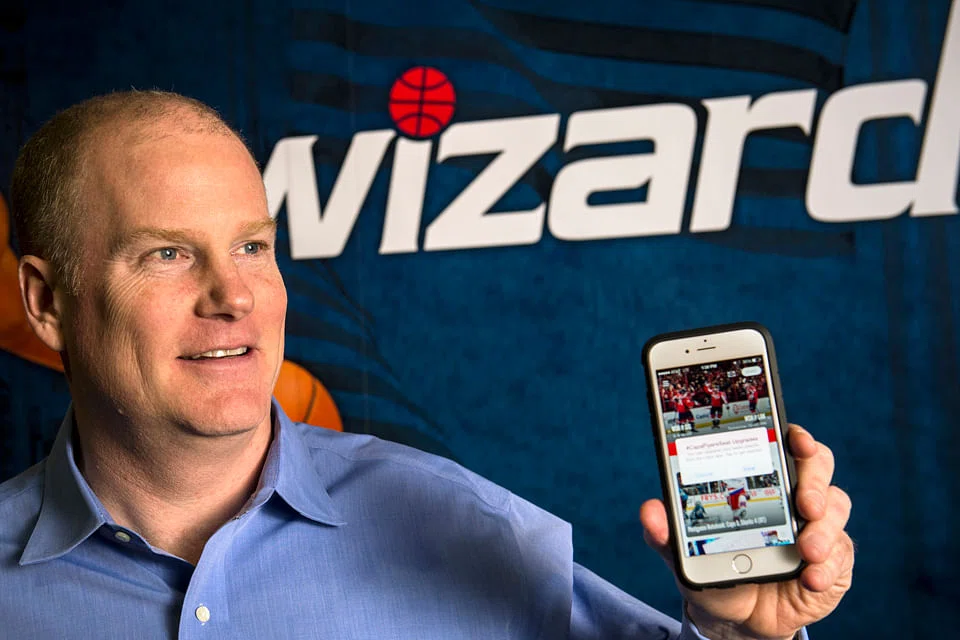
Mr Wallace's latest enterprise enables sports teams such as the Washington Wizards and the Washington Capitals to ping fans at Verizon Center via their cellphones, offering deals on refreshments, seat upgrades or just a chance to vote star guard John Wall onto the NBA Eastern Conference All-Star team.
The company behind this is Radius Networks, a Georgetown startup that began four years ago with an introduction between Mr Wallace and a pair of hungry businessmen with a disruptive idea.
"The story of my success is I have had good partners, and a supportive family, around me," Mr Wallace said.
Radius is small, with about 21 employees. It recently raised US$6.5 million, including US$100,000 from Raul Fernandez, part owner of the Wizards, the Capitals and Verizon Center.
Through contractors, it manufactures wireless instruments called beacons, which range in size from a quarter to a deck of cards.
Think of the beacons as E-ZPass transponders that wake an app on nearby cellphones. The beacons can ping your cellphone from about 150 feet (46 metres) away.
They are relatively inexpensive, costing between US$10 and US$100, depending on the complexity of the location. About 100 were installed around the Verizon Center in less than a day.
"A beacon can be used to trigger an event on your phone," said Mr Wallace, who is notified by email when his kids get home, thanks to beacons tracking their cellphones.
The big breakthrough on beacons arrived about 18 months ago, when Apple embedded beacon detection technology in its devices.
An iPhone 6 can see the beacon, which wakes the app, as at Verizon Center. In addition to having an appropriate app on your phone, you must say yes to the beacon's request to begin sending you messages when you are nearby.
Radius is working with a car manufacturer and an oil company to put beacons in pumps at gas stations, allowing payment by mobile phone. The beacons are installed in seven sports venues and at the National Geographic Museum. At the Cleveland Museum of Art, they guide patrons through exhibits and explain each piece of art.
Radius put 1,000 of the beacons at the sprawling Consumer Electronics Show in Las Vegas last month. The technology is spreading to include restaurants, pharmacies and hotels.
Mr Wallace even has beacons in his District Taco restaurants, where you are reminded that you can pay with the District Taco app by waving your cellphone like a wand over the cash register.
"If you have a pharmacy app, it can help you find things around the store. It can also notify you if you have medications or photos to pick up," he said.
The beauty of the business is its recurring-fee model. Radius doesn't create apps. But once it installs beacons and software, it sits back and collects a fee from the businesses relying on the technology.
"We probably have over one million people and a Fortune 100 company using Radius Networks software in some fashion," Mr Wallace said.
He has been starting businesses since he was a kid growing up outside Boston.
A rugby injury ended his ambition to pilot supersonic spy aircraft, so the Air Force ROTC student took a job helping build rockets for Virginia-based Orbital Sciences instead.
He worked six years at Orbital, which builds and launches commercial spacecraft. He met another ambitious entrepreneur, Roland Schumann, while they were studying for a master's in information systems at George Washington University.
A GW professor (his last name was "Money") in 2000 staked them US$50,000 to start SwapDrive, which was their idea for a cloud-based backup to store and secure computer files. Mr Wallace, married and with a newborn son at the time, quit his job at Orbital and went for two years without income.
"From 2000 to 2004, it was survival mode because of the Internet bubble burst," he said. When the market recovered, SwapDrive had enough customers and revenue to survive while others went under.
"I was fortunate to have good partners and great investors," he said. One of those investors was David Steinberg, a Washington technology businessman who introduced Mr Wallace to his Radius co-founders, Stillman Bradish and Scott Smith. Mr Steinberg and former Sprint Nextel executive chairman Timothy Donahue are also directors.
SwapDrive's revenue really took off once the technology was embedded in existing products by Dell computer, Symantec, Intuit and others. Remember the Norton Antivirus? "We were the backup," Mr Wallace said.
The high-margin company was closing in on US$20 million in revenue when it was sold to Symantec, where Mr Wallace stayed for two years.
He remembers swooping into Austin for meetings at Dell headquarters, starting a love affair with breakfast tacos. That led to his launching District Taco with his next-door neighbour in Arlington, an underemployed construction worker at the time.
"We were drinking beers on the porch, and I said, 'What do you want to do?' He said he wanted to open a restaurant. My only requirement is they serve breakfast tacos." Mr Wallace put up the money for a food truck, which they bought for US$50,000 in New Jersey. His neighbour and co-founder, Osiris Hoil, supplied the food expertise. Mr Wallace runs the business side.
In August 2008, District Taco parked its truck in front of the WJLA-TV building in the Rosslyn section of Arlington.
"It was a hit," Mr Wallace said. A year later, they opened their first restaurant in a strip mall near their homes in Arlington, spending US$500,000.
In addition to North Arlington and Old Town Alexandria in Virginia, District Taco has Dupont Circle, downtown Washington and Capitol Hill locations. Two more Virginia locations are under construction, in Dunn Loring and Rosslyn.
The restaurants solicit feedback on social media, allowing them to change menus to suit demand.
They added queso dip ("not authentic Mexican") after repeated requests from customers. Same with fish tacos, which are hugely popular. The profits are reinvested in more stores. Franchising is not out of the question.
Their incentive plan includes this: Employees who reach general manager or above receive shares of stock in the company.
If the company goes national and franchises, an ownership stake could be highly lucrative.
Now that may be a ticket to getting rich, even for late bloomers. WP
TRENDING NOW

Indonesia begins cutting natural gas exports to Singapore from Oct 24: reports

Singapore’s central gas buyer affirms Indonesia’s role as ‘important partner’ amid export review warning

KKR founders among investors buying 42% of Peter Lim’s Valencia; club valued at US$1.4 billion

NEA issues notices to 10 Singapore-based companies, including Wilmar and APP, over haze

