

Walgreens cuts ties to blood-testing firm Theranos
US retailer says it will immediately close all 40 of the testing centres in its Arizona drugstores
New York
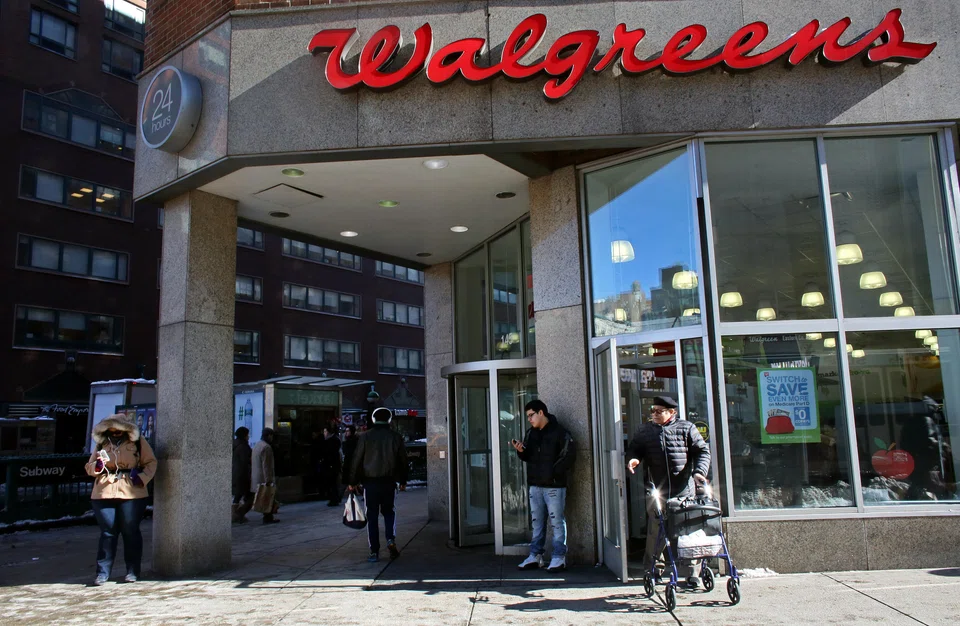
WALGREENS said on Sunday that it was terminating its relationship with Theranos, dealing a severe blow to the embattled blood-testing company. Walgreens said that it would immediately close all 40 of the Theranos testing centres in its Arizona drugstores, the source of most of Theranos' customers.
The giant retailer, a part of the Walgreens Boots Alliance, played a critical role in Theranos' early success. Founded by Elizabeth Holmes, a Stanford University dropout, the company promised to revolutionise the lab industry by being able to offer blood tests through a simple finger prick at a fraction of the cost of conventional testing.
But Theranos has run into a relentless barrage of negative publicity and regulatory scrutiny, and Walgreens has sought to extricate itself from its relationship with the Silicon Valley startup. Federal officials identified serious problems at Theranos' flagship lab in California, causing Walgreens to halt testing done there in January. The 40 Arizona locations remained open while Walgreens awaited regulators' decision, which included whether to ban Ms Holmes from the industry for two years.
While regulators have not yet made a final determination, Walgreens appears to have lost patience. Brad Fluegel, senior vice-president of Walgreens, said: "In light of the voiding of a number of test results, and as the Centers for Medicare and Medicaid Services has rejected Theranos' plan of correction and considers sanctions, we have carefully considered our relationship with Theranos and believe it is in our customers' best interests to terminate our partnership."
Brooke Buchanan, a spokeswoman for Theranos, said that the company would continue to do business using the stand-alone retail locations it is running, apart from the Walgreens stores. It has five such locations in Arizona and one in California, and further expansion is planned for Arizona, she said.
Theranos said in a statement: "We are disappointed that Walgreens has chosen to terminate our relationship and remain fully committed to our mission to provide patients access to affordable health information."
While Theranos might struggle along with its own retail units, clearly most of its customers came from the testing centres in Walgreens. Having easily accessible locations in corner drugstores was part of Theranos' grand plan to upend the laboratory testing business, and it had at one time said that it eventually envisioned being in Walgreens drugstores nationwide.
The announcement of the deal with Walgreens in September 2013 was also when Theranos made its existence known to the world, coming out of the "stealth mode" it had been in since being founded by Ms Holmes in 2003.
Walgreens hoped to add lab testing to its offering, drive traffic to its stores and pick up some of the cachet of being associated with a cutting-edge Silicon Valley startup.
"This is the next step in Walgreens' efforts to transform community pharmacy, giving our patients and customers convenient access to the comprehensive care they need right in their communities," Kermit Crawford, who was then Walgreens' president for pharmacy, health and wellness, said at the time.
The endorsement of Walgreens gave the unproven Theranos some credibility that it could perform numerous medical tests on a drop of blood rather than from tubes of blood drawn from an arm. Ms Holmes became a celebrity whose worth was estimated at US$4.5 billion, based on her half ownership of the privately held company.
But it now appears that Walgreens did not adequately vet the technology. Government inspectors and articles in The Wall Street Journal have revealed that much of the company's testing was being done on standard machines bought from laboratory equipment vendors - the same machines used by Theranos' rivals.
Moreover, Theranos did not even do those tests well, lacking experience and qualified personnel in the laboratory business. Federal inspectors have found numerous problems with operations at the company's flagship laboratory in Newark, California. They have threatened sanctions, which could include barring Ms Holmes from owning a laboratory company for two years. NYT
TRENDING NOW

World’s largest offshore wind platform by Seatrium consortium on track to be completed by 2028

Is stamp collecting enjoying an analogue revival or are its best days over?

GovTech retrenches another 38 staff in second round of layoffs
MBS adjusted property Ebitda falls 20.6% in Q3 with fewer high-roller visits, weaker hold

