

Walmart rewrites its e-commerce strategy
It is buying Jet for an eye-popping US$3.3b; the year-old online bulk retailer's founder Marc Lore is seen as one of the few execs who can help put a dent in Amazon's edge
New York
TRADITIONAL retailers have spent more than a decade and billions of dollars trying to transform their brick-and-mortar businesses for the online shopper. Yet Amazon and other digital upstarts continue to lap them.
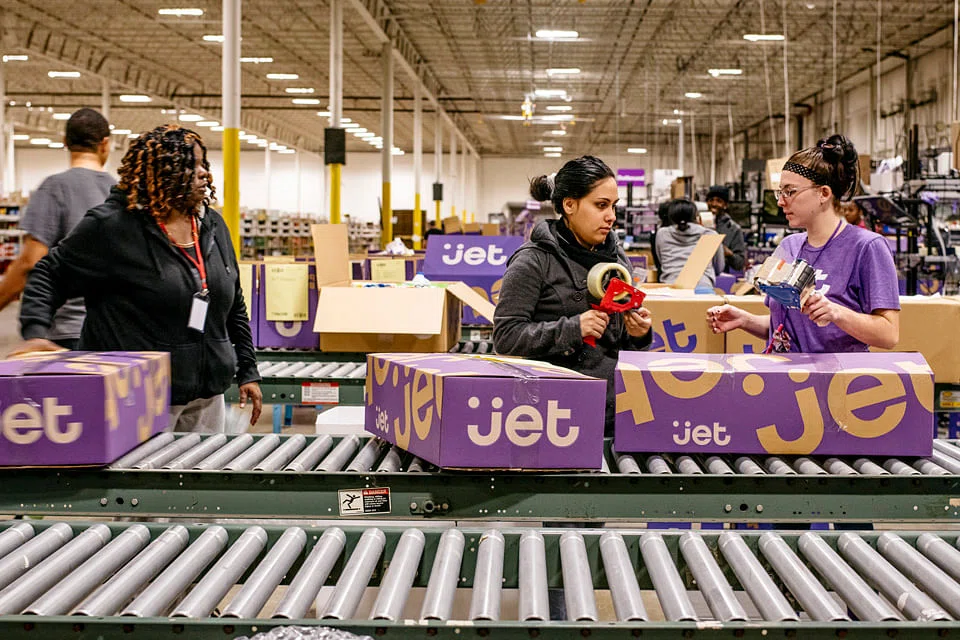
Now Walmart, the world's largest retailer and the dominant player of big-box stores, is turning to someone else's technology and talent. On Monday, the company said it was buying Jet, the year-old online bulk retailer, for US$3.3 billion, the largest deal ever for an e-commerce company.
The purchase, and a shuffling in the executive ranks that comes with it, are Walmart's clearest acknowledgments yet that its online strategy is not working. It also sends a strong message to the rest of the consumer and retail industry: when it comes to competing against Amazon, not even the mightiest brick-and-mortar stores can go at it alone.
"The other retailers are going to be looking up to it and saying: 'You know, absolutely, we've been failing at doing this'," said Jharonne Martis, a retail analyst at Thomson Reuters. "Bringing in an expert might be the key to it."
Overall, Walmart's e-commerce sales have stalled. The online business grew just 7 per cent last quarter, a number that Doug McMillon, the company's president and chief executive, acknowledged at the time was "too slow". Most recently, the company has focused much of its online strategy on expanding its curbside grocery pick-up business.
Jet is perhaps best known for an algorithm that encourages bulk buying, an area where Walmart.com has fallen short and could energise its sagging online growth. Walmart said Jet offered it access to "urban and millennial customers", two groups that the retailer's large rural footprint has been slow to attract. Walmart said on Monday that Jet had added more than 400,000 users monthly.
Jet says it uses a complex formula to offer items 10 to 15 per cent less than competitors by adjusting prices based on the quantity of products bought at once. The company relies heavily on suppliers, and Walmart offers more pricing power and potentially better distribution operations through its vast network of warehouses across the country.
Still, the US$3.3 billion figure is eye-popping, given that Jet.com started selling products barely a year ago.
Walmart is not valuing Jet.com solely based on traditional metrics like profitability, which the startup does not have. The retailer is spending billions in cash and stock in large part for something - or someone - else: Marc Lore. Mr Lore, a serial e-commerce entrepreneur who started Jet.com, is seen as one of the few executives who can help put a dent in Amazon's edge.
"If you looked at Jet from a fundamentals perspective, the company wouldn't be worth what they're paying for it," said Anand Sanwal, chief executive of CB Insights, a research firm covering venture capital. "They're trying to inject Marc and probably some of the veterans on his team, and try and help Walmart figure this out."
Mr Lore, 46, will take over responsibility for Walmart.com in the United States and will continue running Jet, which will operate separately, Mr McMillon said in a call with reporters. Walmart will be "thoughtful" about how it merges the two companies, and will focus on expanding both brands in the short-term, he added.
Mr Lore will replace Walmart's current top e-commerce executive, Neil Ashe, who will leave the company. Mr McMillon said that now was the "natural inflection point" for a leadership change and praised Mr Ashe for doing an "outstanding" job building the company's online business.
Mr Lore co-founded a company, Quidsi, that grew into a collection of e-commerce websites, including Diapers.com and Soap.com. The company was sold to Amazon in 2010 for more than US$500 million. He stayed at Amazon for two years, then left to figure out a new project.
Investors lined up to back Lore on his next venture, Jet.com. He raised more than US$200 million before the company sold a single product, and more than US$500 million overall. In the latest funding in November, the company was valued at US$1.5 billion, according to data compiled by CB Insights.
He is seen as someone who can bring a unique approach when it comes to e-commerce, according to Adam Silverman, an analyst at Forrester, a research firm. "Marc has been a creative force within the industry, creating pretty innovative business models, including Jet.com," Mr Silverman said. "He's proven that he can create businesses from scratch, and Walmart needs a bit of that entrepreneurship within their e-commerce business."
Recently, though, Jet.com has struggled. The company has been quickly burning through much of the cash it has raised, spending freely on hiring and marketing.To attract new customers, it dropped its annual US$50 membership fee. The strategy has caused Jet.com to lose money on every shipment, something that would not have been reversed for another five years, Mr Lore predicted in a 2015 interview.
Connecting with Walmart could help Jet.com amplify its business without the stress of private fund-raising in a market that has become more challenging for unprofitable companies.
Under the terms of the deal, Walmart will pay US$3 billion in cash, a portion of which will be distributed to Jet.com stakeholders over time, while US$300 million will be paid in Walmart stock over time, according to a statement released by the companies Monday.
Walmart said that while it would incorporate some of Jet's ideas and talent into Walmart.com, Jet would remain a separate brand, too. Yet both sites will continue to face a daunting reality: Amazon.com continues to wallop the competition. NYT
TRENDING NOW

South-east Asia has lost Nvidia’s best salesman

Demand, tech capabilities position Apac and AI as Skyscanner’s next growth frontiers: CEO Bryan Batista

Peter Kwee’s Ridley Park bungalow on the market with S$100 million asking price

Beyond the greenback, Vietnam’s big borrowers turn to Asian-currency bonds

