Washi goes from bombs to clothes

Published Thu, Jun 11, 2015 · 09:50 PM

    Ogawa, Japan

    FOR 1,300 years, Japanese paper from the tiny town of Ogawa has fulfilled myriad needs - from the material for Buddhist scriptures to balloon bombs sent to attack the United States.

    Now, as Japan prepares to mark the 70th anniversary of its defeat in World War II this summer, a new and altogether more peaceful use has been found for it - clothes.


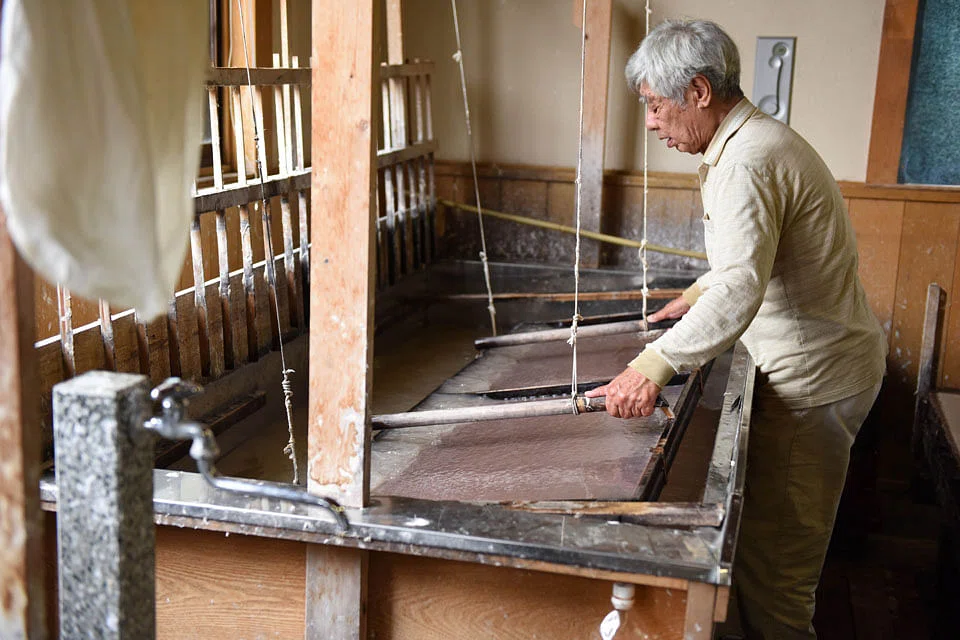
    Washi - literally "Japanese paper" - is traditionally handmade from plant fibres dissolved in water and strained through a bamboo filter.

    Thanks to its durability, Ogawa-washi was long appreciated by holy men, who would use it to copy out their verses, safe in the knowledge that they would survive the tests of time.

    But in the dark days of global conflict last century, war planners declared that the rough, tough but light material could be used in Japan's battle against the US.

    People in Ogawa - about 90 km from Tokyo - were set the task of making balloons 10 m in diameter, which would be filled with gas and launched over the Pacific Ocean with a bomb attached, riding the jet stream at high altitudes.

    It was not a very effective weapon; fewer than 10 per cent of the 9,300 produced are believed to have made it the 9,000 km to the US mainland, with most plunging into the sea en route.

    They failed to spark the forest fires and terror that they had been intended to cause, and there was only one fatal attack - a woman and five children out for a picnic in Oregon were killed when a bomb exploded, according to a nearby museum.

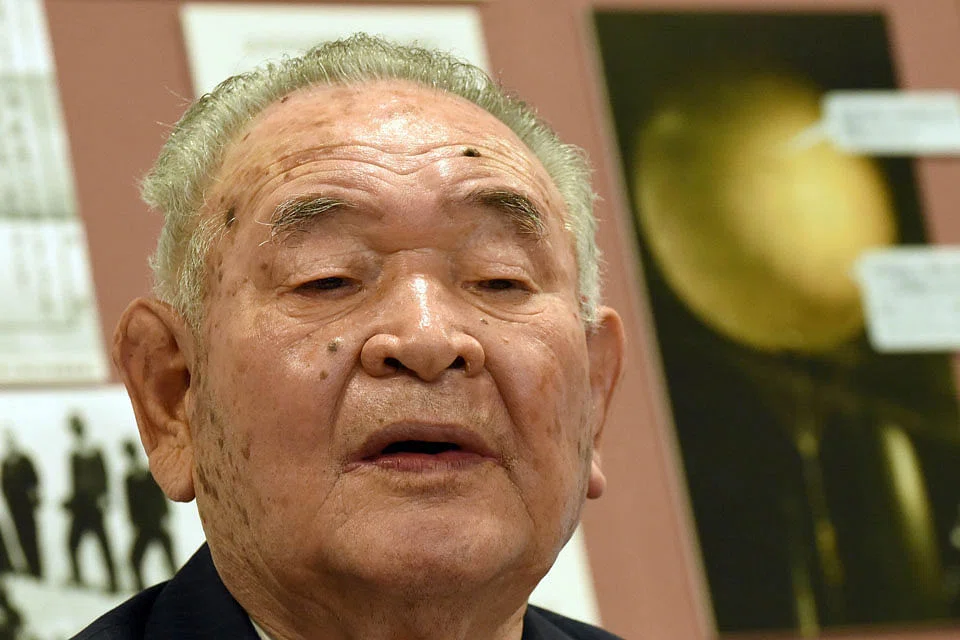
    "We knew nothing about the bombs," said 91-year-old Kaihei Kasahara, a former balloon paper craftsman, recalling the covert project. "We just made paper day after day."

    Last year, the traditional manufacturing process behind a particular kind of Ogawa-washi was inscribed on Unesco's list of Intangible Cultural Heritage.

    Local communities enthusiastically welcomed its entry onto the list, hopeful that it would bring a surge of tourists - both domestic and international - to learn about the delicate craft, and to spend their money in the area.

    But as if to prove that washi-making is not something to be preserved in aspic, one local designer has come up with a novel way of using it - to make clothes.

    Taki Okajima said that she had been inspired by the Buddhist priests at Todaiji temple in the ancient capital of Nara, who still make their own clothes out of washi.

    She has opted to blend the ancient and the modern with a series of western-style clothes made from the material - heavy jackets with a belt, a scarf and loose pants of many different colours. Washi as a fabric is said to be light and breathable, with a feel a little like linen.

    "This is a type of paper that people in olden times created after much trial and error," said Teizo Takano, 80, a senior craftsman in Ogawa. "I personally believe that we should come back and appreciate the high quality of such traditional products."

    Ogawa and its surrounding area built its economy on paper - an industry that supported 1,000 workshops in its 1920s heyday. That number has now dropped to just 10, and production is decidedly artisanal, rather than commercial. AFP