Cordlife upgrades monitoring system, tightens operational protocols
The company is receiving new sign-ups as it resumes cord-blood banking services in a controlled manner



CORDLIFE Group announced on Tuesday (Sep 17) that it is improving operational protocols and upgrading the laboratory monitoring system at its processing and storage facility, as it resumes cord-blood banking services in a controlled manner.
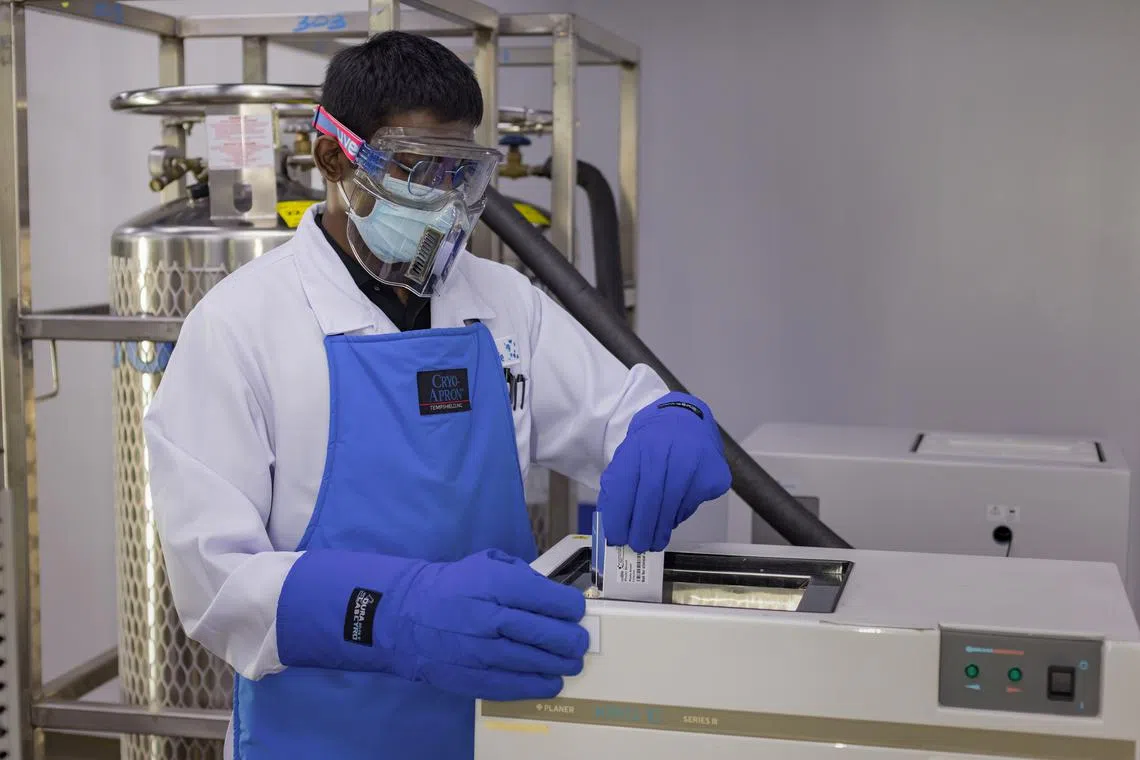
The new monitoring system tracks the temperature of 27 cryogenic storage tanks and other critical equipment, thus ensuring round-the-clock surveillance both on-site and remotely, said the company.
Cordlife management highlighted that the new system was put in place after the Ministry of Health (MOH) issued a suspension. It declined to reveal the exact cost, but noted that the capital expenditure incurred was “not material” due to its upgrades being an “ongoing process”.
Group executive director Chen Xiaoling said: “We keep enhancing our equipment and our facilities, so it will be difficult for us to (specify) an amount… we keep investing.”
The system improvements include a centralised monitoring system that can track the temperatures of all the equipment in Cordlife’s laboratory, as well as the environmental temperature and humidity. For example, storage tanks have temperatures between -180 and -190 degrees Celsius (deg C), while the ultra-low freezers have a temperature between -70 and -80 deg C.
It also sends alerts to technicians, supervisors and management personnel through various channels, with procedures in place to escalate issues to senior leadership if necessary.
If there are any abnormalities in the equipment sensors, staff would receive a phone call, an SMS and an e-mail. The alerts go up to the lab supervisory level and eventually to senior management, said Cordlife during a media tour of the facility.
To ensure that operations continue under any circumstances, the system runs on its own power source, while other equipment in the facility is supported by multiple power supplies and a backup generator.
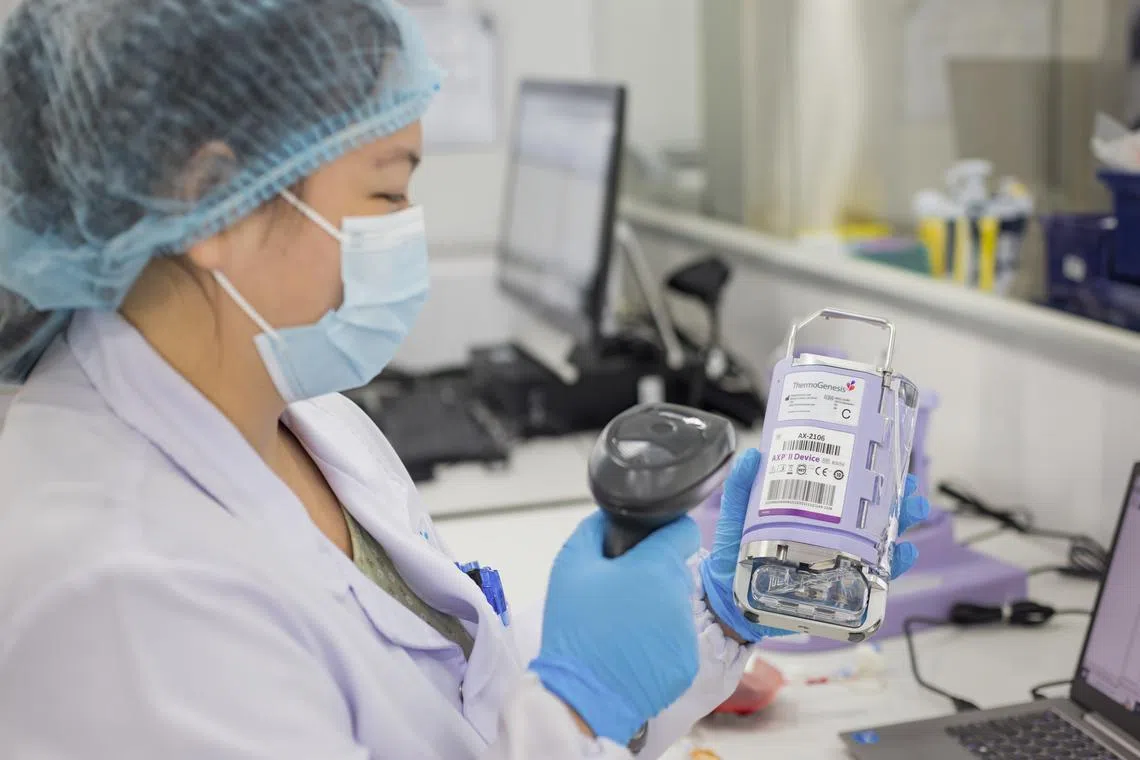
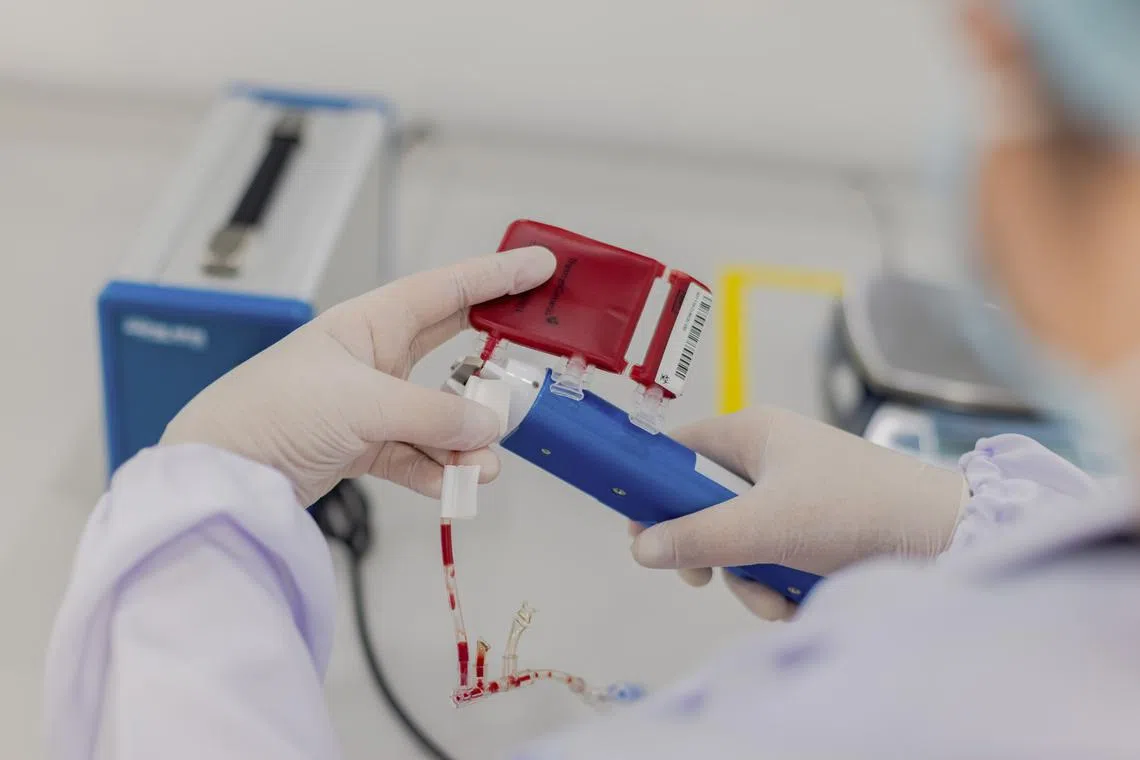
The facility’s cord-blood processing laboratory is also equipped with four units of the AXP II system, an automated platform for processing cord blood. The system has been validated under the supervision of an expert panel from MOH, said Cordlife.
Cordlife has also assigned more technicians to be on duty after office hours.
Alongside system improvements, the group has increased its laboratory and technical manpower, adding four senior staff. It now has 23 laboratory and technical staff, in addition to four quality assurance staff.
The group has “expended considerable human resources” to improve processes and upgrade the skills of its staff, it said in response to The Business Times’ queries.
Group chief executive Ivan Yiu noted that the company will recruit more experts and professionals to further improve operations and service standards.
Resuming in a “controlled manner”
The launch of the facility, which spans 5,400 square feet, comes after Cordlife accepted a notice from MOH earlier this month regarding changes to its cord-blood banking service licence.
As part of the agreement, Cordlife will not collect, test, process and/or store more than 30 new cord-blood units a month from infant donors from Sep 15, 2024, to Jan 13, 2025, unless sooner approved by the director-general of health.
Chen noted that the company has already received a number of new sign-ups since the partial resumption. However, Cordlife has yet to collect the samples from these new customers, as expecting mothers tend to sign up in the last trimester of their pregnancies – the births will only happen later this year.
Cordlife had also not signed on any new customers during its suspension. “We strictly followed the directive from MOH,” she added.
Cordlife was previously told to stop the collection, testing, processing and/or storage of new cord blood for a period of six months from Dec 15, 2023. This came after MOH said seven of Cordlife’s then 22 tanks had been exposed to temperatures above acceptable limits at different periods from November 2020.
In the latest, Cordlife said it has been engaging with clients affected by temperature excursions in two storage tanks and a dry shipper.
The company said it will refund the customers annual fees received from the start of the incident and waive subsequent fees until the service agreements mature when the child turns 21. A “significant number” of affected customers had accepted the offered refund or waiver – depending on payment plans the customers had chosen, said Cordlife.
“One or two customers” whose cord-blood units were stored in the affected tanks had also elected to terminate their contracts “for personal reasons”, said Cordlife’s management.
The company has also not received official requests from customers for the transfer of their cord-blood units to other cord-blood banking providers.
Shares of Cordlife were trading flat at S$0.147 as at 3.26 pm on Tuesday.