Corporate services provider Boardroom looks to modernise ‘old-fashioned’ industry

Uma Devi
Published Tue, Aug 29, 2023 · 08:12 PM
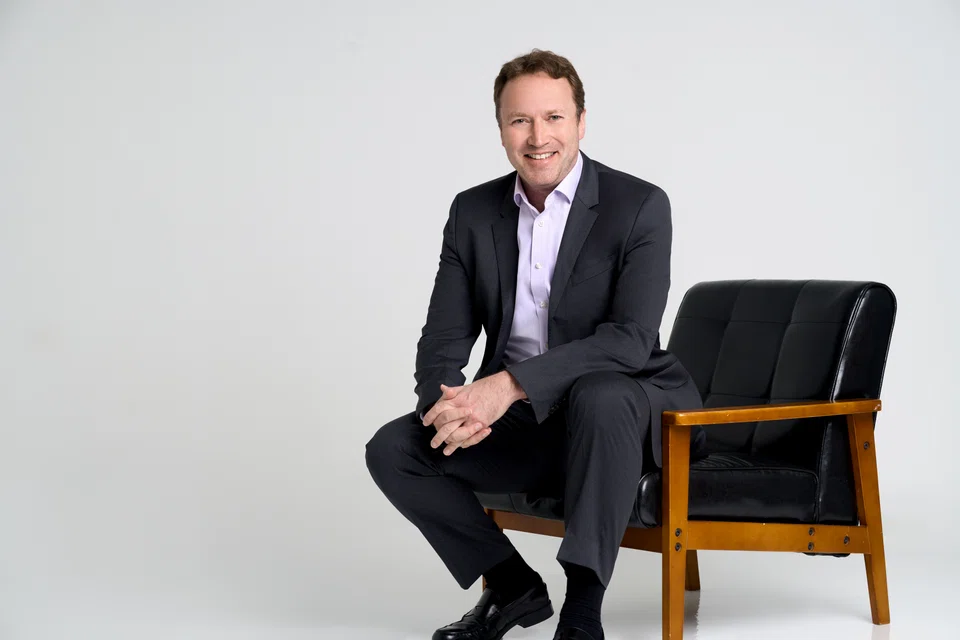
    • On top of modernising the way the company approaches its work and changing the culture of the industry to attract more talent, one of the top priorities of new chief executive Hugo Walkinshaw is also to grow Boardroom’s top and bottom lines.
    • On top of modernising the way the company approaches its work and changing the culture of the industry to attract more talent, one of the top priorities of new chief executive Hugo Walkinshaw is also to grow Boardroom’s top and bottom lines. PHOTO: BOARDROOM

    HUGO Walkinshaw, the newly appointed chief executive of corporate services provider Boardroom, has no doubt that its offerings – which include payroll, share registry and tax advisory services – are vital to companies.

    But the industry is “old-fashioned, operational and historically labour-intensive”, he laments.

    With the corporate world, investor demands and companies’ priorities all rapidly changing, one of Walkinshaw’s main goals when he took over the reins of Boardroom in March was to modernise and revamp the archaic practices.


    In an interview with The Business Times, the 53-year-old – who previously held senior leadership stints at Cognizant, EY and Deloitte as well as an early-stage cloud software startup – notes that certain aspects of Boardroom’s role have become more complicated.

    On top of modernising the way the company approaches its work and changing the culture of the industry to attract more talent, one of Walkinshaw’s top priorities is also to grow Boardroom’s top and bottom lines. 

    In the past, he recalls, Boardroom would have a list of service offerings, and companies would approach the firm for a service it required. 

    “It was certainly less challenging for us (then), in terms of how you drive demand and how you get business through the door. People just turn up… call us and sign up,” he says. 

    “But I think the days of doing business where you wait for the phone to ring and somebody’s calling you up to give you an order to come and do something are definitely going away.”

    According to him, companies like Boardroom are now finding themselves having to source for new ways to stand out from their competitors and attract the interest of clients. 

    “Now, you’ve got to talk value, and you’ve got to engage (clients) on that basis. Historically, you didn’t need to – clients knew they had something that needed to be done, and they turned up and asked. Now, there’s more competition, there’s more digitalisation,” Walkinshaw says. 

    One way that Boardroom has been able to differentiate itself is through active digitalisation of services that are typically done with pen and paper.

    An example is Ignite, a cloud-based software management automated payroll software system. This system can be viewed through a mobile app, and gives employees complete access to the likes of payslips, and leave and claims applications. 

    At the same time, Boardroom also offers a registry platform for general meetings which allows shareholders to place votes electronically. 

    These were widely used in Singapore during the peak of the Covid-19 pandemic, when companies had to switch to virtual general meetings in light of the pandemic-induced restrictions. 

    Companies still utilise them today, as electronic votes help speed up the counting process and can cut operating costs for a company. 

    Walkinshaw stresses that while hybrid meetings sound like “a good compromise” for shareholders at either end of the spectrum, they can be “quite inefficient and costly” for a company. However, this is the “price (that companies) pay to keep shareholders happy”, he says.

    He also notes the role that regulations play in shaping investor and corporate behaviour. For example, he points out that while Singapore has reverted to physical meetings thanks to stricter regulations from the Singapore Exchange, countries like Malaysia still have regulated virtual meetings. 

    “There’s a balance between the efficiency and effectiveness of the meeting versus the engagement and the outcome of the meeting. I think if you pick one particular style and try to mandate it, you will appeal to just a portion of the shareholders, and you risk upsetting some shareholders,” Walkinshaw says. 

    One area he sees potential for corporate services providers like Boardroom is the environmental, social and governance (ESG) space. 

    Walkinshaw concedes that Boardroom is unlikely to be able to “credibly lead” in the environment arena. However, he believes the company can play a huge role in the governance aspect as it sits in the regulatory space, and is able to help clients understand the effects of good governance. 

    Boardroom can, for instance, give its feedback on some of the compliance frameworks that governments are using and help to steer its clients in that direction, he says. 

    With ESG reporting increasingly becoming mandatory for listed companies in many countries, Walkinshaw believes that more than just being a checklist, such reporting requirements can be directly linked to a company’s broader strategy and execution. 

    When a company doesn’t do sustainability reporting right, he says it is one of the things that can “erode value” for the group. But he warns that not every company is qualified enough to be advisers of ESG, and Boardroom is still growing in this area. 

    “A lot of ESG advisers are coming in with no regulatory functional or sector knowledge,” he says.

    While Boardroom has mainly been helping companies with sustainability reporting for the past 18 months, Walkinshaw says Boardroom is looking to push deeper into the area. 

    “If we can help provide a service to make (companies) aware of what’s required by country… and help to link their reporting back to strategies and operations, then I think that’s a great place for us to be,” he adds.