Countries still not insuring enough against natural disasters: Munich Re
Large underinsurance gap ends up placing huge fiscal strain on nations, says insurer


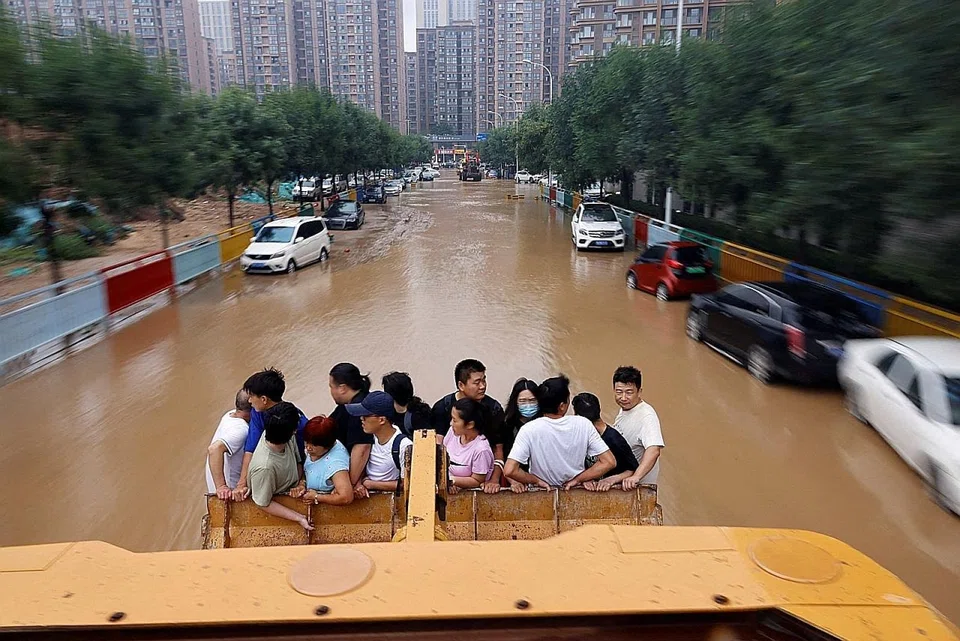
THE havoc wreaked by climate change continues to escalate; but, adding to the devastation is that nations around the world - Asia, in particular - are under-insuring themselves against such damage.
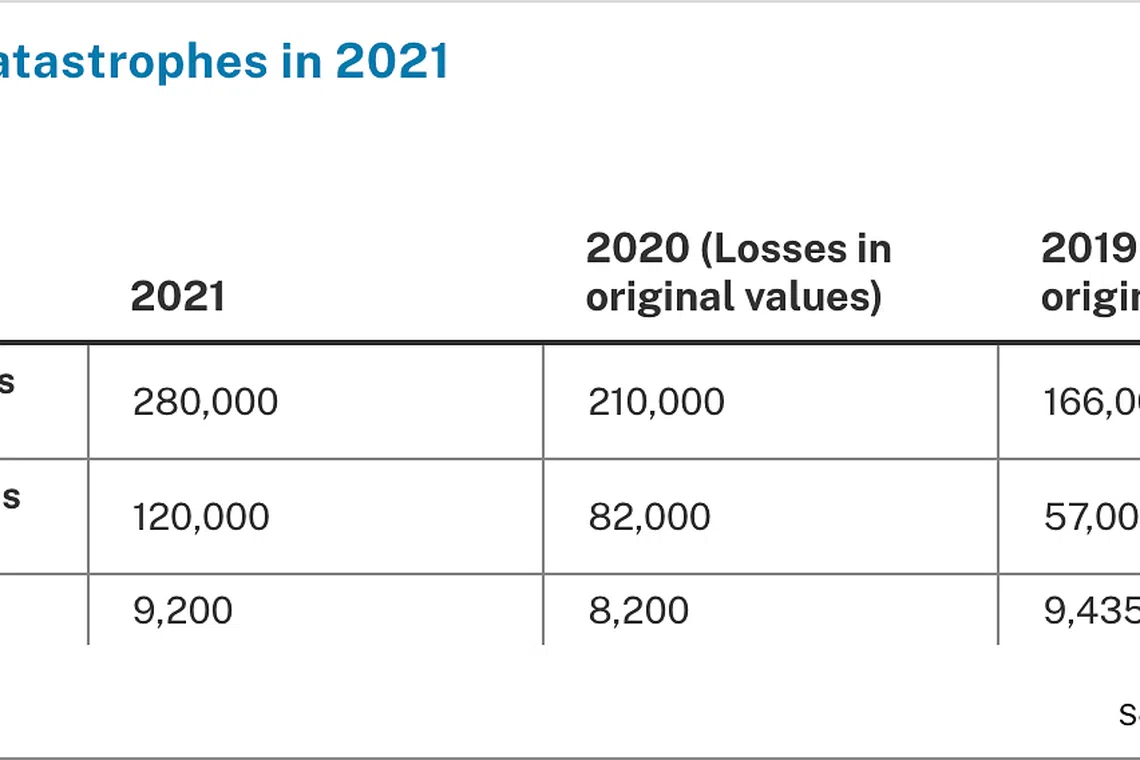
According to global insurer Munich Re's 2021 Nat Cat report, natural disasters across the globe caused substantially higher losses in 2021 than in the two previous years.
Based on provisional data, storms, floods, wildfires and earthquakes destroyed assets worth US$280 billion last year, compared to losses of US$210 billion in 2020, and losses of US$166 billion in 2019.
Adding to the concern is the large underinsurance gap that still exists across the globe. Of the US$280 billion in losses in 2021, only US$120 billion were insured.
In the Asia-Pacific, the overall economic losses for 2021 was US$50 billion, of which only US$9 billion were insured. As a region, it had the largest insurance gap of 83 per cent - compared to the global average of 57 per cent.
Munich Re said 2021's natural disasters have highlighted the enormity of the insurance gap in the Asia-Pacific region - in which there are two extreme cases in terms of insurance penetration and underinsurance.
Ernst Rauch, chief climate and geo scientist at Munich Re, said: "Citing Japan as an example, the insurance gap in the market remains fairly small, with 90 per cent of homes and businesses insured against impacts from tropical cyclones. It is mainly only the public infrastructure which is not insured, resulting in Japan having a total insurance gap from such windstorm events of approximately 25 to 30 per cent.
"However, on the flip side, China is a market where the insurance gap is very large or underinsurance is very high. Last year's costliest natural disaster in Asia was the Henan floods with an overall loss of US$16.5 billion, of which only 10 per cent were insured."
Rauch said that one of the main reasons behind Asia's underinsurance in certain markets against natural catastrophes can be attributed to a lack of awareness around the value of insurance - with communities, financial institutions and governments perhaps being not as familiar with the benefits of insurance.
As a result, these groups are not aware that, fundamentally, insurance can stabilise an individual or a country's development of wealth by smoothing out the economic shocks. Rauch explained that natural disasters often result in large-scale fatalities and economic losses because of the destruction of capital assets and infrastructure such as housing, schools and roads; and high levels of uninsured losses can put a huge fiscal strain on governments.
"The need to reallocate budget resources to finance disaster response and recovery, combined with lower revenues due to decreased economic activity post-disaster, results in less capital that can fund other government priorities," he said.
"Often, when very large-scale natural disasters strike less developed countries, the impact of such fiscal pressures can last for years, or even decades. This is not sustainable in the long term, and comes at the cost of economic development."
He said catastrophe insurance protects communities, businesses and governments against sudden financial losses in the event of unforeseen natural disasters such as earthquakes, floods and hurricanes - cushioning the economic shock and stabilising livelihoods.
The need for this can no longer afford to be overlooked by the region, which remains highly exposed to all types of natural disasters.
Rauch explained that while there are no specific categories of natural disasters that the Asia-Pacific should pay more attention to, the region needs to be aware that its vulnerability to disasters is highly correlated to the locations and the types of buildings its people are living in.
"As a result, communities that live near coastal regions often lack resources to build adequate sea defences, leaving them vulnerable to monsoon rains, storms and storm surges. Moreover, Asia's growing urbanisation also makes densely populated urban areas more vulnerable," he said.
And ongoing climate change is expected to cause extreme weather events to become even more frequent or more severe - posing a greater challenge to attempts to adapt to such increasing risks.
"It is therefore critical to provide more transparency in terms of how such risks can be transformed into insurance risk. By making the concept of insurance more understandable, it goes a long way towards building trust and awareness which can bolster better natural catastrophe resilience in the long term," Rauch added.
Munich Re believes that insurers, like itself, play a pivotal role in fostering consumer risk awareness - particularly in Asia - as well as in developing product availability for targeted distribution.
Rauch says insurers should actively include high-frequency perils in their claims monitoring, risk assessment, pricing and management activities. "With increased demand for tailored insurance solutions, having robust technology and tools that can assess frequency risks will be crucial in developing new products that insure communities and businesses against unexpected natural catastrophes."
Strong government support will also be critical in driving growth and insurance penetration in the region.
"Governments are able to support an insurance risk-sharing pool for high-risk infrastructure. Through public-private partnerships, governments can work closely with insurers to tailor protection schemes and leverage insurance mechanisms to mobilise disaster relief funds, as well as mitigate fiscal volatility resulting from shock events," Rauch said.