

Covid-19 tips balance further in favour of shareholders over creditors
The raised bar for proving insolvency is making creditor protection harder.
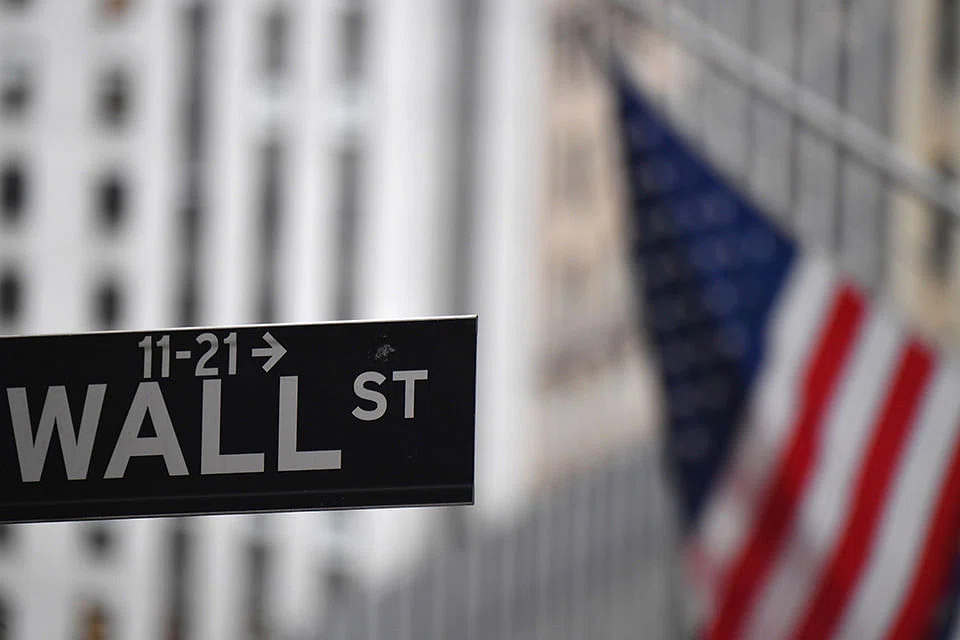
THE S&P 500 has rebounded by more than 30 per cent since its March nadir, breaching its five-year pre-Covid high, in seeming defiance of the bad news linked to Covid-19.
Is the market's upward trajectory in these trying times so inexplicable? Commentators point to spooked investors not knowing where else to park their liquidity, and to tech stocks being the major beneficiaries. But one other factor may be at play: shifts in the creditor-debtor tug of war that have been brought into starker relief.
The company as we know it
The concept of a company is simple enough at its core. A separate legal entity from its shareholders, a company allows businessmen to conduct business through a corporate that bears the risks of the enterprise solely. Creditors can look only to a company's assets and capital, and would have no direct recourse against its shareholders.
Underpinning this status as a separate legal entity is the inviolability of the company's capital - the company's shareholders have no direct access to its assets. Assets can be applied to creditors' rights in an insolvency. In effect, the paid-up capital is locked in. Originally, the law only allowed a company to reduce its capital by a capital reduction court order.
This balance between creditors' and shareholders' interests has allowed corporates to take business risks, and trade and commerce to develop and flourish.
But there has long been a growing disturbance in the force.
Laws to protect insolvent companies from creditors were early on justified on the grounds that they were more equitable and improved returns for creditors and other stakeholders. More recently, rules against financial assistance and share buybacks were relaxed, tilting the balance further in favour of shareholders.
To highlight exactly how far the creditor has been left behind, we observe developments leading up to, and during, the pandemic.
Perpetual tug of war
In more buoyant times, increased shareholder activism pressured corporations to prioritise shareholders' immediate interests over the company's long-term, strategic considerations. This shift could be tolerated so long as profits flowed, with creditor and shareholder interests aligned.
In recent years, however, companies have lobbied to fundamentally - and almost insidiously - backtrack from protecting creditors in favour of securing value for shareholders. In the past, once a company became technically insolvent, creditors' interests came first. Shareholders were last in line.
This stance has been gradually eroded. In its early incarnations, insolvency laws such as the US's Chapter 11 provisions and Singapore's statutory protection for companies in judicial management gave companies breathing space to recover when they fell on hard times. Over time, and accelerated by the global financial crisis (GFC), legislators and the courts have further weakened insolvency laws. Courts have made it more challenging to prove that a company is insolvent. Post-GFC, many banks in theory can no longer become insolvent given bail-in rules that automatically convert debt to equity when they default.
Covid-19 exposes fault lines
When the pandemic happened, governments the world over enacted laws to protect companies. Wrongful-trading rules, intended to stop a company incurring further debts when it has no reasonable prospect of repaying them in full, were suspended. In tandem with this, many countries (including Singapore) also implemented temporary moratoriums on creditors taking legal action against debtors.
While strong arguments exist in favour of providing ailing companies some life support, the crisis accentuated a growing power-balance shift between creditors and shareholders. As the pendulum has been allowed to swing - and at times has even been held aloft by the myriad of moratoriums and protective measures - the constituency that has most benefited is the controlling shareholder, at the creditor's grave expense.
Even prior to Covid-19's onset, the rules that once supported maintaining a company's capital have been weakening. Take, for instance, share buybacks to bolster stock prices. The US no longer prohibits this and now relies on fraudulent conveyance rules to "catch" transactions intended to defraud creditors. While sound in concept, the practical reality is anything but.
The raised bar for proving insolvency makes creditor protection even harder. Companies have been able to qualify as "profitable", which is a requirement in Singapore - although no longer in the US - to undertake share repurchases and dividend payments. These are great for share prices but may not be for the business over the long term.
Historically, US airlines have been among the biggest buyers of their own shares. Over the last decade, they have collectively spent 96 per cent of their free cash flow on share buybacks, leaving no reserves for the proverbial rainy day. That day finally came this year. And it has not quite stopped raining since.
Since then, US carriers have accepted grants and loans from the US$25 billion Cares Act bailout package and continue to plead for extended relief. While the pandemic must bear some of the blame for this predicament, it has also shone a searchlight on the shift towards enhancing shareholder value, at the creditor's expense - in this case, the federal government and, ultimately, the general public, who are forced to bail the carriers out.
Lest we think that the shifts have only occurred in more cavalier markets, Hyflux's spectacular implosion brings this warning home. For the better part of a decade prior to 2017, the erstwhile water treatment darling now undergoing a S$3 billion debt restructuring was able to pay dividends to its shareholders. Despite its net negative cash flow, dividend payments appeared to be supported by retained profits as recognised in accordance with FRS 11 for Construction Contracts.
The plight of retail investors - retirees who invested their life savings in Hyflux's preference shares and perpetual securities - has driven headlines. But Hyflux was also able to benefit its shareholders at the expense of its creditors.
Hyflux did not appear to have done anything illegal or improper in this regard. The question is whether Hyflux ought to have done so, and the focus thus shifts from one of legal entitlement to governance.
There is nothing like a global pandemic to bring fissures to the fore.
First, tanking markets reveal corporate wrongdoing that a rising market would mask. A prime example is oil trader Hin Leong, which attempted to hide US$800 million of losses that might not have surfaced if oil prices had not tumbled.
Second, with the increased challenges in enforcing their rights, banks and other voluntary creditors will demand higher interest rates. Trade suppliers may not deal with companies at all. Trust has been eroded. This will result in higher business costs.
A vaccine for our times
Even as the initial round of protective measures approaches its expiry, markets and regulators are discussing the possibility of permanent debt relief once Covid-19 passes in order to prevent a global crash. Similar protections were rolled out in the GFC's wake, but fortunately many financial institutions and corporates that received bail-out funds because they were "too big to fail" could not, due to enhanced capital adequacy rules, use their money to buy back shares.
Where then do we go from here? As with Covid-19, no panacea exists for the realignment towards shorter-term shareholder interests. While it may no longer be possible to revert to the creditor's absolute primacy, we need to strike a new balance. Otherwise, we may have a stupid situation in which governments have to intervene in markets to dampen soaring stock prices so that the real economy can do well.
We can only hope that a Covid-19 cure is found soon, so that the interests of creditors and shareholders can once again be aligned and the fissures mended. Because the alternative, a vaccine to re-adjust a company's value from shareholders to creditors, appears to be a long way away.






