

Critics of SGX should put things in perspective
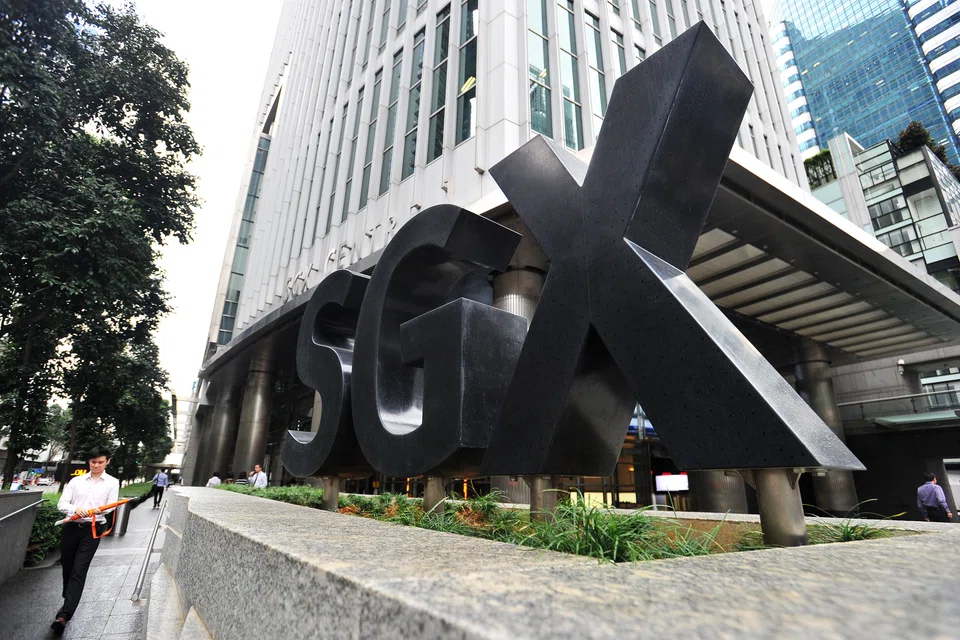
ALL those with an interest in the local stock market, from retail investors to brokers and fund managers, have their own wish list of changes and improvements they would like the new Singapore Exchange (SGX) boss to make. From boosting liquidity to scrapping the minimum trading price (MTP), from attracting better quality listings to bringing back the lunch break, these wishes were highlighted even before Loh Boon Chye assumed the office of chief executive officer.
Most of those demands are valid and understandable. Who, for example, would not want the market to enjoy higher liquidity or offer the public solid, investment-grade companies to choose from? But it is important to recognise that it would be impossible to satisfy all of them. It would be impossible, for example, to reverse the imposition of MTP now that many companies have already consolidated their shares. Moreover, though post-MTP performance has been questionable for some firms, it is still too early to write off a move whose core intention is to try and raise quality levels for all investors.
Equally important is the need to place the task ahead of the new boss in its proper perspective. In this connection, it is necessary for all stakeholders - critics especially - to acknowledge a few obvious truths.
First, the commonly heard critique that liquidity has dropped alarmingly and is in urgent need of improvement. While it is true that volume in the local market has been weak for several months, it must be recognised that there have been factors at work that are beyond the control of the local authorities. These range from tighter monetary policy practised by Western central banks to the launch of the Hong Kong-Shanghai connect, both of which have drained liquidity from most regional markets.
Even so, the situation is arguably not as dire as some critics make it out to be - according to latest statistics compiled by the World Federation of Exchanges, volume traded in local currency on SGX for the first six months of 2015 was 12.2 per cent higher than the first six months of 2014. Not that great when compared to Shanghai's 475 per cent jump, but better than the 10.5 per cent drop posted by Taiwan's bourse; and although we hesitate to use Hong Kong as a benchmark for reasons which will be given later, not that much worse than the 15.5 per cent rise recorded by Hong Kong.
Second, the often unfair and always selective comparisons with Hong Kong and China. Recall that when those markets were enjoying daily gains of 5-8 per cent in volume that on some days was 50 times that done here, SGX critics, no doubt envious of the riches on offer there especially when juxtaposed against the perceived dullness of the Singapore market, had a field day running down the local exchange.
Now that stocks there have crashed and panic-stricken China authorities have scrambled to cobble together funds to stave off an all-out rout, those comparisons and criticisms have been conveniently forgotten. The truth is that Hong Kong enjoys a natural edge over every other market in the world - not just Singapore - by virtue of its geography and that any exchange seeking to compete with it for top China listings will always find itself disadvantaged. Moreover, if China's regulators are happy for their market to undergo massive regular booms and busts as witnessed over the past 2-3 months, then that is their choice - we daresay that the overwhelming majority of local players would not want either SGX or the Monetary Authority of Singapore to encourage the same here.
In fact, most might admit - grudgingly, no doubt - that thanks to the prudent and sometimes overly careful approach adopted when supervising and regulating the local market, such booms and busts are highly unlikely to occur, and that being dull has its advantages.
The point is that the job of running SGX or supervising is a thankless one, with critics always ready to pounce. In some instances, criticism is wholly justified and in those cases, the authorities should take heed.
In others though, it is not. Often, observations, claims and objections are reactionary and made in isolation, without due consideration of the constraints under which the local market operates. There is no doubt that more can be done to boost and improve equity trading here but the quicker stakeholders place the task ahead in its proper perspective, the better.
TRENDING NOW

Nvidia reinstates Jensen Huang as CEO; Trump says move poses no national security risk

Beyond the greenback, Vietnam’s big borrowers turn to Asian-currency bonds

Indonesia’s coal tycoon Low Tuck Kwong replaced as Bayan Resources president-director

Six workers file employment claims against Crystal Jade Food Manufacturing

