Cromwell Reit sees logistics rents up 22% in Q1

Vivienne Tay
Singapore
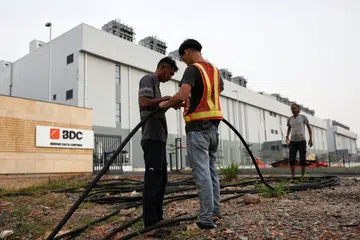
THE manager of Cromwell European Reit achieved a 12.1 per cent average rent reversion rate in the first quarter of the year, led by leases for its industrial and logistics space. This positive performance was driven by e-commerce and global supply constraints given the difficulty of transporting goods across borders, it said on Tuesday.
In fact, the Reit is still seeing "significant rent reversions" in April and May, mostly from logistics, which will be disclosed in next quarter's earnings report.
In a media briefing, Simon Garing, chief executive of the Reit's manager, added that since Brexit started causing greater customs friction between the UK and Europe, inspections at borders have been taking longer, which fuels storage demand at warehouses.
Rent reversions for its light industrial and logistics space averaged a positive 22.1 per cent, versus 2.1 per cent for its office space.
The Reit's net property income rose 17.2 per cent to 31 million euros (S$47.5 million) for the three months ended March 31, 2020, from 26.4 million euros the year prior. Gross revenue was up 21.4 per cent at 48.5 million euros, from 40 million euros a year ago. Total returns for the period attributable to unitholders stood at 17.5 million euros, up 13 per cent from 15.5 million euros.
These increases were mainly due to contributions from 14 new properties acquired over the past year, partially offset by the absence of income from 13 properties divested between October 2019 and March 2020.
Available distributable income per unit came up to 0.91 euro cent, in line with the previous year on a like-for-like basis. The actual distribution per unit will, however, only be determined after the results for the second quarter have been finalised.
Most Singapore Reits have been cutting their payout ratios after the government extended the timeline for S-Reits to distribute at least 90 per cent of their taxable income from three months to 12 months to qualify for tax transparency. Reits investing in foreign properties enjoy exemptions from taxation for certain qualifying foreign income.
The Reit's average occupancy rate rose to 94.7 per cent as at March 31, from 93.2 per cent as at Dec 31, 2019. It has a weighted average lease expiry of 4.5 years.
The Reit manager expects an impact on the Reit's earnings in 2020 due to Covid-19. Mr Garing said: "While we have not yet experienced any material financial impact from Covid-19, we are mindful that a number of our tenant-customers are facing difficulties that cloud their business outlook for the rest of the year."
To mitigate risks, the Reit had earlier already reduced its exposure to small- and medium-sized enterprise tenant-customers by about 30 per cent. They now make up only a tenth of its tenant-customer base, with government and semi-government leases as well as multinational and domestic corporations making up the rest.
Examples of these SME tenants include kindergartens, restaurants and gyms in its office buildings, which naturally suffer when employees in the building are working from home.
Asked if the Reit manager might consider forgoing management fees for a couple of quarters given that it has earned acquisition and divestment fees from recent transactions, chief financial officer Shane Hagan said it would be difficult to given that its teams on the ground, in every country that it has assets in, are working doubly hard to maintain relationships with tenant-customers during this period.
The manager said that as at the end of April, the rate at which tenant-customers are requesting their rents to be re-profiled has slowed. Such tenant-customers currently account for about 15 per cent of the Reit's annual headline rent. The bulk of these requests involve temporarily transitioning from paying rents three months in advance to once a month, as well as deferring rents or early lease renewals with rent-free incentives.
To-date, only 236,000 euros in rent abatements to smaller tenants have been agreed on. These tenant-customers have either agreed to early lease renewals or to the removal of lease breaks by one to three years.
"There are no government decrees in certain countries that we are operating in where office and logistics tenants are given a right to (defer or not pay) rent... apart from a few instances in Italy around hotels and cinemas. The law is still very much on the property owner's side," Mr Garing said.
To bolster its level of cash holdings in the midst of uncertainty in global financial markets, the manager fully drew down its 150-million-euro revolving credit facility in mid-March. About half of this has been earmarked for refinancing a debt facility of 104.5 million euros expiring in August 2021.
The Reit's manager said it will hold off on further transactions in the next few months, but added that this will not mean it is missing out on good deals. Property values are expected to remain resilient given the amount of liquidity pumped into Europe and the low interest rate environment.
It expects to enjoy a competitive edge in acquisitions when it is ready to buy again, given that it has local teams on the ground that will allow it to bypass the inefficiencies of mandatory stay-home periods for travelling to inspect assets.
Meanwhile, the Reit will also reduce non-essential capital expenditure and roll over such projects into 2021. The Reit's units closed flat at 39.5 euro cents on Tuesday.
TRENDING NOW
Fed hike throws Singapore banks a margin lifeline; UOB most likely to feel impact
He built the Vingroup empire. Now South-east Asia’s richest man is handing some key roles to his sons
Real-estate veteran Desmond Sim quits from CEO roles at Realion, ETC
Chagee, Mixue and Luckin won the market. Sustaining their edge is the harder part