

Crude palm oil export restrictions creating demand for Oiltek’s services

Benjamin Cher
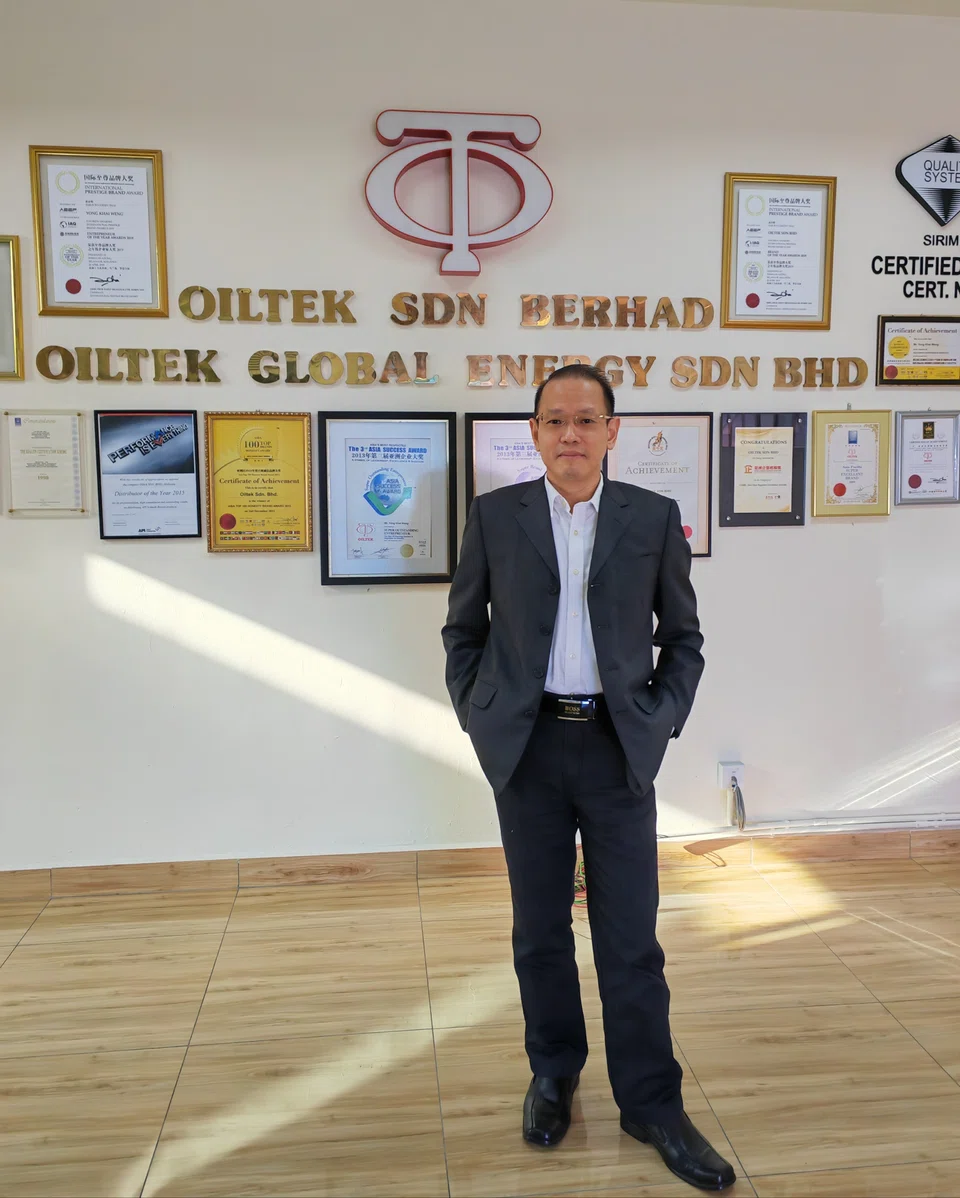
A SHORTAGE of cooking oil and export restrictions on crude palm oil in Indonesia are driving demand for Oiltek International’s services. The company’s healthy order book and recent set of results for FY2022 are indicators of Oiltek’s potential in 2023, said chief executive Henry Yong.
The company builds refineries for both edible and non-edible oils. It also builds plants that produce renewable energy from materials such as biodiesel and biogas. And it distributes a range of components and equipment to industrial clients.
Revenue for FY2022 grew 62.7 per cent to RM163.7 million (S$50.3 million), as earnings rose 30.5 per cent to RM12.7 million. The company’s order book has grown to RM209.9 million, with RM196.1 million secured in 2022.
The order book figure is “one of the highest” the group has seen, Yong said. It is expected to be fulfilled over the next 18 to 24 months.
A large portion of these orders are from companies in Indonesia, that are increasingly looking to refine palm oil domestically.
Bad weather, pandemic-related restrictions, supply chain disruptions and the Russia-Ukraine war combined to create a shortage of fuel and an increase in the price of crude palm oil last year.
To ensure adequate domestic supplies of cooking oil and control prices, the Indonesian government in April last year temporarily banned the export of cooking oil and crude palm oil.
While the ban has been lifted, various restrictions remain in place and palm oil refiners have been kept on their toes by regular policy adjustments. Just last week, for instance, the government said it would review its palm oil export quota amid rising cooking oil prices and suspend some palm oil export permits until end-April.
Yong said Indonesia is Oiltek’s most attractive market for now. The company’s order book is spread across different industries and geographies, but travel restrictions during the pandemic had impeded efforts to grow the order book further away – in Central and Latin America, for instance. Some of the plants Oiltek develops for customers require Oiltek’s employees to travel to the location to oversee the project.
“During the pandemic period, we were not so comfortable to secure projects that were far away,” said Yong.
Indonesia is also in a stronger position compared with some other developing countries that lack US dollars to pay overseas suppliers, said Yong.
And, its economy is in a relatively stronger position. “We know the economy and country are growing, and there is no financial issue,” he added.
Rising costs
Even as it wins more business, Oiltek is wrestling with higher costs. The group’s cost of sales rose 72.8 per cent to RM133.1 million in FY2022, largely due to supply chain disruptions.
Yong said these have been unavoidable thanks to snap lockdowns, but expects to see some improvements this year as the Covid-19 situation eases and travel restrictions are lifted: “We hope that the situation will become more positive.”
To counter the effects of higher costs, Yong said he is trying to grow revenue from new sources.
The company could announce a new business segment, he said, although engineering, procurement, construction and commissioning (EPCC) will continue to be the focus for 2023.
In this space, Oiltek is expanding the roles that it plays. Now it looks to not only do turnkey projects but also every aspect of the customer’s processing plant from design to installation of all the equipment. The recent contract win from Indonesia for a turnkey project for inside-battery-limits is an example of Oiltek handling the construction, fabrication and installation.
“This is another area we are focusing on,” said Yong.
Meanwhile, Oiltek is hoping to ride a rising environment, social and governance (ESG) wave. With the European Union phasing out the use of palm oil and soy bean oil for biodiesel in 2023, Oiltek hopes to support companies with some of its technologies.
“We have developed a waste-to-energy process that is very environmentally friendly, converting waste oil into a diesel replacement. We have utilised our technology to become a different category of player,” said Yong, adding that the company’s membership in the Roundtable on Sustainable Palm Oil would give it a preferred vendor status.
This year, Yong sees opportunities to continue filling up the company’s order book as demand returns: “Especially post-pandemic, I see that people have started reactivating investments and downstream diversification.”
TRENDING NOW

Grab CEO’s wife Chloe Tong on life with Anthony Tan and finding her purpose

US trade chief to consider trade deal tariff caps in excess capacity probe
Bee Cheng Hiang customers’ e-mail addresses exposed in Singapore’s first case of AI-related data breach

DFI Retail to take over Starbucks business in Asia from Maxim’s Caterers

