
CSE Global diversifies away from oil and gas in search of greener pastures

Yong Jun Yuan
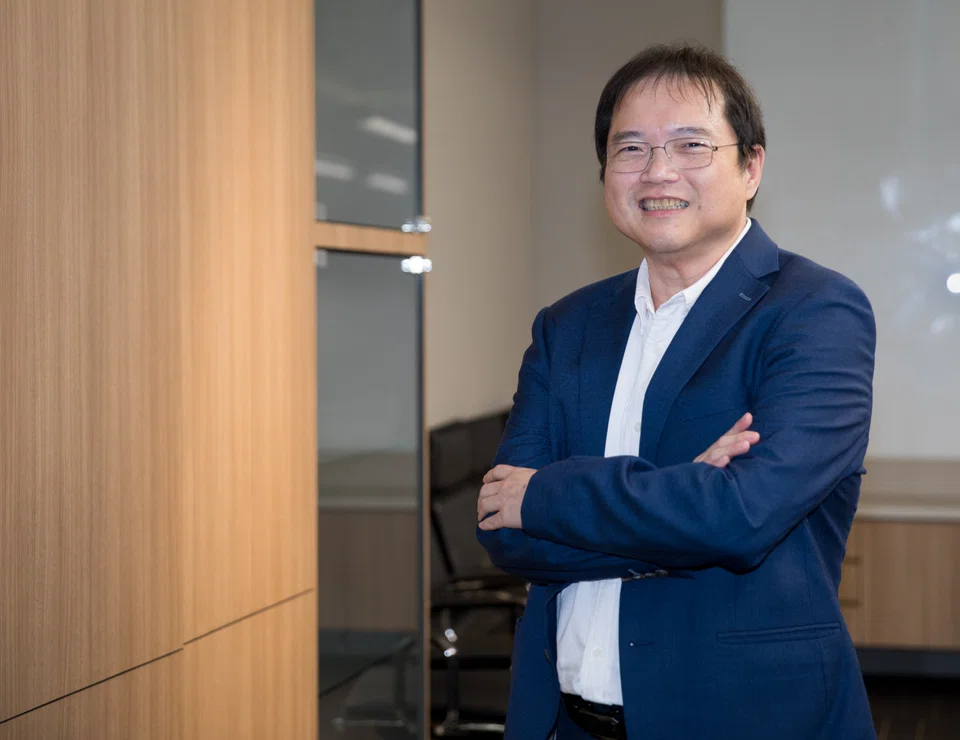
FRESH from a successful pivot into clean energy projects, systems integration solutions provider CSE Global is hungry for more avenues to drive further growth.
One area that the group has been actively growing is the provision of critical communications services – or closed networks – to government agencies and large multinational corporations.
In February, it acquired Florida-based communications solutions company Radio One, in a bid to further its expertise in the area. Radio One provides voice, video and data solutions to consumers.
As closed networks are less susceptible to being hacked, such private networks are now “particularly important”, said CSE Global chief executive Lim Boon Kheng.
Aside from creating private, reliable networks for companies, value-added services can also be introduced on top of the network.
For instance, there are accessories that can tap such networks to track assets and look out for the safety of employees.
Companies can use this function to track the location of their employees within a manufacturing facility.
Part of CSE Global’s unique selling point, Lim said, is its ability to create standard designs that can be adapted to different customers’ needs.
“We’re not just pushing boxes,” Lim said. “We actually help you to design some of your basic systems as well.”
He added that having boots on the ground is “very important” in creating solutions, and distinguishes CSE Global from other system integrators.
Diversification to drive growth
CSE Global’s efforts to diversify come amid tighter government regulations and souring sentiment on oil and gas projects – once the pillar of the group’s business.
Lim noted that many regulations and policies have emerged as concerns mount over the oil and gas industry’s impact on the environment.
Some oil and gas projects may not be approved, or may be taxed, which would impact their viability.
“That will create a lot of issues for us because if our customer doesn’t get approval, the project doesn’t move forward…then we don’t get our orders,” he said.
In 2018, the group decided to reposition itself to take on businesses in other growth areas.
It spotted an opportunity to help municipalities secure their electricity networks in countries such as the US and Australia.
“We are not into the manufacturing of electric vehicles, so what we can do is help municipalities and organisations to upgrade (and) secure their electricity networks, their grid,” Lim said. In September 2019, the group acquired a US company called Volta.
This gave CSE Global additional capabilities in the design, manufacturing and management of industrial power systems projects.
This has complemented the group’s existing expertise in systems integration and allowed it to ride the electrification trend.
Electrification projects now account for about half of the group’s revenue.
Conversely, process controls and automation now make up about 22.5 per cent of its revenue, down from close to 80 per cent in 2018. (*see amendment note 1)
Growing pains
However, CSE Global’s expansion plans have also led to some growing pains.
In the last year, it promoted some of its more junior employees into senior roles for process controls projects within the energy segment.
This was so that the more senior teams could take on the new electrification projects.
However, these junior employees on the technical team subsequently made mistakes in quotations and estimations, which led some projects to sink into losses.
Lim said the group gave certain individuals within the energy segment a choice to either take a pay cut or leave the group. This allowed it to reduce costs and downsize as the energy segment slowed down in the US.
But unless employees do not appear to have learnt lessons from their mistakes, Lim said that CSE Global does not sack employees immediately.
“Sometimes, they have already learnt their lessons, we already paid (for their mistakes)… so we let them step down, and we assess the person,” he said.
Meanwhile, the group also had to deal with rising cost of sales as it tried to expand its electrification services.
Further, while the sales team began receiving orders in the second and third quarters of 2022, revenue was only recognised towards the end of the year.
“Thankfully, we ended the year with a very good backlog, and that backlog gave us good revenue this year,” Lim said.
The group’s financial performance has strengthened in the latest half-year ended Jun 30, 2023. Net profit climbed 142.8 per cent year on year to S$11 million, as revenue rose 33.2 per cent to S$349.3 million.
While its order intake fell by 7.3 per cent to S$391 million year on year over the same period, its flow business orders, which exclude major contracts secured, grew by 25.6 per cent.
Lim said that CSE Global’s next target is to grow its order intake to S$1 billion, from S$800 million in 2022. (See *Amendment note 2)
“We will definitely want to look at acquisitions, and acquire companies in critical communications to strengthen our Australia and New Zealand reach, as well as to move into more areas, more states in the US,” he said.
“The idea is to continue to grow – the market is there for us.”
*Amendment note 1: The article had earlier said that process controls and automation made up 30 per cent of the company’s revenue. The company has clarified that it accounted for 22.5 per cent of its revenue in the first half of this year ended Jun 30.
*Amendment note 2: CSE Global has clarified that the S$1 billion figure provided was a reference to its order intake target rather than its order book target.



