

Current higher yields on Singapore Savings Bonds and Treasury bills unlikely to last: analysts
The December tranche gives a 10-year average return of 2.81% and attracts S$164.8 million in applications for the S$600 million on offer


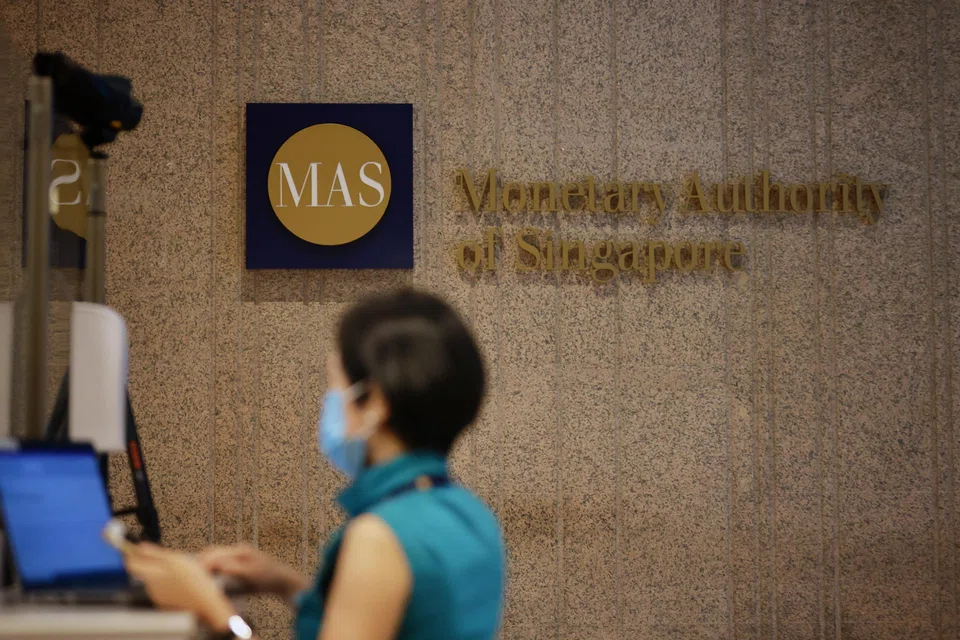
THE latest Singapore Savings Bond (SSB) allotted on Wednesday (Nov 27) recorded a rise in the number of applications, with the rate higher than that of the previous tranche.
The December tranche offers a first-year interest rate of 2.66 per cent, and a 10-year average return of 2.81 per cent.
This surpasses the interest rates for the last two tranches of the SSBs. The November issuance, which saw yields slip to record lows for 2024, offered a first-year interest rate of 2.25 per cent, and a 10-year average return of 2.56 per cent.
As a result, a total of S$164.8 million applications were received for the S$600 million on offer. Some S$153.4 million were applied within allotment limits, and this amount was fully assigned. This was higher than the November issuance, which pulled in S$99.6 million in applications for the S$600 million on offer.
Eugene Leow, senior rates strategist at DBS, said investors of SSBs tend to be sensitive to absolute yield levels.
While he noted that the number of applications picked up in the latest issuance, “this level of demand is still not particularly high”.
“In the June and July issues, demand exceeded S$1 billion. I would expect a meaningful step-up in demand if SSB yields cross 3 per cent,” he added.
Applications for the SSB closed on Nov 26, and the bonds will be issued on Dec 2.
SSB interest rates are taken from the average yields of the previous month’s Singapore government bonds.
However, they are subject to adjustments to ensure that interest rates do not fall over time and form inverted yield curves – when the yields of short-dated bills exceed those of longer-dated bonds.
The government may make adjustments to ensure that returns do not step down before the SSB matures, to provide investors with a return that increases across their holding periods.
Likewise for Treasury bills, a similar trend has been seen. Since the cut-off yield for the six-month T-bills fell to 2.71 per cent in October, subsequent cut-off yields have risen. The latest gave a cut-off yield of 3.08 per cent. However, analysts do not think these attractive yields will last for long.
Yields rise, but not for long
There are a few contributing factors to the rise in bond rates, such as economic growth and inflation expectations.
Simon Ree, founder of trading academy Tao of Trading, noted that markets are factoring in stronger economic growth and inflation above the 2 per cent target.
This leads to higher yields on longer-term bonds, reflecting a belief that economic expansion will continue, with yields compensating for potential inflation risks.
This coincides with the incoming Trump administration’s agenda of tax cuts and tariffs, which sparked concerns over rising fiscal deficits and inflation, with the markets pricing in higher yields to offset the risks.
While Singapore is fundamentally an interest-rate taker due to its small and open economy, the rise in US yields from reduced Federal Reserve rate cuts has contributed to the higher rates observed in the December issue of SSBs and the latest T-bills issuance.
The exchange rate policy also indirectly influences yields. The Monetary Authority of Singapore (MAS) uses the policy as its monetary tool.
With Singapore’s headline inflation falling below 2 per cent in October – the lowest since March 2021 – and Q3 gross domestic product growth at 5.4 per cent, MAS is expected to maintain and not tighten current monetary policy, noted Lim Choon Siong, research analyst at wealth advisory firm Providend.
“This scenario could exert upward pressure on SSB and T-bill yields, as investors may seek higher domestic interest rates to compensate for the reduced likelihood of SGD appreciation against the USD in the future,” he said.
The uptick in yields is likely a short-term reaction, as observers believe that once the markets have been given time to digest developments in the US, rates will come down.
OCBC’s head of FX and rates strategy Frances Cheung said: “Over the medium term, we maintain a downward bias to short-end USD rates and SGD rates, but this expected downward path is not a straight line which is also illustrated by the interim fluctuations in T-bill cut-offs.”
Colin Low, iFast portfolio manager for global fixed income, said that with risk shifting from inflation to US economic growth, bond rates are likely to decline if US growth deteriorates or if the labour market shows signs of weakness, as the market will price in more Fed cuts.
With elevated yield levels unlikely to be sustained going into 2025 because of expectations that gradual rate cuts will continue, market watchers believe there is space for an increase in portfolio allocation towards Singapore-listed real estate investment trusts (S-Reits).
RHB analyst Vijay Natarajan noted that lower financing costs and a resilient economy are likely to boost yields for S-Reits in the coming years.
“Thus, we believe investors should continue to gradually increase their allocations into S-Reits or other high-yielding equities to benefit in the medium term,” he said.
Gabriel Yap, a veteran Reit investor and chairman of GCP Global, noted that S-Reits are also trading at a low, as the market priced in higher fiscal budget deficits.
However, he pointed out that most of the well-diversified, well-managed Reits are still trading above a dividend yield of 6.4 per cent, which has historically delivered 12-month returns of 11.9 per cent.
“I believe that it is time to get back to S-Reits at their lows,” he said.
TRENDING NOW

Once staunchly pro-China, Malaysian Chinese businesses are now distancing themselves from Beijing

Looking beyond looming CEO succession, should UOB potentially pursue a transformative merger?

Could stablecoins be the future of money?

Grab CEO’s wife Chloe Tong on life with Anthony Tan and finding her purpose

