

Data centre Reits navigate growth amid competing forces
Expansion relies on acquisition firepower, though there is also keen interest on building assets from scratch
Singapore
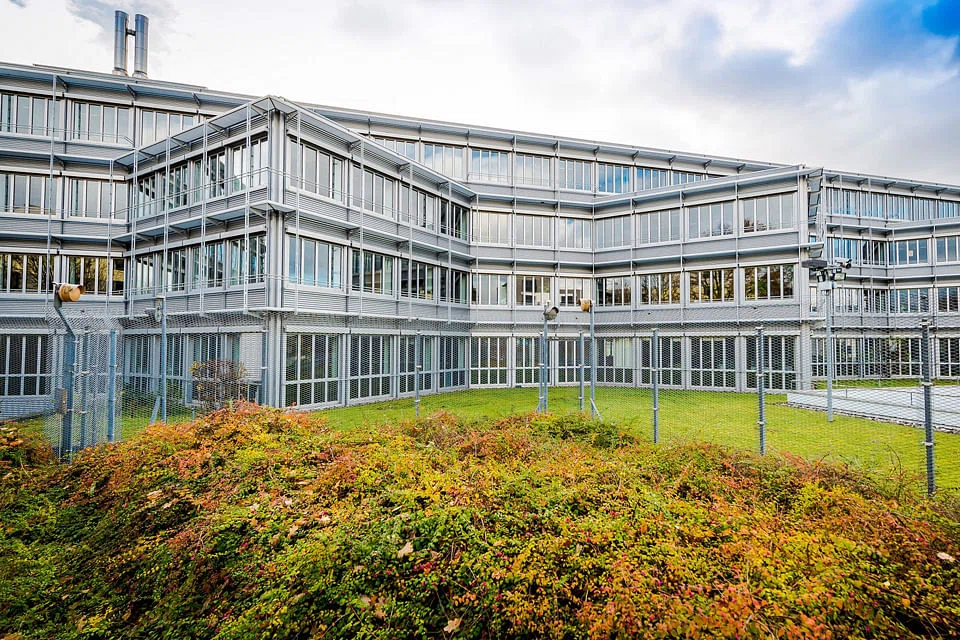
MAPLETREE Industrial Trust's (MIT) latest US$1.32 billion proposed purchase of 29 data centres in the United States speaks to the continued appetite for assets tied so intimately to the trend of 5G and the natural data boom.
On the local bourse, there are three real estate investment trusts (Reits) with substantial exposure to this asset class: Ascendas Reit, Keppel DC Reit, and MIT.
Over the past five years, total unitholder returns for all three Reits, as at May 25, was about 214 per cent for Keppel DC Reit, 131 per cent for MIT, and 70 per cent for Ascendas Reit, based on Bloomberg data. Within the same period, the benchmark Straits Times Index gave a total return of 37 per cent. Total unitholder returns include distribution yield.
Growth for some dominant players in this space will rely on their firepower to be able to make acquisitions. But it is also becoming a crowded space, and analysts are flagging that these players will need to find new ways to hunt down assets, and take more care in their lease mix.
Gone shopping
The offshore acquisitions by major property players in Singapore have already come in thick and fast this year.
In April, CapitaLand made plans to invest 3.66 billion yuan (S$757.7 million) to acquire its first hyperscale data centre campus in Shanghai's Minhang District. A month earlier, Ascendas Reit snapped up 11 data centres in Europe for S$904.6 million from New York-listed data centre Reit Digital Realty Trust.
As for MIT, it announced last week the proposed acquisition of 29 data centres across 18 US states for US$1.32 billion. MIT said that the proposed acquisition will make it one of the largest owners of data centres among Asian-listed Reits. It is also in line with MIT's target for data centres to make up two-thirds of its portfolio in the medium term.
While Singapore is tightening its supply with its temporary pause on data centres, markets such as Europe and the US continue to present good opportunities for acquisitions for data centre players here, said RHB analyst Vijay Natarajan.
India is another emerging market to look at, he added, given its large population and the need to store data centres and servers.
With acquisitions, DBS Group Research's analyst Dale Lai said that Keppel DC Reit could rely on its sponsor, Keppel Telecommunications & Transportation, to suss out assets to buy.
As for Ascendas Reit and MIT, "they have acquired data centres from Digital Realty and they could continue to tap on this relationship for further acquisitions".
There remains financial firepower for acquisitions. MIT's post-acquisition gearing would be at 40.3 per cent. As at March 31, Ascendas Reit's and Keppel DC Reit's were 38 per cent and 37.2 per cent respectively.
About 10 per cent of Ascendas Reit's portfolio consists of data centres, following the acquisition of the 11 European data centres. The total sum of its investment properties stands at some S$15.1 billion as at March 31.
As for Keppel DC Reit, whose entire portfolio is made up of data centres, it has assets under management (AUM) of S$3 billion as at end-December, 2020.
It had a total of 20 data centres in its portfolio, as at March 31. These properties are in Singapore, Malaysia, Australia, the United Kingdom, The Netherlands, Ireland, Italy, and Germany.
As for MIT, following the proposed acquisition - targeted for completion in the third quarter this year - the proportion of data centres in MIT's portfolio by AUM will increase to 53.6 per cent, standing at some S$4.6 billion.
The acquisition will bring MIT a total of 61 data centres under its belt - five in Singapore and 56 in North America, of which, 13 are held through a 50:50 joint venture (JV) with Mapletree Investments.
With acquisition opportunities tightening, Reit sponsors may look to develop data centres from scratch, analysts added. As it is, there seems to be keen interest to build up data centres in Singapore.
Brenda Ong, executive director for logistics and industrial at Cushman & Wakefield, said that there "have been a few (data centre) operators identifying and pooling potential 'land' wherever possible, to be ready (for) when the moratorium is lifted".
After building such assets, these could eventually be injected into a Reit, analysts said.
The urgency comes as Singapore itself has put a moratorium on data centres to be built here. In the last five years, 14 data centres with a total IT capacity of 768 MW were approved to be constructed on industrial state land, the Ministry of Trade of Industry had said in February.
This was a huge surge compared with the 12 data centres with a total IT capacity of 307 MW in the preceding five-year period.
Given the intense use of water and electricity by such data centres, the government paused temporarily the release of state land for data centres, as well as the development of data centres on existing state land.
With the moratorium in place since 2019, the government expects to provide details on its review by the end of 2021.
Fine print
In navigating growth, data centre players will also have to watch their lease mix. Investors should sit up to look through the fine print.
Notably, out of the 29 North American data centres that MIT is now proposing to acquire, the portfolio's largest property - a multi-tenanted mixed-use data centre and office property - is only 63.5 per cent occupied, given recent office lease termination, said Citi analyst Brandon Lee in a research note.
"While some commercial space could be converted into data centre space given its existing network connectivity and power availability, conversion and lease-up would take time and a short-term or safer solution would be to lease as office to increase income," he added.
"We expect challenges given rising vacancies and tenant incentives in Atlanta's downtown office market."
Of MIT's five existing Singapore data centres, four are leased to single tenants, including Starhub and Equinix. The last is catered "for companies in the lifestyle and knowledge-driven industries".
Another way to look at the risk behind tenant mix is to review the type of leases being signed. One form is known as a triple net lease, in which the tenant is responsible for all ongoing expenses at the property in addition to base rents. These property expenses include real estate taxes, building insurance, and maintenance, on top of rent and utilities.
Citi's Mr Lee said one positive of the latest MIT deal is that it expects minimal yearly capex of US$4 to 5 million, in part as 82 per cent of the leases are on a triple-net basis.
With Ascendas Reit, its recently acquired 11 European data centres comprise 58 per cent of triple net leases, while the other 42 per cent are leases within colocation data centres, as at Dec 31, 2020.
Both Keppel DC Reit's fully-fitted and shell-and-core data centres have a mix of triple net and double net leases. Shell-and-core data centres are buildings that have the bare bones necessary for data centre development, along with available power and connectivity. The tenant is then responsible for the fit-out.
READ MORE:
TRENDING NOW
Far East Organization’s The Serra Residences sells less than a quarter of units released at average S$3,460 psf

MAS, SGX must address our IPO problem

A bumpy road ahead for some of Singapore’s fresh graduates in their job search

Once staunchly pro-China, Malaysian Chinese businesses are now distancing themselves from Beijing

