DBS CEO makes tentative guess on oil-and-gas trough
Singapore
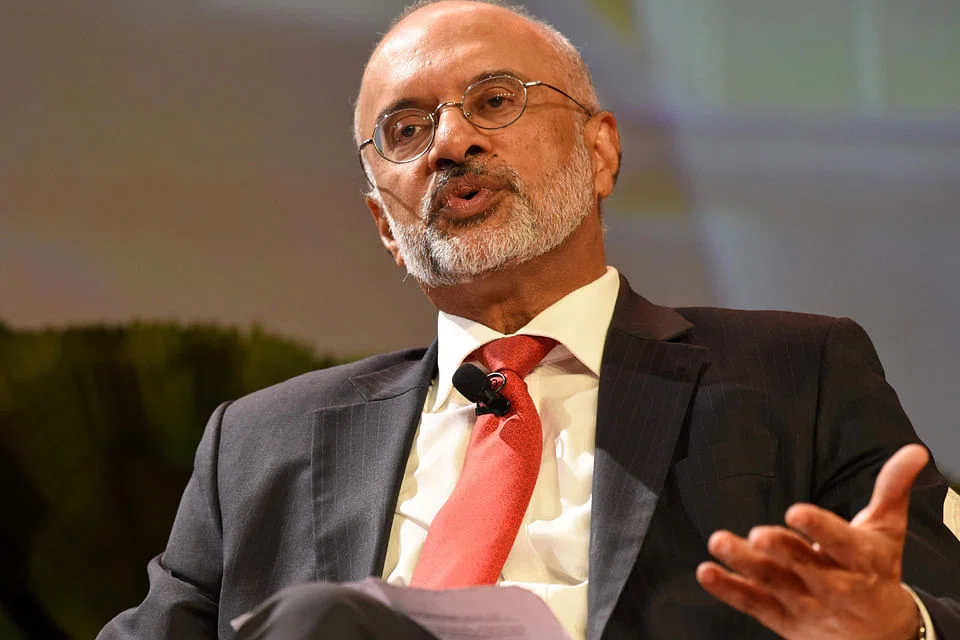
DBS chief Piyush Gupta hopes the oil-and-gas sector is at its trough, even as the ripple effect from Swiber's collapse makes its way through the industry. But the prognosis might just be wishful thinking, quipped the boss of Singapore's biggest bank.
A hefty jump in bad-loan provisions at DBS meant record income in the third quarter was eventually compressed into flat growth in net profit at S$1.07 billion for the three months ended Sept 30, 2016, compared to a year ago, the bank said on Monday. That translated to an annualised earnings per share of S$1.67, unchanged from a year ago.
The result was a shade stronger than the average forecast of S$1 billion from five analysts polled by Reuters, and an estimated S$1.04 billion by analysts polled by Bloomberg.
What helped drive earnings were stellar performance from wealth management and significant cost cuts. The proportion of weak smaller support services firms in DBS's portfolio is now at half of S$2.7 billion - or about S$1.3 billion - up from a third of this specific portfolio in the second quarter, Mr Gupta told reporters.
DBS's all-in exposure to support services companies in the oil-and-gas sector is S$7 billion, of which about S$3 billion is accounted for by 90 names that are smaller support firms with no government links and 90 per cent secured against collateral. "Quite clearly in the third quarter, we saw an effect of Swiber, and the spill-off from that," said Mr Gupta, noting a few names are directly connected to Swiber via the supply chain, while others are suffering from a tightening capital market that has made it difficult for them to raise cash through new shares or debt.
DBS is heavily exposed to Swiber, an oil-and-gas company now in the throes of restructuring through judicial management. Swiber had first tried to wind up the company, taking the market - and DBS - by surprise.
Until the second quarter, DBS's Swiber exposure had not been categorised by the bank as a non-performing asset, because the company had been paying up. Swiber is deemed a contractor, and so was financed based on working capital needs, and measured against projected cash flow.
Following Swiber's collapse, DBS decided that such financing can leave the bank with a lot of unsecured exposure, said Mr Gupta. The bank has "completely refreshed" how it lends to contractors, and has created new lending guidelines for such firms.
DBS had in the second quarter tapped S$200 million from its general allowance to cover part of the amount it does not expect to recover from its S$700 million Swiber exposure.
In the third quarter, it more than doubled its total allowance to S$436 million from S$178 million a year ago. Its general provision - that is, an overall cushion not meant for exposure to specific loans - surged more than four times to S$169 million. Of these smaller "weak names" that DBS is still working through, 40 per cent have had refinancing, or are in the final stages of documentation. Refinancing is possible as the bulk of these companies are in the business of supporting production of oil from existing wells, and have "good quality vessels", according to Mr Gupta.
Refinancing plans are still being discussed for the remaining 60 per cent of the smaller support services firms. "I think we've seen the bulk of the pain. There will be some more, but it's not dramatic," said Mr Gupta. "This could be wishful thinking, but in some ways, the production part of the offshore sector is beginning to see a trough."
Mr Gupta made it clear that there is still stress in the production segment because of overcapacity, with utilisation rate at about 60 per cent.
But while the exploration segment - that is, companies seeking fresh oil from new wells - is still deeply challenged, the production segment is at least still generating cash. Mr Gupta said premiums to charter vessels for one year have increased since May.
DBS's non-performing loan (NPL) ratio rose to 1.3 per cent, up from 0.9 per cent a year ago. Mr Gupta expects this bad-loan ratio to not exceed 1.4 per cent for the full year.
DBS posted total income of S$2.93 billion, up 8 per cent. This was powered by a record showing in income from wealth management, jumping 47 per cent to S$201 million on the back of stronger bancassurance income. Other fee and commission income also grew, given strong gains in trading in a volatile quarter, and higher fees from more credit card transactions. Net interest income was flat at S$1.82 billion.
DBS's results also gained from a 5 per cent cut in expenses to S$1.2 billion that DBS said included gains from going digital. Cost-to-income ratio fell to about 41 per cent from about 47 per cent a year ago. DBS will keep expenses flat, Mr Gupta noted.
Shares of DBS finished higher at S$15 on Monday, up 10 cents.
READ MORE: