

DBS CEO underscores psychological impact of negative rates

Singapore
THE negative interest rate environment in two-thirds of the world, including most of Europe and Japan, are spooking global markets not just because of its impact on the financial sector - below zero rates hurt banks' profitability - but it also affects the "psychology" on what it means for the future of the global economy, said DBS chief executive Piyush Gupta.
This is a "fundamental" issue that requires careful consideration. "Why is there negative interest rates? How does one deal with it? And what does this portend for the future of the global economy?", said Mr Gupta in his welcome address at the sixth DBS Asian Insights Conference 2016 in Singapore on Thursday.
Since the global financial crisis, there has been uncertainty and volatility "more than ever before" in the world which is now facing a period of sustained low growth. Geopolitical and socio political risks such as Brexit, which was totally unexpected, have now joined the mix.
Mr Gupta attributed the outcome of the Brexit referendum to the rising disenfranchisement of the middle class who voted against "not Europe, but the establishment". "There is no question that this has impacted the psychology . . . we are starting to see similar elements of that in different parts of the world. The US election is another case in point."
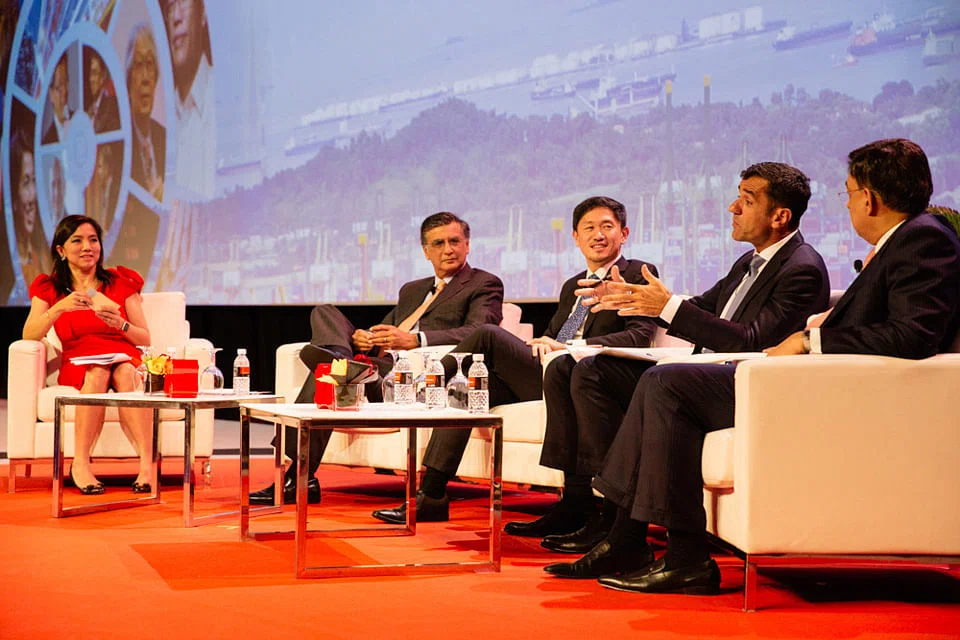
At a panel session on the "Future of Singapore's economy", there was broad consensus over Mr Gupta's summation earlier that Singapore has successfully built a first world infrastructure in a third world region over the past 50 years. Even so, the speakers agreed that changing circumstances (rising cost and tight labour situation amid an ageing population and slowing growth) now call for a different tack, including a more sustainable immigration policy to draw talent here.
Harish Manwani, a member of the Committee on the Future Economy, a taskforce formed to retool Singapore for the future, said: "The beauty of Singapore is its ability to constantly introspect as it goes forward."
Singapore Business Federation vice-chairman Gautam Banerjee said: "The easiest way to increase GDP is to put more resources such as labour and technology but beyond a certain point, we need to innovate which is not easy."
Anthony Tan, deputy chief executive of Singapore Press Holdings, who also participated in the panel discussion, provided a compelling analogy in the context of whether rising cost was stifling growth and innovation here.
"Singapore is in the throes of middle-age crisis - a bit pudgy around the waist and hair dropping," he said.
"So, you can do two things - keep staring at the mirror and blame everything else or go out as confidently as always which has gotten you to this successful point. We must have generally done something right to get here."
The conference, an annual gathering of government, business and thought leaders in the region that provides a platform to discuss key themes driving Asia, was attended by some 800 senior executives and private investors.
It concluded with a leadership dialogue with Benigno Aquino III, the former president of the Philippines, who provided insights on the country's economic challenges and investment opportunities and its role in the region.






