DBS maintains ROE expectations of 17% next year as it seeks to strengthen infrastructure


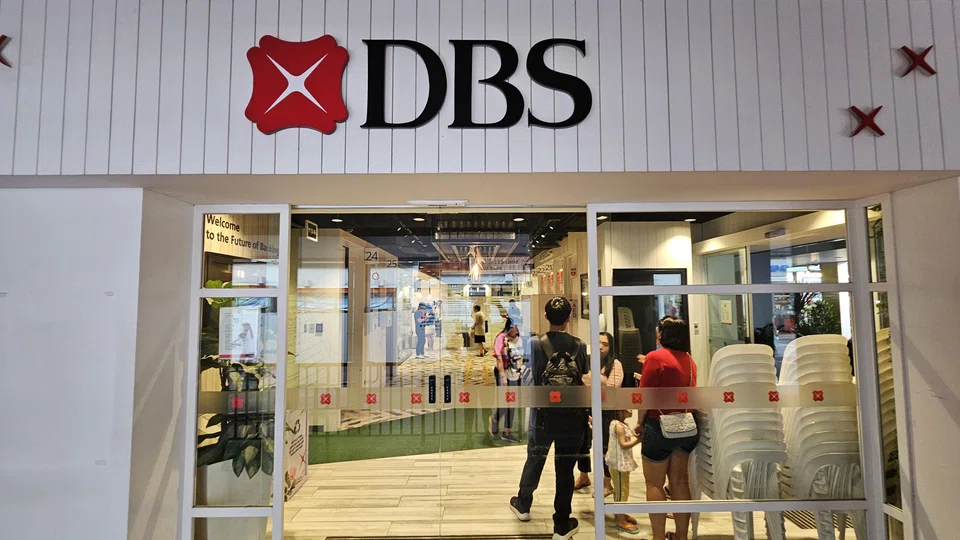
SINGAPORE’S largest lender, DBS, is expecting a return on equity “north of 17 per cent” next year, with an emphasis on strengthening its infrastructure to withstand future shocks, said its chief executive Piyush Gupta in its third quarter earnings briefing on Monday (Nov 6).
This comes after the bank experienced at least five outages this year – the most recent one lasting up to 12 hours.
The bank has since committed to improve its technology infrastructure. This includes tightening the process on quality assurance on every software before it is put into production, more comprehensive chaos testing and better system recovery.
Referring to the recent outage incidents, Gupta said the bank was already in the process of hiring more talent to solve some of its problems, which admittedly required a dive deep within its technology system.
Such a process, however, would take time, he added.
“Hopefully, by the end of the first quarter, we should be able to make a far more robust recovery pathway to be able to get back,” the CEO said, adding that DBS had already identified “critical applications” and where relevant, was building a warm standby system to recover its services in the event of digital disruptions.
Last week, the Monetary Authority of Singapore barred DBS from acquiring new businesses for six months to ensure it focuses on shoring up its digital banking services. It will also not be allowed to reduce the number of its branches and ATMs.
Responding to queries on this, Gupta said the bank did not have any mergers and acquisitions or new business venture plans, and hence will not see a direct impact from the measures.
The bank is also not allowed to make non-essential IT changes during this period, and will hence have to delay rolling out some new products and services to focus on “building resiliency”.
On Monday, DBS posted a 16 per cent increase in net profit to S$2.59 billion for the third quarter ended September.
Excluding one-off costs of S$40 million accrued from acquiring Citigroup’s Taiwan consumer banking business, net profit in Q3 would have reached S$2.63 billion.
This was largely driven by an expansion in its commercial book income, which rose 19 per cent to S$5.02 billion, offset by a decline in its treasury markets business, where income fell 38 per cent to S$166 million.
Total net interest income, including treasury markets, was up about 16 per cent to S$3.5 billion, compared with S$3 billion in the previous Q3. DBS’ commercial book net interest income grew 23 per cent to S$3.7 billion, from nearly S$3 billion a year ago, while treasury markets’ net interest losses were S$180 million, a reversal from the net interest income of S$31 million in Q3 2022.
Excluding the one-time item, net interest margin (NIM) at the group level stood at 2.19 per cent, up from 1.9 per cent in Q3 last year.
Other non-interest income rose 20.7 per cent from a year earlier and the previous quarter to S$845 million from higher treasury customer sales and higher treasury markets non-interest income.
DBS’ net fee and commission income remained strong, expanding 9 per cent year on year to S$843 million in Q3.
Specific allowances for expected credit losses rose almost eight times from a year ago to S$197 million, or 18 basis points of loans.
DBS said the increase in S$80 million of allowances was “prudently taken for exposures linked to a recent money laundering case in Singapore”.
At the earnings briefing, Gupta revealed that the bank had already filed suspicious transaction reports with regard to the money laundering cases, and that its exposure to the companies linked to the investigation was “a tad bit below S$100 million”.
However, this was unlikely to affect money flows into Singapore and the region, he added.
Meanwhile, DBS’ non-performing loan ratio was little changed at 1.2 per cent.
Looking ahead, it expects loan growth to remain challenging if interest rates continue to stay elevated.
On the quarter, loans grew 1 per cent, or S$5 billion in constant currency terms to S$420 billion – S$10 billion of which was contributed by Citi Taiwan.
Gupta said the bank could experience a loan growth of between 2 per cent to 3 per cent, though the figures will only be confirmed at the year-end.
For Q3, DBS declared a dividend of S$0.48 per share, up from the S$0.36 in the previous Q3. This brings the total dividend for the three quarters ended Sep 30 to S$1.38 per share.
Shares in DBS finished up 1.4 per cent, or S$0.46 at S$33.75 on Monday.