DBS sees non-performing assets picking up in 2021; Q3 profit exceeds expectations
Hit by lower net interest income, net profit falls 20% to S$1.3 billion, above market estimates of S$1.17 billion
Singapore
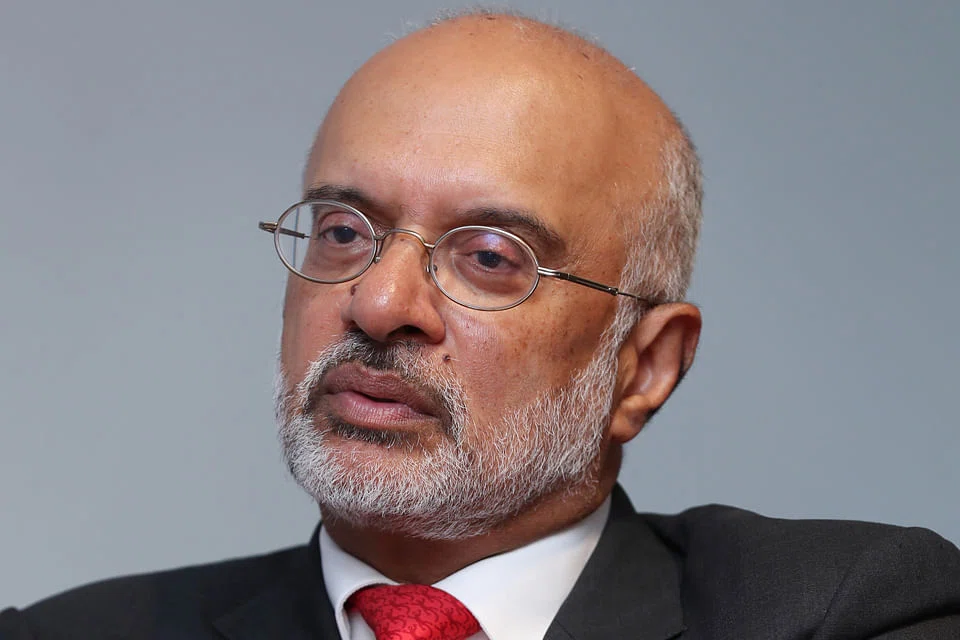
DBS chief executive Piyush Gupta said that the bank is seeing "some episodic corporate stress" in its portfolio, with non-performing asset (NPA) formation to pick up as government relief moratoriums expire in 2021.
In its third quarter results briefing, he told the media that there seems to be "no pattern" to the rise in new corporate NPAs in the third quarter, with no specific country or industry dominating.
These NPAs come from a handful of clients, ranging from consumer goods companies in China to a state-owned enterprise in Indonesia, but with no one big item compared with Q1, said Mr Gupta.
DBS' new NPAs under the corporate segment rose to S$543 million in Q3, up from S$115 million in the previous quarter.
"With the amount of demand destruction that the world has seen this year, it is not unreasonable to expect that there will be some companies which will be in distress," he said. "My expectation is that as the government relief programmes start winding down, you will see NPA formation increase next year."
He added that it is still hard to estimate the potential rates of default at this point, which could be anywhere between 10 and 20 per cent of its SME loans under moratorium. DBS has about 5 per cent of its loans under moratorium - the lowest among the three banks.
However, DBS will still maintain its guidance for total allowances of S$3 billion to S$5 billion, with a large chunk of it conservatively set aside to fortify the balance sheet against macroeconomic risks.
In its third quarter results, Southeast Asia's largest lender by assets saw its net profit fall 20 per cent to S$1.3 billion, hit by lower net interest income.
This still came above market estimates of S$1.17 billion from four analysts, according to Refinitiv data.
Over the quarter, however, net profit was up 4 per cent.
On a year on year basis, total income was down 6 per cent to S$3.58 billion, with both net interest income and fee income hurt, while trading income rose.
For the third quarter, total allowances more than doubled from a year ago to S$554 million. Meanwhile, its non-performing loans (NPL) ratio ticked up marginally to 1.6 per cent, from 1.5 per cent a year ago.
Third-quarter net interest income declined 12 per cent from a year ago to S$2.17 billion, given the fall in short-term interest rates. Net interest margin (NIM) - a key profitability indicator for banks - fell from 1.90 to 1.53 per cent as the impact of global interest rate cuts in March and April was more fully felt.
Net fee and commission income also fell by 2 per cent to S$798 million from a year ago, but it was a 17 per cent jump on a quarter-on-quarter basis. This comes as wealth management fees and card fees jumped by 25 per cent and 22 per cent respectively, as sales of investment and insurance products increased with improved market sentiment in a low interest rate environment and consumer spending picked up from the easing of lockdowns.
Non-interest income went up 11 per cent to S$608 million, partly as profits were realised on investment securities, which had appreciated with lower interest rates.
Third-quarter common equity tier-one ratio (CET-1 ratio) stood at 13.9 per cent, up a notch from 13.8 per cent a year ago. The ratio, which refers to a bank's core equity capital against its risk-weighted assets, is comfortably above regulatory requirements and expected to remain within DBS' target range of 12.5 to 13.5 per cent.
The board declared a third-quarter dividend of 18 cents per share, and will also apply its scrip dividend scheme. This is in line with guidance from the Monetary Authority of Singapore (MAS) for local banks to moderate dividends for FY20. Dividends were unchanged from Q2.
During the briefing, Mr Gupta said that the lender will continue to be guided by MAS on the issue of dividends, but it is expecting to get dividends "back up to where we were".
It won't raise dividends in "one fell swoop", but he said that DBS has the capacity to pay more dividends than what it is paying right now. Prior to MAS' guidance, DBS had kept its quarterly dividend payout at 33 Singapore cents per share in the first quarter.
In the year ahead, Mr Gupta is expecting strong economic rebound in Asia, with loan growth of mid-single digits and double-digit fee income growth. This would partially offset the impact of lower NIM, he added.
With the worst not yet over for NIM and the impact on interest income, the bank will have to rely on fee income and other types of income to make up for it, he said.
On the other hand, most of the provisions have already been taken this year - S$2.5 billion so far - with the amount next year expected to go down, added Mr Gupta.
DBS' shares ended at S$22.43 on Thursday, up 88 cents or 4.1 per cent.
READ MORE: