Delisting not on the cards for Wing Tai

Chairman says the group wouldn't go that way to avoid QC rules, calls for the rules to be lifted

Kalpana Rashiwala
Kalpana Rashiwala

Published Thu, Jul 17, 2014 · 10:00 PM

    WING Tai Holdings will not be doing an SC Global. It won't take the delisting route, declares chairman Cheng Wai Keung, as a way out from rules requiring the company to dispose of all units in its high-end residential projects here within two years of completion.

    He also called on the authorities to lift this condition, which is stipulated under the Qualifying Certificate (QC) that foreign housing developers need to obtain when they buy a residential site from private-sector sources. After all, the government has given such reprieve to developers in the past amid external shocks that rocked Singapore's property market, he argued.

    The Cheng family owns slightly more than 50 per cent of mainboard-listed Wing Tai which, like many other developers, is stuck with unsold units in high-end residential projects developed on sites bought at high prices before the 2008 global crisis.


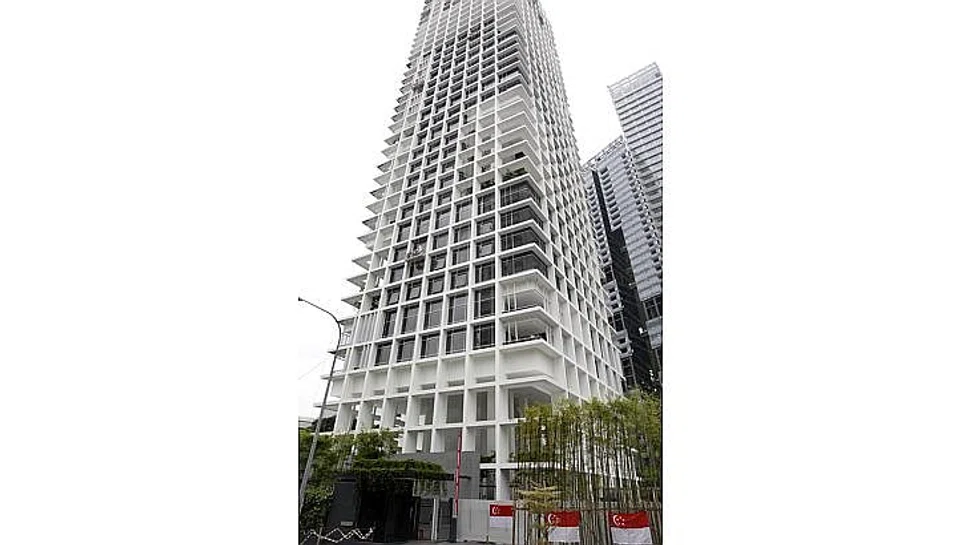
    Wing Tai has sold only three of the 43 units at Le Nouvel Ardmore. The freehold project received Temporary Occupation Permit (TOP) in April and hence Wing Tai has up till April 2016 to finish selling the project.

    Next door, at the 156-unit Nouvel 18 - an equal joint venture with listed City Developments - sales have not even begun. Under the QC for that project, TOP must be obtained by Dec 17 this year, which means the partners have until late-2016 to finish selling the project.

    Under the Residential Property Act, a foreign company, defined as one that has even a single non-Singaporean shareholder and/or director, has to get a QC from the Land Dealings (Approval) Unit or LDAU before it may buy a private residential site. All listed property developers are deemed foreign companies.

    Under the QC conditions, the developer is given five years to complete construction of the project and obtain TOP, and is required to finish selling all units within two years of the TOP date. The rule is aimed at preventing foreign developers from hoarding or speculating in residential land in Singapore.

    Since January 2011, a developer that wants extra time on either of these two deadlines has to pay extension charges - set at per annum rates of 8, 16 and 24 per cent of the site's purchase price for the first, second and third/subsequent years of extension, respectively. For the two-year deadline to finish selling the project, the extension charges are pro-rated based on the proportion of unsold units.

    Sites bought from the Government Land Sales (GLS) programme do not require QC.

    Many listed developers who picked up residential land from private-sector sources, typically collective sales, in the upmarket districts before the 2008 global crisis are now stuck with unsold units in the projects on those sites.

    One option would be for the developer to be privatised and delisted (with no foreign shareholding or directors) before making an application to the LDAU to obtain a clearance certificate, followed by a further application to cancel the QC. This is what luxury developer Simon Cheong did for SC Global Developments last year.

    "I am not considering that option," said Mr Cheng, when asked by BT recently. He indicated that he was pursuing other courses of action but declined to say what they were. Market watchers say that other than the privatisation route, another avenue available to a listed developer in such a situation, to fulfil QC conditions, would be to do a bulk sale of all unsold units in a project. The buyer could be an internal party (such as a subsidiary or entities controlled by the family of the controlling shareholder) or an external party.

    A point to note, however, is that the transaction would be subject to prevailing taxes such as the 15 per cent additional buyer's stamp duty (ABSD) imposed on residential property purchases by corporates. In addition, the new owner will be subject to seller's stamp duty (SSD) if it decides to offload the properties within four years of purchase; SSDs of 16, 12, 8 or 4 per cent have to be paid for properties sold in the first, second, third and fourth years, respectively, of purchase.

    Mr Cheng called on the authorities to lift the QC rule on the two-year disposal period, "which the government has done in the past when there were external circumstances or external shocks affecting the industry".

    Doing so will "mitigate the distortions caused by the cooling measures to the property market", he reasoned.

    "Now that we have curbed excessive foreign hot money (with the 15 per cent top tier rate ABSD on foreigners), weeded out speculative demand (with SSD) and set up the total debt servicing ratio (TDSR) framework for responsible financial borrowing for Singaporeans, it is timely for the government to make a positive intervention to moderate their policies to allow for an orderly resumption of market forces.

    "As excessive demand has been removed, a concession or reprieve to the two-year disposal period under QC rules will not undermine the effectiveness of the ABSD and TDSR."