Deliveroo riders not entitled to collective bargaining, top UK court rules
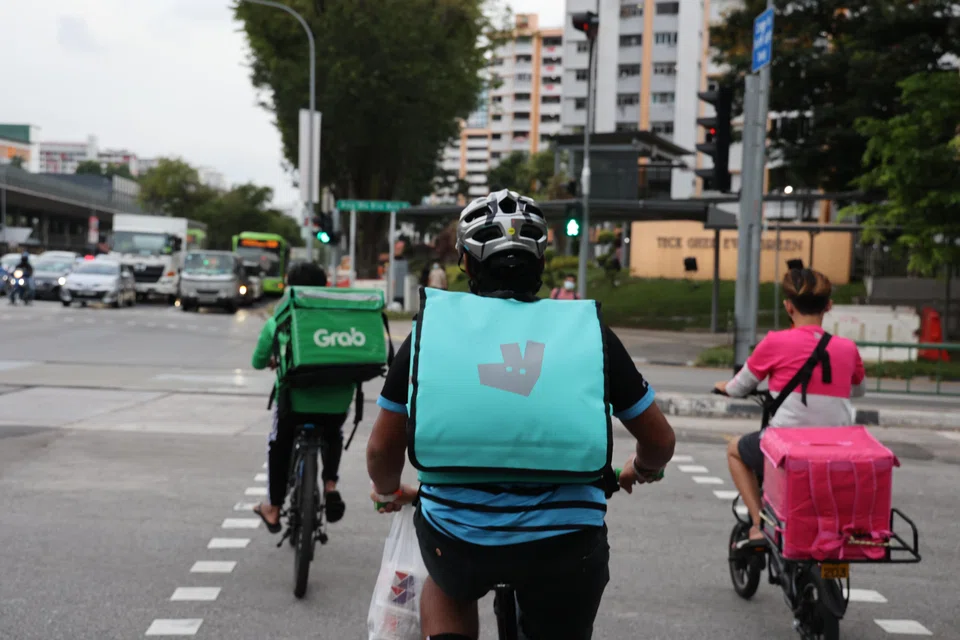
FOOD delivery firm Deliveroo’s riders cannot be represented by a trade union for the purposes of collective bargaining, the United Kingdom’s Supreme Court ruled on Tuesday (Nov 21).
The Independent Workers Union of Great Britain (IWGB) had tried to represent a group of Deliveroo riders in order to negotiate pay and conditions with the company.
The union was first refused permission in 2017, on the basis that riders were not “workers” under UK labour law, and it has since mounted a number of appeals.
The IWGB took its case to the UK’s highest court in April, arguing that it was an unlawful interference with riders’ human rights to deny the IWGB’s application to be recognised by Deliveroo for collective bargaining.
But the Supreme Court unanimously dismissed the IWGB’s appeal in a ruling on Tuesday.
Announcing the court’s decision, Judge Vivien Rose said Deliveroo riders do not have an “employment relationship” with Deliveroo and were thus not entitled to compulsory collective bargaining.
The Supreme Court said in its written ruling that Deliveroo riders could appoint a substitute to undertake a delivery, can work for competitors, do not have to work specific hours or even carry out any deliveries at all.
These features of the relationship between Deliveroo and its riders are “fundamentally inconsistent with any notion of an employment relationship”.
A Deliveroo spokesperson said: “UK courts repeatedly and at every level have confirmed that Deliveroo riders are self-employed, and this now includes the Supreme Court, the highest court in the country. This is a positive judgment for Deliveroo riders, who value the flexibility that self-employed work offers.”

Colin Leckey, a lawyer at Lewis Silkin who represented Deliveroo, said the decision provided certainty for platform-economy companies with highly flexible operating models in which individuals have genuine freedom about whether and when to work.
“Whether such persons are ‘workers’ under domestic law had long since been resolved in Deliveroo’s favour, and now arguments based on human rights law have been finally decided for the company as well,” he said.
The IWGB said in a statement that the ruling was disappointing and it was considering its options.
The union added: “Whether reflected in legislation or not, couriers are joining the union in ever bigger numbers and building our collective power to take action and hold companies like Deliveroo to account.
“Our strength lies not in court rulings, but in our unity as a workforce coming together to demand change.”
Decoding Asia newsletter: your guide to navigating Asia in a new global order. Sign up here to get Decoding Asia newsletter. Delivered to your inbox. Free.
Share with us your feedback on BT's products and services