

A digital dollar is for banks and governments, but not you
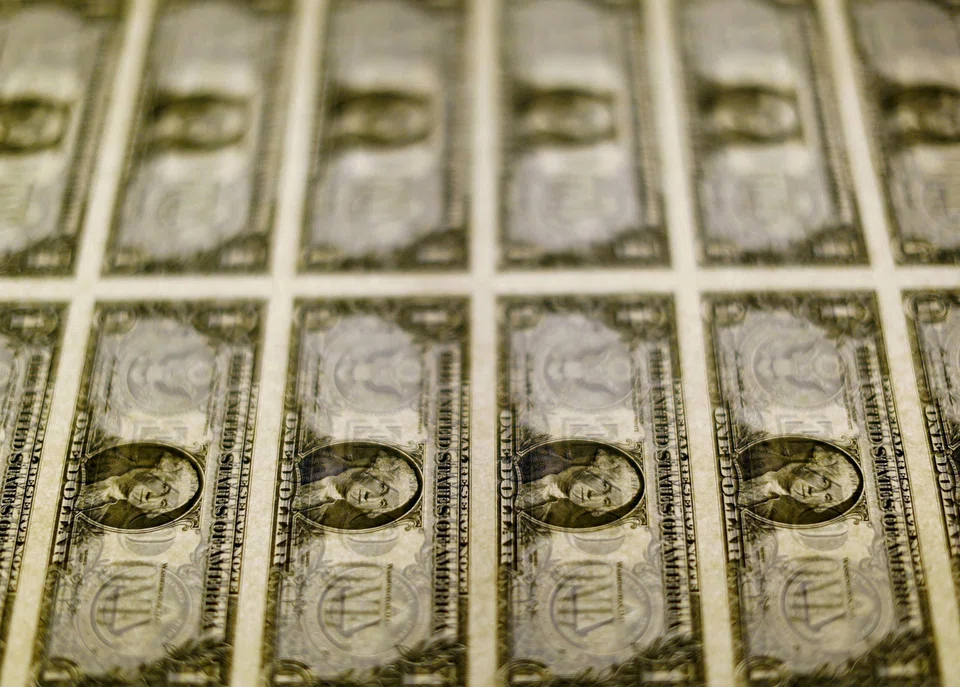
ALMOST nobody talks about digital dollars any more. Just a couple of years ago, as cryptocurrency was peaking and China was experimenting with a virtual version of the yuan, Washington was abuzz with the idea that the Federal Reserve could create America’s own digital currency.
Enthusiasm faded as people began to hash out the details. Although in theory digital US dollars could provide wider access to the financial system, in practice using them would require a smartphone and a banking relationship, which some low-income people lack. Banks complained that giving consumers a safe way to store electronic cash could lead to a drain on deposits, potentially undermining their stability during a financial scare. Politicians raised fears of government surveillance of retail transactions. And, of course, the crypto crash happened – digital money lost its glamour. “The promise of financial inclusion is still there, but the hype got ahead of reality,” says J Christopher Giancarlo, a former chairman of the Commodity Futures Trading Commission and co-founder of the Digital Dollar Foundation, a non-profit advocacy group.
Still, the idea isn’t dead. While you may never spend a digital US dollar yourself, a technological leap may be coming for the money that moves among central banks and big financial institutions. Think of it as a wholesale digital US dollar. A group of researchers from the New York Fed and a handful of top banks have been experimenting with simulated digital payments. They’ve shown it’s possible to use blockchain-like technology to zip money almost instantly around the world 24 hours a day, 365 days a year.
In one sense, these US dollars already are digital. Big money isn’t held in the form of paper bills; it’s simply an account entry at a bank, and moving it is a matter of changing the entries on a computer. But cross-border transfers can sometimes be painfully slow. Each one involves recording parallel changes in at least three, and frequently more, entirely segregated databases – those belonging to two banks and the Fed. This necessitates a series of messages requesting and confirming every step as assets are handed from party to party.
Although many international transfers settle within minutes, they screech to a halt on weekends and when there’s a holiday in any involved country. Transfers to and from small countries usually take longer, because local banks often must work through larger banks, frequently in separate countries, that hold accounts at the Fed. The more intermediaries and countries involved, the more likely the transaction will be delayed, sometimes for days, and the more chance for error.
That represents an opening for countries keen to loosen the greenback’s dominance in international payments. About half of global trade is invoiced in US dollars – and the US dollar’s top-dog status makes US borrowing cheaper and helps keep the currency stable. It also aids the enforcement of economic sanctions, since US dollar transactions ultimately flow through US-regulated banks.
Efforts to speed up global payments include Project mBridge, an experiment involving the People’s Bank of China and the central banks of Hong Kong, the United Arab Emirates and Thailand. The most advanced project of its kind, it’s testing ways to handle transfers and foreign exchange transactions in multiple digitised currencies. “Wholesale payments are cross-border,” says Josh Lipsky, senior director of the Atlantic Council’s GeoEconomics Center in Washington. “If you’re truly concerned about the role of the dollar in the world, the project you should be focusing more on is actually the wholesale project, not the retail project.”
One way to smooth wholesale transactions would be to “tokenise” US dollars that commercial banks keep on deposit at the central bank, turning them into Bitcoin-like digital packets, but without the anonymity that makes crypto so popular for illicit trade. The New York Fed researchers, as part of an initiative called Project Cedar, have already used tokenised reserves in a simulated foreign exchange transaction with Singapore’s central bank, according to a report issued in May.
Tokenisation allows ownership of an asset, and information attached to it, to be transferred securely across cyberspace. Tokenising central bank reserves is important because that’s where US dollar transfers between banks settle, when a central bank debits one bank’s account and credits another’s. Separately, the Fed’s experts have been working with specialists from large financial institutions on building a shared digital ledger connecting the Fed and banks. The idea is to create a network where all the steps in a transaction, down to the changes in customer accounts, could be recorded all at once.
Being able to move dollars within seconds, while reducing risk of settlement errors, is attractive for businesses that move large amounts of money internationally. Corporate treasurers at multinational companies would also have significantly greater ability to pool and invest idle cash or move money among subsidiaries around the globe.
Few believe the US dollar will be toppled by another country’s digitised money anytime soon. Even if China had both retail and wholesale versions of a digital yuan, coupled with an international payments platform, it wouldn’t match the key attractions of the US dollar: America’s open and liquid capital markets, its robust economy, the credibility of its central bank and its relatively stable laws. “I’m not worried about China at all, because China’s ability to make the yuan a globally important currency rests on much more profound criteria,” says Darrell Duffie, a Stanford University finance professor. But he also says it’s worth taking steps now to avoid a slow erosion of the US dollar’s primacy. “That’s a huge advantage to give up,” Duffie says. “Even if you’re only giving it up gradually over two or three decades.”
So far, the US is moving cautiously. A Treasury Department official, speaking on the condition of anonymity because they weren’t authorised to discuss the issue publicly, says only that the department is following research efforts closely. At the White House, another official who asked not to be named says National Economic Council Director Lael Brainard isn’t devoting serious attention to the topic and has no position on a potential digital currency, despite her focus on the issue when she was a governor at the Fed before leaving in February.
That’s viewed with some scepticism outside the administration. While at the Fed, Brainard made it clear that Washington wants a seat at the table when nations work out how to modernise payment networks. “It’s very important for us to be involved in standard setting in cross-border transactions,” she told the House Financial Services Committee in May 2022. “Our ability to shape those standards will be influenced by whether or not we actually have a digital offering.”
Decoding Asia newsletter: your guide to navigating Asia in a new global order. Sign up here to get Decoding Asia newsletter. Delivered to your inbox. Free.
Share with us your feedback on BT's products and services
TRENDING NOW

Temasek’s Wan Chee Foong to helm PIL, Lars Kastrup to be board adviser

Chagee, Mixue and Luckin won the market. Sustaining their edge is the harder part

He built the Vingroup empire. Now South-east Asia’s richest man is handing some key roles to his sons

One-third of Singapore-listed firms at risk in severe AI downturn: MAS

