Digital exchanges nipping at the heels of slow-to-evolve players

Six Group sees the digitalisation of capital markets entering the mainstream for the good of companies and investors

Claudia Tan HS
Published Thu, Nov 18, 2021 · 09:50 PM

    Singapore

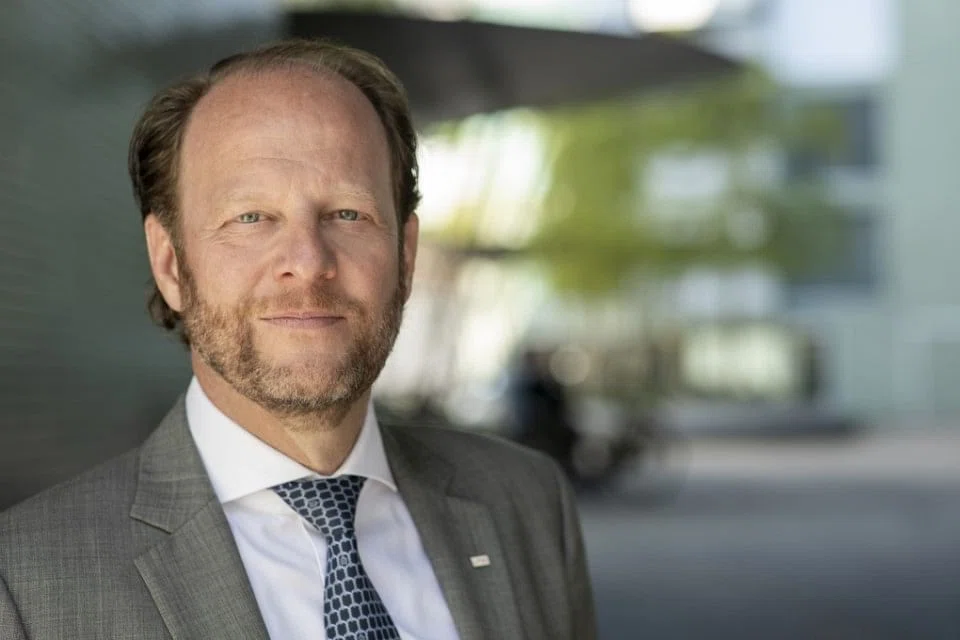
    TRADITIONAL exchanges should brace themselves for stiffer competition, given the emergence of a growing number of regulated digital players that are set to make a wider range of assets tradable, Jos Dijsselhof, the chief executive of the Swiss stock exchange operator Six Group, has said.

    Using distributed ledger technology, digital securities exchanges enable quicker, cost-effective transactions, while also paving the way for access to alternative assets, which may otherwise be available only to financial institutions or ultra-high-net-worth investors.


    The technology will also widen fund-raising opportunities, with lower listing requirements on digital exchanges, said Dijsselhof in a recent interview with The Business Times.

    In September, Six Group had obtained the necessary licences for Six Digital Exchange (SDX) - an integrated trading, settlement and custody infrastructure for digital assets.

    Despite lower barriers to entry for both investors and issuers, it does not mean compromising on regulation, said Dijsselhof.

    There is always going to be a balance between making the market accessible on the one hand, and ensuring that investors are properly protected on the other.

    The flexibility that digital exchanges offer will sharpen the competition which slow-to-evolve incumbent players will have to contend with, he said.

    For instance, streamlined processes and fewer listing requirements on digital exchanges mean that smaller companies can be brought to the market, "so we hope we are not only attracting bigger companies, but can also create a segment around small and medium-sized enterprises", he said.

    Traditional exchanges should therefore boost their tech-enabled platforms to stay ahead of the game. This includes investing in technology such as blockchain, tokenisation and artificial intelligence, among others, said Dijsselhof.

    "In Switzerland, our view was very clear - and it was that we'd rather compete with ourselves than have somebody else compete with our existing business. And that's why we've made the choice to make these investments."

    Even ahead of the rush towards digital assets amid the pandemic, he and his team at Six Group had - as early as in 2018 - recognised the potential of tapping the existing regulatory framework to bring a digital exchange to market.

    "We were convinced that there would be other players who would try to set up business outside the regulations. But at some point, regulators and others will have to step in and force these exchanges to be more regulated," he said.

    There are opportunities to create new products and to potentially tokenise existing ones, he said.

    Eventually, there is also the possibility of moving existing exchanges onto the digital exchange, he added.

    Interest in digital assets, particularly cryptocurrency, surged during the pandemic.

    "There's a lot of money going into these cryptocurrencies which is not traceable," he noted, adding that investors do not have to disclose the sources of their money or the kind of assets they are invested in.

    This gap in regulation has therefore spurred more local and regional players to offer new and trusted platforms to own and trade in digital securities.

    With a growing focus on the need to regulate digital securities, there are opportunities for regulated platforms to take up a bigger share of the market, said Dijsselhof.

    Indeed, as the digitalisation of capital markets is being pushed into the mainstream, authorities across the world are beginning to formalise regulatory frameworks for financial institutions and exchanges to offer digital securities.

    Asia, for instance, is emerging as a trading hub for digital securities.

    In a bid to target the growing demand for public and private institutional digital assets, SDX has partnered Japanese digital financial company SBI Digital Asset Holdings to create a Singapore-based exchange for digital assets.

    It has applied to the Monetary Authority of Singapore (MAS) for a licence to go live next year.

    Others have also hopped on the bandwagon in a bid to capture a slice of the growing market.

    Singapore Exchange-backed ADDX (formerly known as iSTOX), a Singapore-based private platform operated by local company ICHX Tech, allows traders to invest in private markets such as hedge funds and pre-IPO companies. Earlier this month, ADDX launched its first cryptocurrency product for its accredited investors.

    Singapore's largest bank, DBS, last year launched a digital exchange, which includes a cryptocurrency trading platform.

    Even as the marketplace becomes increasingly crowded, Dijsselhof said that there is "a very good ecosystem" in Singapore, with support from the MAS and customers.

    Asian customers are quick to adopt new technology and new ways of working, he added.

    Given that Six already has operations in Singapore, he said he believed the city-state to be the best place to launch an Asian digital exchange.

    As financial markets continue to evolve, a lot more can be done with automation and blockchain technology, such as in the area of labour-intensive and complex corporate actions, he said.

    "Now many banks and institutions have big teams to deal with corporate actions. If we have that all properly defined in smart contracts, a lot of the administrative tasks and the communication between the different stakeholders can actually be done with blockchain in a much more efficient way."