Disgruntled ARA Logos unitholders should vote
Reit mergers are driven by property market dynamics and shifting priorites of real estate groups rather than the pursuit of size

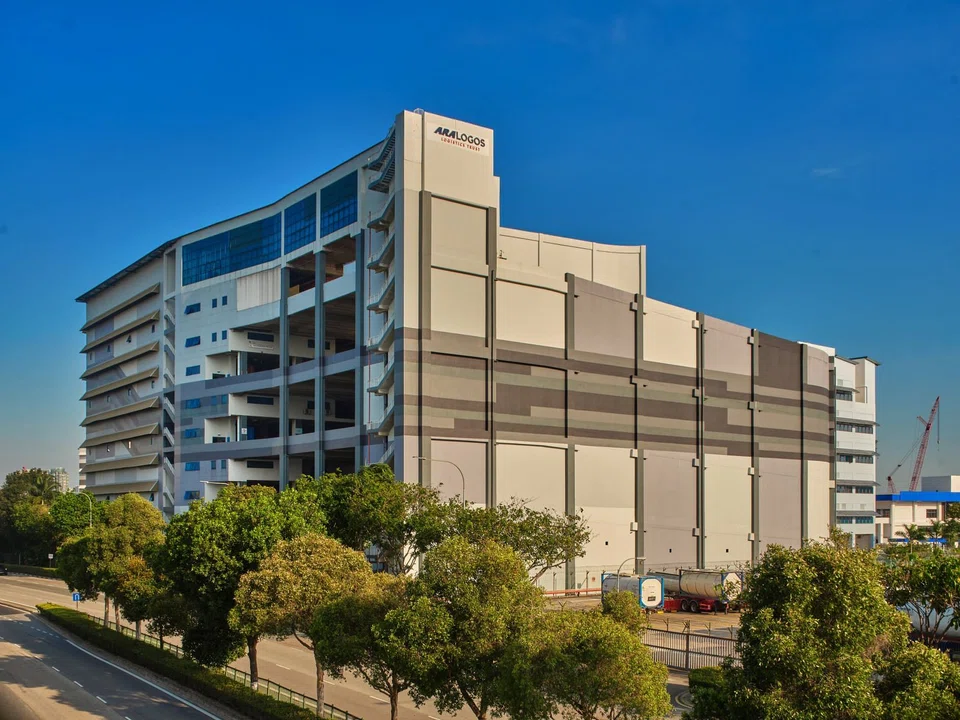
SOME readers of The Business Times took umbrage at this column's suggestion a fortnight ago that minority unitholders of ARA Logos Logistics Trust might choose to support its proposed merger with ESR-Reit.
The point I was making was that once ESR Cayman acquires ARA Asset Management, there is likely to be uncertainty as to which of the two real estate investment trusts (Reits) will benefit from the asset pipeline of their combined parent group. A merger of ARA Logos and ESR-Reit would negate this issue of their overlapping mandates.
The problem is that the terms of the proposed merger obviously favour unitholders of ESR-Reit over unitholders of ARA Logos. Indeed, the merger announcement on Oct 15 immediately triggered a sell-off in ARA Logos versus ESR-Reit.
Moreover, while ARA Logos is smaller than ESR-Reit, it has a higher concentration of in-demand logistics properties and its units are trading at higher valuations. It is arguably in a better position than ESR-Reit to grow by issuing new units and acquiring assets.
The blowback this column received from readers was a reminder to me that the market is driven by return-maximising self-interest. Achieving some greater good is fine as long as it is somebody else who is getting the short end of the stick.
But investors should consider the big picture in order to see through the self-serving narratives surrounding Reit mergers, and gain an understanding of why these deals are happening.
Is bigger better?
Every Reit merger proposal over the last couple of years has sidestepped complaints of unfairness by emphasising the notion that bigger is better; and that all unitholders will share the spoils of the combined entity's heft.
It's a brilliant justification, because it's true. A Reit merger, by definition, creates a larger Reit with a more diverse property portfolio that offers more opportunity for active management. Larger Reits also tend to have more options when it comes to capital raising, especially on the debt front.
Yet increased size does not guarantee immediate outperformance, which makes it possible to explain away poor returns after the mergers are concluded.
Take the merger of CapitaLand Mall Trust (CMT) and CapitaLand Commercial Trust (CCT).
Since the deal was announced in January 2020, CMT - which is now called CapitaLand Integrated Commercial Trust (CICT) - has delivered a total return of minus 10 per cent (up to end-October 2021). The FTSE ST Reit Index returned minus 0.7 per cent over the same period.
This relatively poor performance was obviously due to the pandemic, which was especially hard on owners of retail properties - so much for the benefits of CICT's bigger and more diverse portfolio.
In another case: ESR-Reit has delivered a total return of 17.2 per cent since its merger with Viva Industrial Trust was announced in May 2018.
During the same period, the FTSE ST Reit Index returned 28.8 per cent. Sector leaders Ascendas Reit, Mapletree Industrial Trust (MINT) and Mapletree Logistics Trust (MLT) returned 40.2 per cent, 65.8 per cent and 94 per cent, respectively.
The manager of ESR-Reit recently told me Ascendas Reit, MINT and MLT performed better probably because they were bigger, linked to Temasek Holdings, and held a higher proportion of freehold assets - all of which has helped them garner a stronger investor base and raise funds more easily.
One Reit that has done well post-merger is Frasers Logistics & Commercial Trust (FLCT). Originally known as Frasers Logistics & Industrial Trust (FLT), it announced plans to merge with Frasers Commercial Trust (FCOT) in December 2019.
Since then it has delivered a total return of 35.6 per cent, far outpacing the FTSE ST Reit Index's total return of 3 per cent. It also outperformed Ascendas Reit, MINT and MLT, which returned 12.5 per cent, 18.8 per cent and 28.3 per cent, respectively.
Shifting priorities
In my view, the real driver of Reit mergers is not the pursuit of size but the dynamics of the commercial property market and the shifting priorities of the real estate groups behind the Reits.
For example, the merger of CMT and CCT took place against the backdrop of the CapitaLand group trying to downplay its exposure to retail property and garner a better market valuation for itself.
Just before combining CMT and CCT, CapitaLand acquired Ascendas Singbridge to gain exposure to logistics properties and business parks. It has since restructured itself into a real estate investment manager and renamed itself CapitaLand Investment.
Some investors will also remember that when FCOT was listed in 2006 it was known as Allco Commercial Reit and belonged to Australia's Allco Finance Group. In the wake of the Global Financial Crisis, Fraser and Neave (F&N) bought the Reit's manager as well as a stake in the Reit.
F&N was then itself taken over by vehicles controlled by Thai billionaire Charoen Sirivadhanabhakdi. The group's property arm was then spun out, and it went on to acquire Australand. FLT was listed in 2016.
Given all these changes, it is perhaps no wonder that a decision was taken to merge the legacy FCOT with its newer sister Reit.
As for the soon-to-be enlarged ESR Cayman group, the three Singapore-listed Reits under its umbrella - ARA Logos, ESR-Reit and Sabana Industrial Reit - were all once linked to other corporate groups.
ESR-Reit was once known as Cambridge Industrial Trust, while ARA Logos was originally known as Cache Logistics Trust.
Unitholders should vote
If the bigger-is-better rationale for Reit mergers is just an eyewash, and their real purpose is to enable Reit sponsors to reposition themselves, investors should be all the more concerned about whether their interests are adequately protected.
Unfortunately, the crucial protections investors rely upon in these situations are sometimes ineffective.
This column has previously pointed out that the board of Sabana Reit's manager - which consisted entirely of independent directors (IDs) - recommended a merger with ESR-Reit last year on terms that would have valued Sabana Reit at significant discount to its book value.
Independent financial advisers (IFAs) appointed to advise IDs are also constrained by terms of reference that might prevent them from fully examining the pros and cons of a merger proposal.
Minority investors would benefit from greater regulatory scrutiny of the independence of IDs, and the work of IFAs. Some investors would also like to see it become easier in practical terms to change the manager of a Reit.
For now, however, minority unitholders should protect their interests by taking every opportunity to vote.
Dissident unitholders of Sabana Reit managed to scupper its proposed merger with ESR-Reit by voting against the resolution to amend the Reit's trust deed, a crucial part of the merger process that required 75 per cent support to pass.
Just over 576.2 million units were voted on that resolution, out of a total outstanding 1,053.1 million units. Almost 384.2 million units voted in favour, and almost 192 million voted against. In effect, it only took 18.2 per cent of Sabana Reit's outstanding units to block the deal.
Could this happen at ARA Logos?
Its sponsor and manager currently hold less than 13 per cent of its units. Ivanhoe Cambridge Asia, which has provided an undertaking to support the merger, holds a further 8.7 per cent of the Reit.
It is also worth noting that participation at the Reit's last AGM was relatively low - less than 29 per cent of its units were voted on the first three resolutions.
All things considered, it might not take that much for unitholders of ARA Logos to sink the merger.
If they are really convinced that the merger is worse than ARA Logos and ESR-Reit having overlapping mandates, they should stop complaining and rally one another to vote.