

Diversification, the Midas curse
Midas Holdings, maker of aluminium products and train car bodies, is paying a price in its desire for new revenue sources
TO understand China's Old Economy problems, one just needs to examine the S-chips in Singapore's backyard.
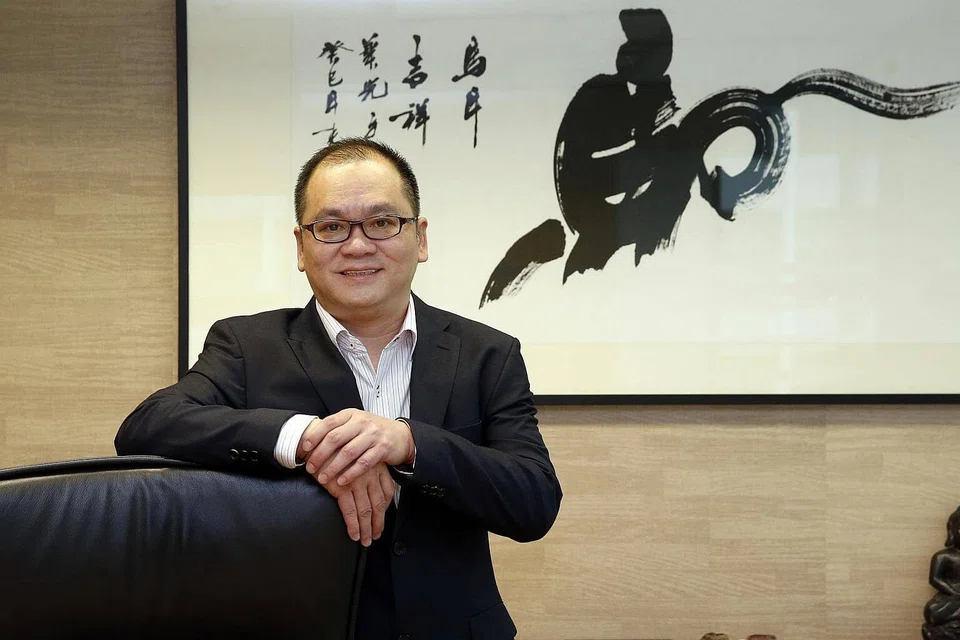
The latest company falling foul of investor patience is Midas Holdings, a train car body maker founded in 2000 by Patrick Chew, a Singaporean businessman with a rags-to-riches story, and a Chinese partner, Chen Wei Ping.
Shares have slumped a third in just a few weeks to S$0.14 a share, a historic low. The company is now trading at just one-third of book value, at a historical earnings multiple of under 10 times.
What alarms investors, it seems, is firstly how receivables keep piling up and debt costs continue to bite, even while revenue and profit growth are failing to keep up.
The fundamentals have deteriorated markedly in the past five years even as Midas spent billions of yuan to diversify its revenue sources and expand its capacity.
Annual revenues might now be on track for more than three billion yuan (S$610 million) next year, up 200 per cent from a billion yuan in 2010. But receivables have gone up almost 400 per cent, and total debt is up more than 500 per cent.
Meanwhile, net profits haven't recovered to the 2007 to 2011 average of 185 million yuan, before a deadly train crash in the suburbs of Wenzhou city in 2011 threw the train industry into a slump.
Working capital statistics compiled from Bloomberg also tell a similar story. From 2002 all the way to 2010, receivables were getting collected within four months. Inventories were also getting sold within two months.
In 2016, it took more than nine months for Midas to collect the debts that its customers owed it. And it now takes more than six months to sell its inventories.
Disappointing
The problem is in how investors have been led to believe that Midas' diversification attempts will bear fruit, while the results are yet to be seen.
After the Wenzhou crash, Midas invested in capacity to make aluminium plates and sheets for the automobile, shipbuilding and aviation industries, on top of expanding capacity for its core business.
But it's been six long years, commercial production for the plates and sheets business keeps getting pushed back. The group has not recorded revenue on that front yet.
The diversification process was supposed to have been given another fillip in 2016 after Mr Chen, the executive chairman, injected into Midas an aluminium products manufacturer he partially owned, the Huicheng group. Minorities were diluted as a result of the all-share deal, which had valued Huicheng at 1.2 billion yuan, 1.5 times its net assets.
To make such an acquisition worthwhile for minorities, Huicheng probably needed to make at least 120 million yuan of net profit a year in the medium term.
Indeed, there was a 2016 net profit target of 80 million yuan for Huicheng. As it turned out, Huicheng made a "clean" net profit of 65 million yuan on revenues of 409 million yuan, an impressive net profit margin of 16 per cent. That netted Mr Chen a good chunk of new Midas shares as was agreed upon in the deal.
But in 2017, Huicheng's profits and margins are slumping, even while its revenues appear to be stagnant. Half-year profit before tax for the stretched plates division was 24.6 million yuan, on revenues of 186 million yuan. Net out 25 per cent tax, and you might get 18.5 million yuan of net profit. This means a net profit margin of 10 per cent, not far from an 11 per cent net profit margin in nine-month 2015 - but a far cry from 16 per cent in 2016.
So what happened in 2016 that made net profits and margins so high? Was the Huicheng acquisition carried out at too high a price?
More importantly, when will Midas' billions of yuan worth of investments in new capacity pay off?
On the train side, the latest reports are mixed. Chinese regulators are closely scrutinising infrastructure investments, but rail tender numbers have been improving.
The good news is Huicheng's margins are still higher than what Midas had after the 2011 slump.
The bad news is that its revenues are likely falling short of projections. Given that, and deteriorating fundamentals, it is little wonder that Midas is trading at just one-third of its net asset value of S$0.43.
King Midas, of Greek mythology, was known for being blessed to turn everything he touched into gold, which he asked for. Yet the blessing turned out to be a curse, for his food and drink was also transmuted.
Midas Holdings, prophetically named, might have used its golden touch to grow substantially in China through the years.
Perhaps the company has hit rock-bottom and will only go up from here.
But market conditions are weak. And in its high debt and receivables load, low core business profits, and excess capacity borne out of a desire to diversify, it has paid a heavy price.
TRENDING NOW

He built the Vingroup empire. Now South-east Asia’s richest man is handing some key roles to his sons

Developers rush to build homes on Vietnam’s breathtaking coast, testing a new urban model

US dollar falters after Iran’s offer to reopen Hormuz sends oil lower

Tokyo reverses baby bust with AI matchmaking and generous subsidies

