

Dollar gets a safety bid as data spurs growth worries
 Add BT as a preferred source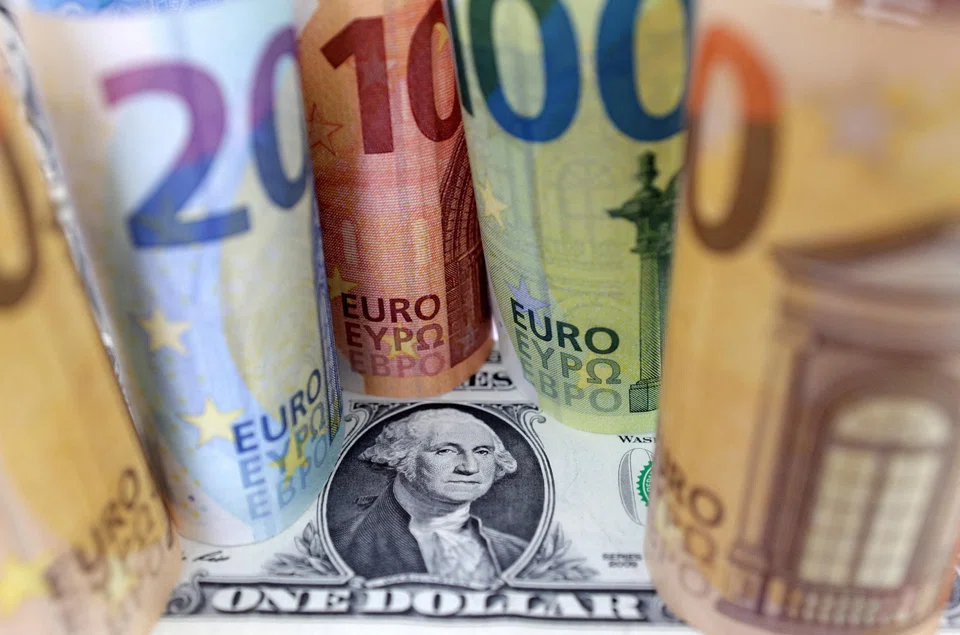
DeeperDive is a beta AI feature. Refer to full articles for the facts.
THE dollar was higher against the euro on Friday (Jun 23) after data showed US business activity growth slowed in June, but services kept humming along and as the US currency drew support from a bout of risk aversion driven by hawkish comments from global central banks.
US business activity fell to a three-month low in June as services growth eased for the first time this year and the contraction in the manufacturing sector deepened, closely watched survey data out Friday showed.
The overall picture, though, indicated US economic growth ticked up a notch in the second quarter even as worries persist that the Federal Reserve’s aggressive interest rate increases over the past year will trigger a recession.
Earlier, the session data showed eurozone business growth virtually stalled in June. A downturn in manufacturing deepened, while activity in the bloc’s dominant services sector barely expanded, as overall demand fell for the first time since January.
“We’re starting to see signals from businesses that the demand is starting to ease up at the margin and that’s leading to recalibration of expectations of what future output looks like,” said Bipan Rai, North America head of FX strategy at CIBC Capital Markets.
“I do think that the concern with the future outlook is weighing on risk appetite right now and the dollar is catching somewhat bid off of that,” Rai said.
Navigate Asia in
a new global order
Get the insights delivered to your inbox.
The euro fell 0.56 per cent to US$1.0894, a three-day low against the US dollar. The dollar index, which measures the currency against six rivals, rose 0.48 per cent to 102.88
Traders squaring books as the end of the month and the quarter nears was also likely supporting the US currency, Rai said.
Friday’s data comes on the heels of rate hike surprises and hawkish comments from central banks globally which have renewed market fears that policymakers have further to go in tightening policy to tame inflation, even at the risk of tipping their economies into a recession.

Fed Chair Jerome Powell said on Thursday the central bank would move interest rates at a “careful pace” from here, but ruled out interest rate cuts “happening any time soon.”
Against the yen, the dollar was up 0.34 per cent at 143.62yen, its strongest level in more than seven months. The Japanese currency has come under renewed pressure as the Bank of Japan (BOJ) maintains an ultra-dovish stance.
Data out on Friday showed that Japan’s core consumer inflation exceeded forecasts in May and an index excluding fuel costs rose at the fastest annual pace in 42 years, putting pressure on the BOJ to phase out its massive stimulus.
The pound was down 0.26 per cent on Friday at US$1.2715, on pace to finish the week down about 1 per cent, its largest weekly loss in six weeks.
The British currency has come under pressure from rising expectations the UK economy could slip into recession after the Bank of England on Thursday delivered an outsized rate hike in response to persistent inflation.
The Australian and New Zealand dollars struggled on Friday as traders avoided riskier currencies.
The Aussie fell 1.20 per cent to US$0.66755 and was headed for a weekly loss of nearly 3 per cent, its worst week since late August. The kiwi slid 0.73 per cent to 0.6132, down about 1.6 per cent for the week.
The Reserve Bank of Australia and the Bank of Canada had earlier this month delivered surprise rate hikes when markets were leaning towards pauses.
In cryptocurrencies, bitcoin was up 0.95 per cent at US$30,172, on pace for a near 15 per cent gain for the week, its best weekly gain since mid-March, boosted by BlackRock’s plan to create a bitcoin exchange-traded fund (ETF). REUTERS
Decoding Asia newsletter: your guide to navigating Asia in a new global order. Sign up here to get Decoding Asia newsletter. Delivered to your inbox. Free.
Share with us your feedback on BT's products and services
TRENDING NOW

From 1MDB to ‘corporate mafia’: Is Malaysia facing a new governance test?

Higher costs, lower returns: Why are Singaporeans still betting on real estate?

South-east Asian markets account for 8.8% of global capital inflows from 2021 to 2024: report

Richard Eu on how core values, customers keep Singapore’s TCM chain Eu Yan Sang relevant

