Downturns affect diversity: Tendency for leaders to become less inclusive in tough times
A 15-year Imperial College Business School study shows big companies' boards gear towards homogeneity when performance dips
When shares in General Electric fell sharply in 2018, the industrial giant declared it would overhaul its board, whittling down numbers but bringing in "new experts with fresh perspectives" to pull the firm out of the doldrums.
But the knock-on effect ended up with the new board being less diverse - at least in terms of ethnicity and gender. During the revamp, a disproportionate number of women and minority ethnic directors left, including the company's only female Asian director, Ms Andrea Jung. In other words, new perspectives meant, in practice, a higher proportion of white men on the leadership team.
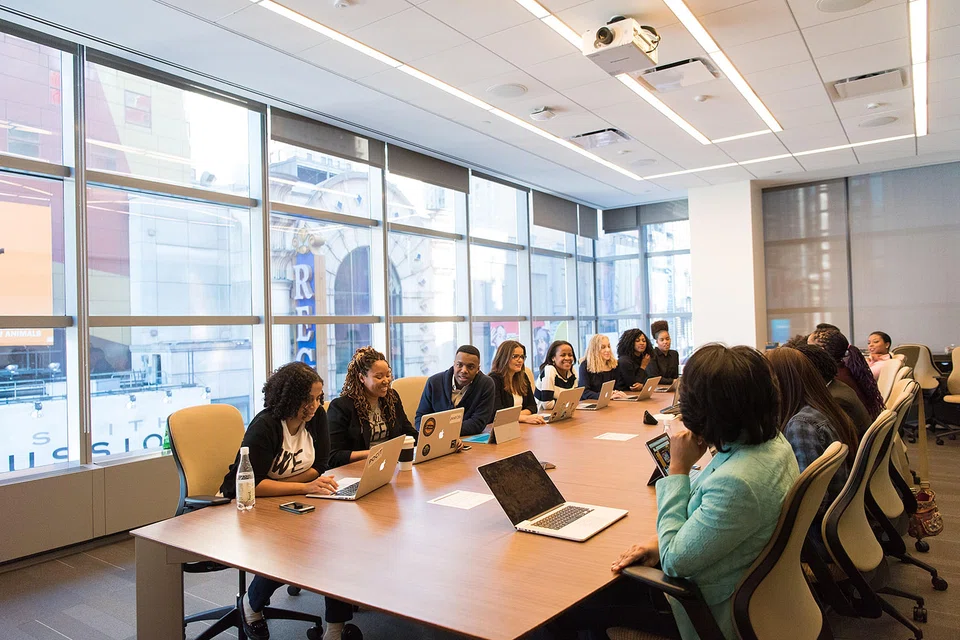
Despite years of pressure and numerous initiatives for better inclusivity at the top of large US corporations, progress is patchy, and boardrooms remain stubbornly resistant to diversity. Inclusivity apparently goes out the window - in the boardroom at least - during tough times.
What affects diversity in corporate governance?
To find out more, Dr Hee Jung Jung, Assistant Professor of Entrepreneurship at Imperial College Business School, and fellow researchers from Hong Kong University of Science & Technology and Seoul National University examined the performance and subsequent boardroom decisions over a 15-year period by 727 major US-listed companies.
They wondered if there was a pattern in leaders' reactions when company performance dipped, or if rival firms enjoyed more success.
When the chips are down, companies look to their bottom line. Prior research showed bosses feel pressure to appease shareholders by making swift strategic changes in a bid to better their companies' performance. But few studies have examined what goes on among the leadership team itself. Poor performance, Dr Jung and her collaborators found, provokes the board to question its own contribution and make changes.
"When there is an extreme downturn, you need to set a new direction," one director told them. "Everything is possible: you can be a completely new company, or you can think of merging, or you can change the board."
The researchers discovered boards deliberately seek out new expertise among a variety of industries and backgrounds in the belief that fresh insights and new networks might rescue their companies' performance. This is an intuitive and natural response under pressure. But while these fresh perspectives came from a range of sectors, that was as far as diversity went. New arrivals in the boardroom resembled the key individuals who were already there - usually white and male.
In other words, a board's makeup became more homogenous, even if their combined experience became more diverse.

In no way does this exclusion appear deliberate. From individual interviews, the researchers found directors instinctively sought executives they felt they could communicate with easily and trust. This, they felt, would enable them to build consensus swiftly around new proposals and strategies, and get things done without conflict.
Diversity just among themselves
In times of crisis, improving the financial performance for shareholders trumped any other priorities. Racial and gender diversity - perceived as the most powerful differences among individuals and can thus effectively bring a breadth of experience to the board - are often ignored. Instead, boards sought diversity of experience among white-male directors.
But Dr Jung and her collaborators did make some more hopeful discoveries for inclusion. When a female or racial minority director was chair of a board, then other directors, usually white and male, were less prone to hiring people who looked like them in times of crisis. This finding only holds if a female or racial minority leads a board - it's not enough simply to have a more inclusive team without diversity at the very top.
Dr Jung and her collaborators have been able to shed light on some of the hidden but powerful barriers to greater inclusivity at the top of major US corporations.
They haven't established whether directors' drive to hire people they identify with is deliberate or unconscious - indeed, no directors they spoke to were overtly aware of it. But leadership teams and diversity champions must note that this tendency away from diversity is quietly but firmly there and is particularly obvious when things get tough - and they can get tough for any firm at any time.
While others speculate on the future, the diverse minds at Imperial College Business School are designing and building it. For more insights from the world's top academics and industry experts, visit the Many Minds Make Our Future page by Imperial College Business School.

Decoding Asia newsletter: your guide to navigating Asia in a new global order. Sign up here to get Decoding Asia newsletter. Delivered to your inbox. Free.
Share with us your feedback on BT's products and services