

Dubai’s growing commodities hub is now enticing London traders
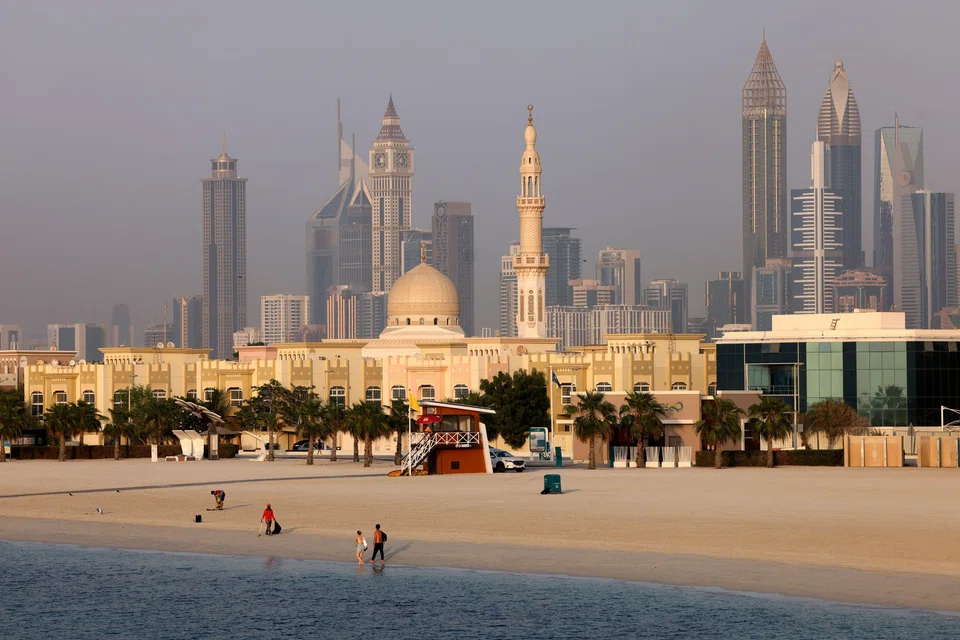
LONDON’S commodities merchants are following some of their Swiss peers to Dubai, as the emirate moves from being an outpost focused on crude to a major energy trading hub.
Dubai has long tried to attract more commodities companies, investing in banking infrastructure and developing exchange-traded futures. Those efforts have helped to drive a transformation after the Kremlin’s invasion of Ukraine, with many traders of Russian raw materials rushing to set up businesses in the city as European Union and Swiss sanctions made it harder for them to deal with Moscow.
While London has a much bigger commodities presence, more energy traders are now moving or expanding from the UK capital to Dubai. They’re being enticed by the growing pool of merchant counterparts and low taxes at a time when traders themselves are raking in unprecedented bonuses. Dubai also offers other lifestyle perks, something that’s becoming increasing important to attract top talent.
In the past year, Hartree Partners and Freepoint Commodities are among those to move energy traders and senior executives to Dubai, according to people familiar with the matter who asked not to be identified. It shows how historic trading centres such as London are starting to lose out to the emirate’s growing appeal.
It’s also part of a broader boom in Dubai and the United Arab Emirates, which is benefiting from an influx of foreign wealth. The arrival of crypto millionaires, bankers relocating from Asia and wealthy Russians shielding assets have boosted property prices.
“We have seen well-known hedge funds recently open offices in Dubai as well as independent commodities merchants,” said Jonathan Funnell, a partner at executive search firm Sidley Marion. “The tax incentives are clear, but for some there is a feeling that Dubai is well positioned to become a major commodities-trading hub.”
Dubai has courted commodity businesses for decades, and set up a free-trade zone in 2002. It has since introduced oil and gold contracts, while regional banks increased their offerings to finance trade flows. And companies that trade with Russian producers can do so there without the restrictive sanctions imposed in places such as the EU, Switzerland or US.
For traders of European power and gas, the time zone means no early morning starts and the chance to retain more earnings just as the sector is booming. Dubai also benefits from its proximity to some of the world’s biggest oil and gas producers, including Saudi Arabia, Abu Dhabi and Qatar.
Still, as a commodities trading centre, it remains much smaller than places such as London, Singapore, Geneva and Stamford.
Hartree is an example of the move to Dubai. It’s expanding its office there to 20 people from 12, including people from London, according to people familiar with the matter. Some of the company’s European power team have already made the move – including power desk head Brendan Mycock – and gas traders are expected to follow.
Freepoint is another major trader expanding in the region. Senior managing director Michael Walter was previously based in London, but has begun working out of Dubai. And Andre Dvoretski, formerly of Swedish utility Vattenfall, started working for Freepoint as a senior energy trader in Dubai in April, according to his LinkedIn profile.
Hartree and Freepoint declined to comment.
The way European power and gas is traded also means you don’t need as many people physically located on the continent.
“Gas and power trading in particularly can be performed with a huge degree of geographical flexibility, given the highly digitalised nature of the business,” said Anders Porsborg-Smith, managing director at Boston Consulting Group.
There have been similar moves in oil. Yaoyao Liu, one of Vitol Group’s star derivatives traders, was previously based in London but now trades out of the company’s Dubai office, people familiar with the matter said. Vitol’s Bahrain office remains its regional hub.
The company declined to comment.
“There’s a lot of interest from our businesses in sending people to Dubai,” said Ian Lowitt, chief executive officer of London-based broker Marex Group. “For us, it will become a really important centre, clients are moving there and there are big commodity players from the region.” BLOOMBERG
Decoding Asia newsletter: your guide to navigating Asia in a new global order. Sign up here to get Decoding Asia newsletter. Delivered to your inbox. Free.
Share with us your feedback on BT's products and services
TRENDING NOW
DBS, OCBC, UOB rout lops billions off STI as inflation, rate concerns spook investors

Grab CEO’s wife Chloe Tong on life with Anthony Tan and finding her purpose
OCBC sheds S$8 billion in value as shares close nearly 6% down; analysts cautious on banks
Deal between tycoon friends sparks scrutiny of Philippine power sector

