

Easier to justify construction greening costs in Singapore: Lendlease CEO, Asia

Wong Pei Ting
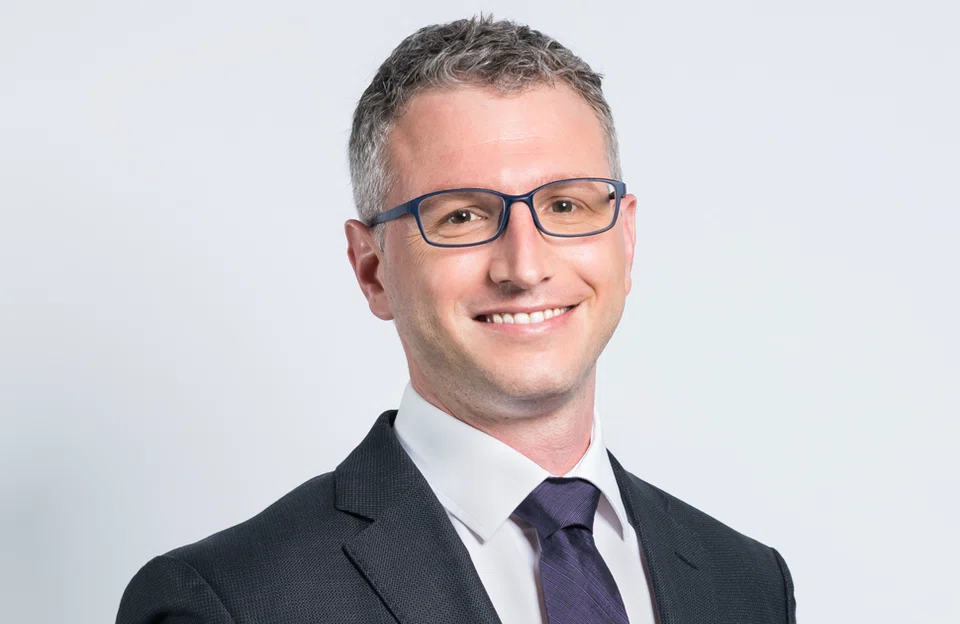
LENDLEASE strategically focuses on larger projects in more expensive markets like Singapore as they are better able to absorb the additional cost associated with greening the built environment, said Lendlease’s chief executive officer (CEO) for Asia, Justin Gabbani.
A test is the land cost make-up of a development’s capital value, he said, pointing out that any increase in construction cost would be more acutely felt where the land cost component is low.
Gabbani considers Singapore favourable as 60 to 70 per cent of a building’s cost in Singapore is the land itself, versus places like Malaysia and Sydney, where the land cost is about 20 per cent.
Gabbani was discussing how Lendlease financially justifies its decarbonisation efforts as the Australian Securities Exchange-listed real estate giant aims to be one of the industry’s first to achieve net-zero carbon for construction delivery in Asia.
Working with the supply chain to advance low-carbon material uptake and innovation is a critical step in decarbonising construction, but contractors in South-east Asia have lagged behind Europe and the US on this aspect, driving up the cost of going green.
To overcome this, “we tend to figure on bigger developments (in) higher capital value (markets) because then you can amortise the cost better”, he said in the Tuesday (Oct 18) interview.
Gabbani’s views were sought as two of Lendlease’s Asia funds and its Singapore-listed real estate investment trust (Reit) – Lendlease Global Commercial Reit (LReit) – emerged as regional leaders in the Global Real Estate Sustainability Benchmark (GRESB) rankings.
The rating that GRESB issues is one of the indications of whether a company or fund stands a good chance at obtaining interest rate savings from their sustainability-linked loans and bonds. Investors also look at the achievement of sustainability performance targets when making an evaluation, as sustainability-linked loans typically require a real reduction in an organisation’s carbon emissions.
Lendlease has indeed been focusing on green financing, with LReit launching the largest sustainability-linked loan in the Singapore Reit market in the past 12 months. The S$860 million unsecured loan was intended to help the Reit fund its acquisition of a 100 per cent stake in Jem mall.
Financing costs usually go up by 5 to 10 basis points if takers of such loans miss their sustainability targets, Gabbani said.
In meeting the targets, Lendlease’s approach in Singapore is to “go above and beyond” the Building and Construction Authority’s Green Mark certification, to “help write the next standard”, he said.
The rationale: “If we lift the bar, that’s only going to bring the rest of the market up.”
“I think that is coming and playing to fruition now,” Gabbani added. “Our partners, our investors, our tenants are moving towards wanting to be associated with that, and that’s helping us win projects, win work, win partnerships.” Lendlease’s latest win is the project to redevelop Singtel’s Comcentre headquarters into a S$3 billion sustainable workplace.
Asked how the bar is raised, Joelle Chen, Lendlease’s sustainability director in Singapore, said it has looked into addressing the health and well-being aspects of a building by pushing for materials with low or zero volatile organic compounds, among others.
Chen added that Lendlease is working with the Singapore Green Building Council on some specifications relating to this for it to be recognised under the Green Mark.
Raising the bar is also in Lendlease’s interest as today’s green bond proceeds typically go towards funding green building projects, but these projects are increasingly becoming a norm, potentially making it harder for developers to stand out.
Sensitive to this, Gabbani said Lendlease has trended towards sustainability-linked notes, which hold entities to a higher account.
Even so, he is already anticipating the next version of such sustainability-linked lending options, which may be even more stringent in criteria. “Sure, there will be another innovation. It is an evolving market,” he said.
TRENDING NOW
Singapore tech stocks plunge as Nasdaq bloodbath spills into region

S$3 billion money laundering case: Rare Pateks and Rolexes, diamond-covered Hermes and more head to auction
OCBC Q3 profit rises 3% to S$2.04 billion, slightly above expectations

From legacy to launch: Francis Yeoh and Yeoh Pei Xien on family unity and YTL’s next‑gen ventures

