EMA says no setback to plans to import clean energy, following Sun Cable’s abrupt demise 

Anita Gabriel
Anita Gabriel

Published Thu, Jan 12, 2023 · 01:09 PM
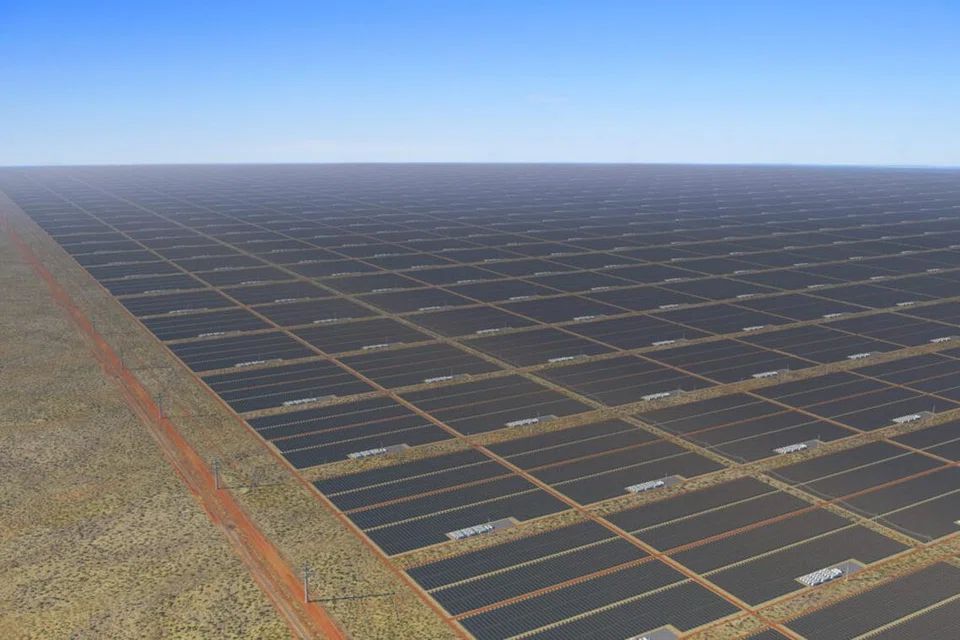
    • The proposal for Singapore to draw critical energy supply from a source some 4,200 km away through an undersea cable has been deemed a hard sell from the get-go by market watchers.
    • The proposal for Singapore to draw critical energy supply from a source some 4,200 km away through an undersea cable has been deemed a hard sell from the get-go by market watchers. PHOTO: SUN CABLE

    THE surprise collapse of Sun Cable, a company that has been in talks with Singapore for the past two years to supply 1.75 gigawatts (GW) of solar power via potentially the world’s longest submarine cable from Down Under, will not derail the city-state’s target to import clean energy, according to Singapore’s energy market regulator.

    “We remain on track to meet our imports target of 4 GW by 2035. Discussions with the other request-for-proposal (RFP) participants are in progress to support the development of their projects,” said a spokesperson from the Energy Market Authority (EMA) in response to queries from The Business Times (BT).

    “The EMA is unable to comment on Sun Cable’s decision to enter into voluntary administration. Besides the Sun Cable proposal, EMA has received more than 20 proposals to import electricity from countries including Indonesia, Lao PDR, Malaysia and Thailand,” the spokesperson added.

    BT understands that of these 20 proposals, the “viable offers” involve projects that can potentially supply more than 4 GW in total to the city state.

    On Wednesday (Jan 11), Sun Cable, backed by billionaire climate crusader Mike Cannon-Brookes and iron ore magnate Andrew Forrest, said it has entered into voluntary administration after shareholders couldn’t come to a consensus on the future direction and funding structure of the company that was undertaking the ambitious renewable project.

    FTI Consulting’s Christopher Hill, David McGrath and John Park have been appointed as administrators. 

    “Sun Cable has achieved so much since it was founded in 2018,” said Cannon-Brookes in a statement, as reported by Bloomberg. “I’m confident it will play a huge role in delivering green energy for the world, right here from Australia. I fully back this ambition and the team, and look forward to supporting the company’s next chapter.”

    Less than three months ago, Sun Cable’s co-founder and chief strategy officer Dr Fraser Thompson told BT in an interview that the firm was “nailing” the “exact dates” with Singapore for the ambitious A$30 billion (S$27.6 billion) giant solar farm in northern Australia to supply power to Singapore under the second RFP for potential importers to submit proposals.

    The flagship project, officially called Australia-Asia PowerLink, was to span over 12,000 hectares of land and involves a 20 GW peak solar generation site in Elliot, a small town in the Northern Territory. The multibillion-dollar project’s grandest portion will include a 4,200 kilometre high-voltage submarine cable that will route through Indonesian waters to deliver renewable energy to Singapore.

    It was reportedly expected to meet up to 15 per cent of Singapore’s power needs when completed. Sun Cable’s collapse has now clouded the project’s prospects.

    Thompson had then said the company had been in discussions with Singapore for the last two years and hoped that the project will be completed around 2029 or “slightly earlier”, in line with Singapore’s stated goal to import 30 per cent of energy from low-carbon sources by 2035.

    The RFP to appoint licensed electricity importers was issued by EMA last July and ends in December 2023. It is part of the city-state’s plans to meet its import target of 4 GW of low-carbon electricity by 2035.

    The proposal for Singapore to draw critical energy supply from a source some 4,200 km away through an undersea cable was deemed a hard sell from the get-go by market watchers.

    Edgare Kerkwijk, managing director of Singapore-based Urban Renewables, a firm that provides solar rooftops and energy storage services, noted that the project had initially not drawn much attention, even in Singapore. This was until several well-known Australian tycoons got in on the green energy revolution in Australia and threw their weight behind the Sun Cable project.

    “Amid the energy price hike in Singapore, the Singapore government started to look more seriously at this project. This led other players to look at this market and Singapore opened the idea of importing green energy to more players...

    “Ultimately it would have been an easy choice to go for projects closer to home and Sun Cable would have had tough competition. Technically the project already had its doubters from the start as the length of the cable would be difficult to achieve. Cable-laying experts would be able to tell you that this long cable would be a technical challenge,” he said.

    As it turned out, Sun Cable’s biggest challenge was not the technical aspect, which on its own appeared challenging but not insurmountable, but rather the “absence of alignment with the objectives of all shareholders”.

    In fact, one source told BT that independent technical consultants hired by Singapore to assess the project’s viability had advised that while involving the long-distance undersea cable would be challenging, “it would not be impossible” and “there was no technical reason that it can’t be done”.

    For that reason, too, it may be too early to completely rule out that the Sun Cable project, which largely hinges on getting an import licence from Singapore, could take off.

    Even more so as EMA’s RFP process involves a rolling timeline till end-2023.

    In a statement, founder and chief executive officer of Sun Cable David Griffin said: “Sun Cable has made extraordinary progress in developing the AAPowerLink. This project remains well placed for completion.”

    The bigger challenge for Sun Cable, according to market watchers, is securing offtake agreements with Singapore customers for its mega project following the company’s “difficult decision” to enter voluntary administration.

    Thompson had earlier said the firm had drawn “real demand” in terms of offtake and that it was over 50 per cent oversubscribed.

    “The hurdle for Sun Cable just got higher, as it needs to secure contracts and letters of intent from potential buyers in Singapore to buy its electricity. It is part of the RFP process to indicate that a project has enough interest from buyers. Potential customers may rethink buying power from Sun Cable following this recent episode,” said a market observer.