Agri-commodity prices to ease as growth slows, but upward pressure remains amid macro woes

Uma Devi
THE pace of increases in the prices of most agricultural commodities should slow in 2023, due to a higher base effect and a slowing global economy. But market watchers said prices are likely to remain high by historical standards, given macroeconomic uncertainty.
A combination of the Russia-Ukraine war, higher demand and tight supply due to weather conditions pushed prices of several agri-commodities to multi-year highs in 2022, although some have since pared earlier gains.
Wheat prices, for instance, spiked following Russia’s invasion of Ukraine in February. The two countries are among the world’s major exporters of wheat. Other agriculture products affected by the invasion were fertiliser and corn.
“Concerns over a significant tightening of global supplies drove up prices,” said analysts at Fitch in a report. Wheat prices reached an all-time high in March, but have since come back down significantly and ended the year up 0.3 per cent.
Soybeans also came under the spotlight as the year drew to a close. Argentina, one of the world’s top exporters of soybean and its by-products, has been grappling with a drought – which could threaten prospects for this year’s harvest. The commodity ended the year with a 14.1 per cent gain.
Sugar and cocoa also ended the year on a higher note, booking advances of 10.1 per cent and 1.4 per cent, respectively.
Coffee, however, closed out the year lower. Robusta coffee futures on the Intercontinental Exchange (ICE) were down 19.5 per cent, while Arabica futures were down 24.8 per cent. Observers have attributed the softer prices to better weather in Brazil, as well as the strength of the US dollar.
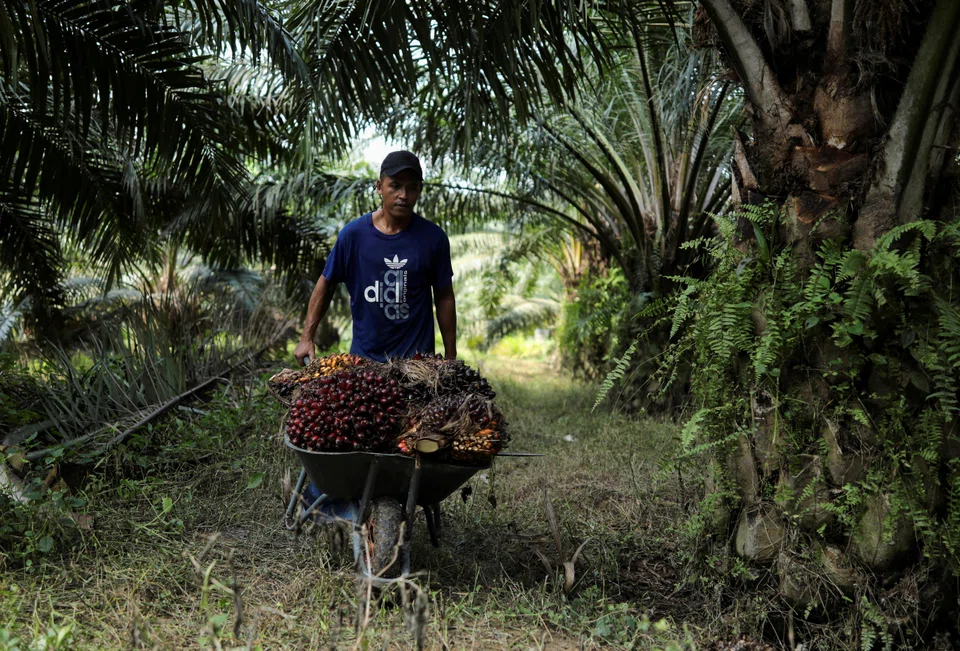
Palm oil also ended the year lower, booking a decline of about 19.4 per cent. Crude palm oil futures fell after Indonesia announced a policy shift in early June to encourage exports by cutting export levies. But the country announced on Dec 30 that it would tighten palm oil exports from Jan 1 this year to shore up its domestic supply.
Maybank analysts reckon palm oil prices could be sustained at the range of RM3,000 to RM4,000 in the near term, which will provide “decent margins” for planters.
“The downside of sustainability commitments has been a lack of new planting by the industry since 2015, which limits global palm oil supply growth in the coming years,” the analysts said.
The “structural underinvestment” in palm oil expansion means global vegetable oil supply will be “increasingly vulnerable to supply shocks”, they added.
They also noted that the financial positions of planters in the region “have been boosted significantly recently”.
“The sector is transitioning into high-dividend-yield plays given lack of growth opportunity,” the Maybank analysts said. They believe Singapore-listed First Resources and Bumitama Agri are likely to be in net cash positions by the end of FY2022/23. The two counters will also offer net dividend yields of more than 5 per cent.
Fitch analysts expect a “broad easing” of agricultural crop prices in 2023 from the historically high levels seen in 2022. They expect the US dollar to remain strong throughout this year, which will put a ceiling on US dollar-traded commodity prices.
RHB analysts, meanwhile, are expecting oil and food prices to drop further in 2023 as global growth slows. Ineffective sanctions against Russia, related to its shipments of oil and agri-commodities, will also cause prices to slide.
Supply chain congestions in the US are expected to further dissipate in 2023, which the RHB analysts said would help alleviate some upward pressure on prices.
Still, crop prices are expected to remain elevated.
RHB warned that the Covid-19 situation in China remains a risk, and could be one reason “supply chain congestions will re-emerge at the global level”.