Apex court dismisses almost all of the appeals by Envy’s ex-employees over S$38 million of clawbacks
Only fees calculated as a percentage of the amount invested by referred investors do not have to be returned, rule judges

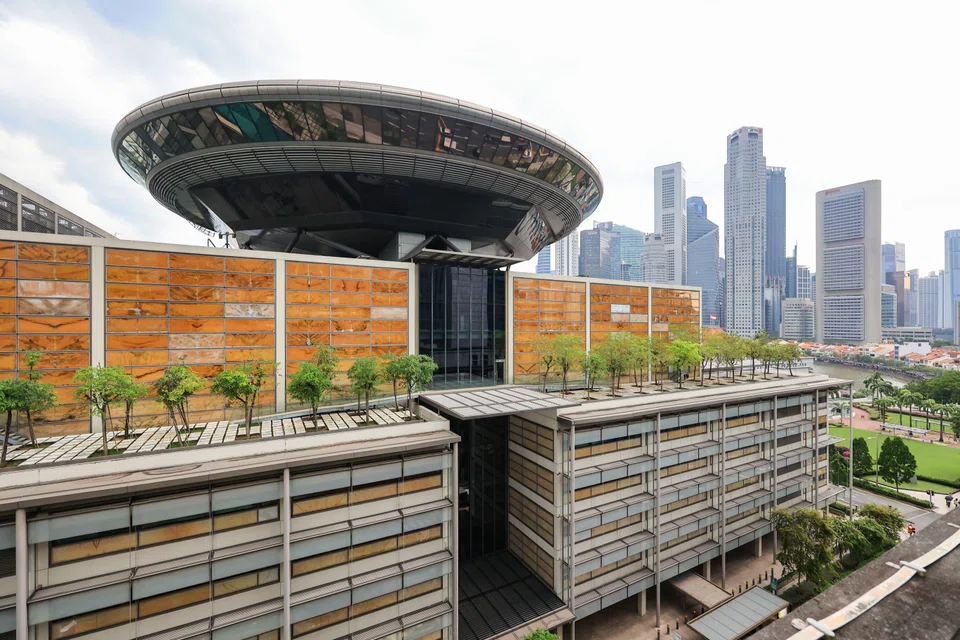
[SINGAPORE] The Court of Appeal has rejected the appeals almost in entirety by four former employees of the insolvent Envy group of companies over the clawback of commissions, profit-sharing payments and referral fees amounting to about S$38 million.
Envy is at the centre of a S$1.5 billion nickel-trading Ponzi scheme that Ng Yu Zhi allegedly perpetrated.
The only payments the three-judge court ruled that need not be returned were those calculated purely as a percentage of the amount invested by the referred investors. Anything dependent on profits generated by trading nickel would have to be clawed back.
The apex court, in a judgment published on Monday (Jun 22), dismissed the appeals of Lau Lee Sheng, Benjamin Teo Wei Wen and Shen Xuhuai. Koh Hong Jie’s appeal was allowed only for the S$49,600 referral fees that were paid based on the investment amount he referred to Envy.
Lau and Teo were sales directors, Koh was a sales associate, and Shen was a financial accountant employed by companies in the Envy group.
These four, together with another four employees previously engaged by Envy, were sued by the group’s liquidators to claw back payments including commissions, profit-sharing bonuses and referral fees made to them.
Six of them were ordered by the High Court last year to repay the sums, subject to deductions for any excess income tax payments that they had made.
Lau, Teo, Shen and Koh appealed against the judgment, while the other two with S$3 million in total claims between them did not.
Another two defendants had settled the claims with the liquidators.

All these former employees were acting in good faith as they were unaware that the scheme was fraudulent.
A question over profits
At stakes in the appeal were about S$17 million for Lau, S$9.9 million for Teo, S$6.1 million for Shen and S$5 million for Koh.
While the appellants argued that they were contractually entitled to the commissions and profit-sharing payments because the term “profits” in their employment contracts should be interpreted as “declared profits”, the Court of Appeal held that “profits” must mean actual profits.
Since no actual nickel trading took place and no real profits were generated, the Envy group had no contractual obligation to make these payments, ruled the court comprising Justices Steven Chong, Kannan Ramesh and Judith Prakash.
Shen argued that about S$900,000 of her commissions and profit-sharing payments should not be clawed back because she never received the money but had reinvested it into the purported trading scheme.
The court rejected this, finding that the company had in effect made a payment to her by internally redirecting the funds at her request to be reinvested into the scheme.
The Ponzi scheme had the veneer of a highly profitable business of purchasing and reselling nickel operated by the Envy group.
Investors were offered the opportunity to participate in the business by investing significant sums which were to be used to purchase nickel in exchange for lucrative returns from the profits made upon resale.
But the purported profits that were paid out to investors were recycled from funds invested by others, to keep the Ponzi scheme alive.
Shook Lin & Bok acted for the liquidators in the appeal.
Decoding Asia newsletter: your guide to navigating Asia in a new global order. Sign up here to get Decoding Asia newsletter. Delivered to your inbox. Free.
Copyright SPH Media. All rights reserved.