

Asian gold buying spree burnishing Singapore’s status as precious metals hub
While competition from other regional centres such as Shanghai and Dubai remains, the challenges could also bring opportunities

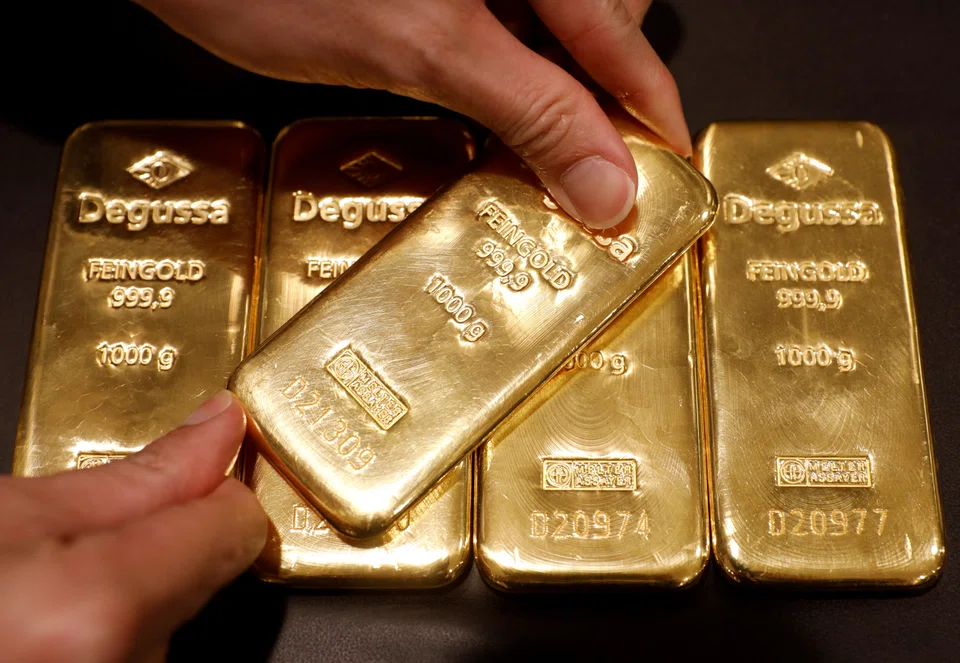
SINGAPORE’S proximity to emerging gold markets in Asia as well as its political and financial stability amid global macroeconomic uncertainties are spurring its ambitions to become a regional gold hub, according to market watchers.
While the price of gold has surged, investor demand has remained healthy in Asia, boosted by purchases by central banks in the region.
Observers say this comes despite appetite for gold investments waning in the West.
Robin Tsui, State Street Global Advisors’ Asia-Pacific gold strategist, noted that gold investment in Asia has been strong year to date. Asian retail and institutional investors have stocked up on both physical gold and gold-backed exchange-traded funds (ETFs), despite gold prices hitting record highs, he said.
Spot gold is trading at over US$2,300 per ounce in June, up nearly 20 per cent since last year.
Statistics from the World Gold Council also indicated that global gold demand, including over-the-counter (OTC) purchases, was up 3 per cent year on year to reach 1,238 tonnes in Q1 2024. This made for the strongest first quarter since 2016.
Excluding OTC purchases, the first quarter’s demand fell 5 per cent year on year to 1,102 tonnes.
Leading the buying spree is China, where the People’s Bank of China bought gold for 18 consecutive months up to April. This raised the central bank’s percentage of gold over total reserves to a new record.
“China saw its strongest physical gold bars and coins demand in seven years in Q1 2024 as Chinese investors continue to turn to gold due to its status as a safe-haven asset,” said Tsui.
He added that Chinese demand for gold has been propelled by the macro environment of a weakening yuan, on top of slowing domestic equity and property markets.
Albert Cheng, chief executive officer of Singapore Bullion Market Association (SBMA), said Asean investors tend to invest in gold during price hikes. In contrast, there is typically negative growth in gold ETFs and reduced demand for physical gold bars and coins in Western countries.
“In Vietnam, Laos, Cambodia, Indonesia and even Thailand, we heard the premium of small gold bars may be as high as several hundred US dollars per ounce at times of high demand,” Cheng said. He attributed the different buying behaviours to different underlying reasons for buying gold.
“In the West, gold is often considered a hedge within a diversified investment portfolio,” Cheng said. “This is why we have seen a reduction in demand for gold investments in Western markets, especially during periods when other asset classes, such as equities, are performing well.”
Some Asian investors, on the other hand, hold gold as a long-term asset for its intrinsic value, while digital ownership of ETFs also provides a convenient means of investment exposure, he added.
Based on World Gold Council’s Q1 market report, among the Asian markets that added the most to their gold purchasing in Q1 were China, India and Singapore with an increase of 27.1, 18.5 and 6.6 tonnes respectively. These include transactions by both central banks and retail investors.
Tsui noted that while high interest rates dampen ETF investor sentiment in North America and Europe, Asian-listed gold ETFs have consistently posted net inflows since March 2023, led by robust demand in China, Japan, and India.
Singapore to ride the tide
“The centre of gravity of the gold market has shifted east, with Singapore fortuitously placed as the potential fulcrum of this new balance,” Shaokai Fan, the World Gold Council’s head of Asia-Pacific and global head of central banks, said last week at the Asia Pacific Precious Metals Conference held in Singapore.
Leveraging its strategic location, history of political and financial stability, the Republic has set itself up to be “an efficient entrepreneur for commodities”, said Rhona O’Connell, head of market intelligence of Europe, Middle East, Africa and Asia at StoneX.
Since 2012, it has been setting out regulations to develop its bullion sector. One of the favourable policies include the exemption of gold investment from goods and services tax.
While the government has developed a favourable tax regime to enhance Singapore’s appeal in the precious metals industry, other logistics infrastructure, such as refining and vaulting facilities, have also been coming into place.
“Singapore has successfully attracted a London Bullion Market Association-accredited refinery to set up operations within its borders. This not only boosts local refining capabilities but also assures international markets of the quality and standards upheld in Singapore,” said Cheng, adding that the country has also invested in expanding vaulting facilities to meet growing storage demand.
John Chen, regional head of corporate commodities sales for the East at Standard Chartered, noted a “top-tier” logistics infrastructure in Singapore, where some commercial vaults have direct airside access to the airport, in addition to a growing number of vaulting facilities.
Founder of Silver Bullion, Gregor Gregersen, said that the precious metals dealer is building a facility hosting 15 vaults. Each of the vaults can store several billion Singapore dollars worth of gold.
“We do believe that this capacity will help generate more demand for high security and efficient storage of precious metals in Singapore,” said Gregersen.
Challenges bring opportunities
“Singapore is facing fierce competition from Shanghai and Dubai to be the major hub in the region,” Tsui noted. However, he added that a tech-forward approach to finance will position Singapore well to continue growing into a major gold trading hub for precious metals.
Cheng shares a similar view. “Investing in advanced technologies such as blockchain for supply chain transparency, and artificial intelligence for market analysis, can provide Singapore with a cutting-edge advantage in the precious metals industry,” he said.
In addition, while Singapore still lacks large-scale refineries, O’Connell pointed out that it can also grow its trading hub status by forming ties with other refinery bases, such as Dubai.
“I can see there would be a symbiosis between Dubai and Singapore,” she said. “Dubai can handle the raw material and refine it, send it through to Singapore for distribution and so on.”
Cheng noted that enhancing trading volumes and ensuring a more active secondary market can attract more investors and bolster Singapore’s leading position.
“This could be enhanced if we continue to build Singapore as an alternative storage hub for the central bank, sovereign wealth funds, high net wealth individuals and family offices who would like to allocate part of their portfolio to physical gold,” he said.
TRENDING NOW

Britain’s mansion tax shows the difficulty of targeting wealth

Once staunchly pro-China, Malaysian Chinese businesses are now distancing themselves from Beijing

The only common thing in S-E Asia is that we all eat rice: Cisco’s Asean president

Singapore data centre operator DayOne opts for US IPO at likely US$20 billion valuation

