

Australia says China coal ban would be clear WTO breach
 Add BT as a preferred source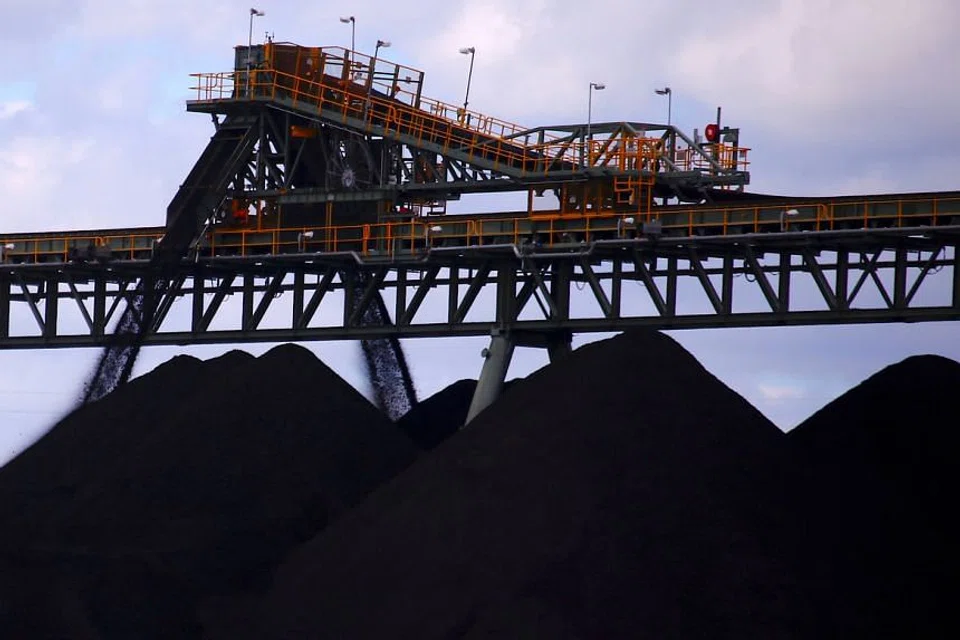
DeeperDive is a beta AI feature. Refer to full articles for the facts.
[SYDNEY] Australia on Tuesday decried China's reported ban on its coal exports as an obvious breach of World Trade Organisation rules, as tensions between the two countries flared again.
Prime Minister Scott Morrison said the Chinese government had yet to confirm state media reports that Australia's multi-billion-dollar coal exports are now subject to an informal ban.
Nationalist state-run tabloid the Global Times reported on Sunday that Chinese power plants are being steered toward buying their coal domestically, as well as from countries other than Australia.
"If that were the case, then that would obviously be in breach of WTO rules," Mr Morrison said. "It would be obviously in breach of our own free trade agreement and so we would hope that is certainly not the case."
"We are seeking clarification on this," Mr Morrison said, although ministerial-level contacts between the two countries are said to be non-existent.
Ties between the two countries are at the lowest ebb since the Chinese government's 1989 killing of pro-democracy protesters at Tiananmen Square, with Beijing rolling out a string of economic sanctions against Australian products.
Navigate Asia in
a new global order
Get the insights delivered to your inbox.
Each dispute has been billed as a technical issue, but many in Canberra believe the sanctions are retribution for Australia pushing back against Chinese influence at home and in the Asia-Pacific.
At least 13 Australian sectors have been subjected to tariffs or some form of disruption, including barley, beef, copper, cotton, lobsters, sugar, timber, tourism, universities, wine, wheat and wool.
Suggestions of a coal embargo had been the subject of rumours for some time, with many Australia shipments reportedly already blocked at Chinese ports.
But even an informal ban would be a dramatic escalation, targeting one of Australia's most valuable exports - worth up to US$3 billion a year - and a sector that Mr Morrison's conservative government has been keen to champion, despite objections from environmentalists.
Australia has long hinted that it may seek WTO intervention in the disputes, but a resolution could take years, open Australia up to retaliatory claims and worsen relations with Beijing further.
There has so far been little indication that Australia's political allies in the United States or Europe have been willing to step in and offer support.
The dispute with China has called into question Australia's decades-old model for stellar economic growth - namely supplying the raw materials for China's breakneck emergence as a modern economy.
Mr Morrison said both nations had benefited from close trade relations over previous decades and called for "mature discussions" about the disputes.
"Australia has always participated in China's economic development," he said. "We always have been a proponent of China's economic growth. We are not one of those countries that have sought to contain their growth."
AFP
Decoding Asia newsletter: your guide to navigating Asia in a new global order. Sign up here to get Decoding Asia newsletter. Delivered to your inbox. Free.
Share with us your feedback on BT's products and services
TRENDING NOW
Why where you park your joint venture matters: Lessons from a US$689 million shareholder dispute

Richard Eu on how core values, customers keep Singapore’s TCM chain Eu Yan Sang relevant
A new logic of China-Asean economic integration emerges from the Middle East conflict

From 1MDB to ‘corporate mafia’: Is Malaysia facing a new governance test?

