

BOE’s Ramsden says inflation risks mean more rate hikes needed
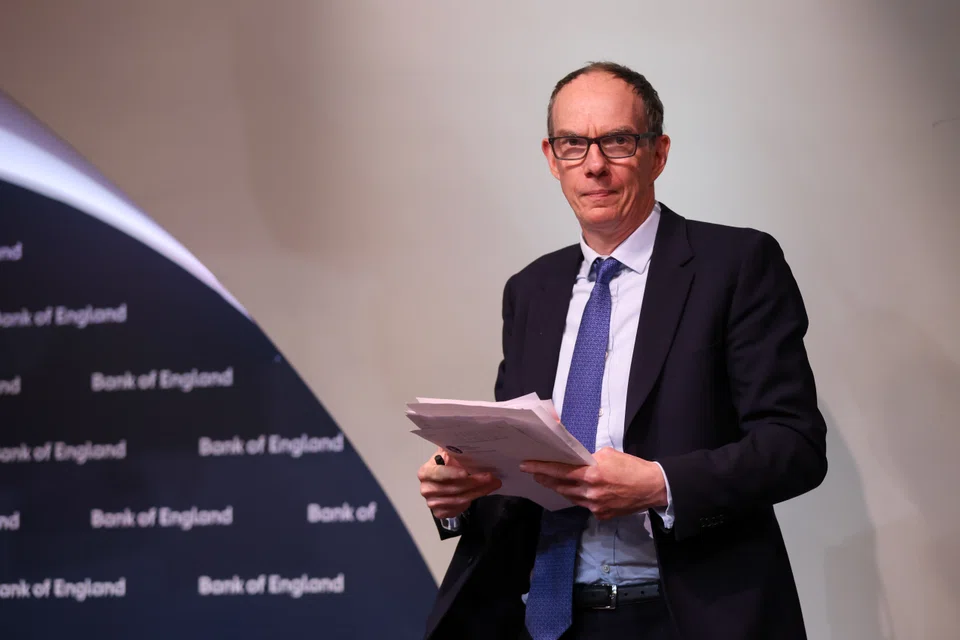
THE Bank of England will have to raise interest rates further to control surging prices, and there’s a risk that the UK’s worst inflation crisis in decades will take longer to ease fully, according to deputy governor Dave Ramsden.
The comments mark yet another warning to households already struggling with a dramatic cost-of-living squeeze that’s eroding incomes and pushing more people into poverty. In an interview with Bloomberg, Ramsden said the jobs market could prove stronger than the BOE anticipates, feeding more persistent price gains. Inflation is already at 7 per cent, and likely to top 10 per cent later this year.
But dealing with the price surge is being complicated by a deteriorating economic outlook. Figures on Thursday showed the UK economy unexpectedly shrank in March as consumers cut back on spending.
For now, the BOE’s focus is on inflation. It hiked rates to 1 per cent last week - a fourth straight increase - and there’s more ahead.
“Certainly on the basis of my current assessment of prospects, we’re not there yet in terms of how far monetary policy has to tighten,” Ramsden said. “I‘m still very, very supportive of the forward guidance that there may well need to be further tightening in the coming months.”
While Ramsden declined to comment on market expectations that show rates hitting 2.5 per cent by the middle of 2023, he said that investors, like him, were concerned about inflation staying higher than anticipated.
“Given what we know about the UK labour market, I wouldn’t be surprised if it turned out to be a bit tighter,” he said. “I think there are upside risks on inflation the medium term.”
The pound briefly pared earlier losses before slipping back again. It was down 0.5 per cent to US$1.2196 as at 8.38 am London time.
The war in Ukraine has added additional uncertainty to the outlook for both inflation and growth. Ramsden said the BOE’s next meeting in June would be a chance to assess the situation, but that he wasn’t offering a prediction on how he would vote.

June “will be a chance to take stock - in this extraordinary period we really are learning things everyday,” he said. “I don’t think we’ve gone far enough yet on bank rate, but I do think that what we’ve already done is having an impact.”
The policy decision this month was accompanied by forecasts showing that if rates rise in line with market pricing, inflation will fall to 6.7 per cent this time next year, and to just 1.3 per cent in 2025. But unemployment will climb to 5.5 per cent in that period.
Ramsden dismissed the idea that the BOE was “talking down” the economy with gloomy forecasts that would a make a recession a self-fulfilling prophecy.
His views on the economy - particularly on employment, increasing profit margins and inflation - were reinforced when he visited west Cheshire and north Wales last week, stopping by Airbus SE, Iceland Foods and some smaller firms.
“The common theme across pretty much all of the businesses I talked to was the issues in the labour market,” he said. “All of them are very conscious to different extents of the challenges that they’re having in recruiting and retaining staff.”
That trip also hammered home the scale of the real-income squeeze. Earlier this week, Prime Minister Boris Johnson said there was a limit to what the government could do to help, though the Financial Times subsequently reported that Chancellor of the Exchequer Rishi Sunak is preparing to announce extra support in the summer.
“I can only imagine what it’s like for households at the moment, particularly at the lower end of the income distribution, in dealing with the increases in the price of food and energy,” Ramsden said. He added that households and businesses should have “confidence” in the BOE’s ability to get inflation back to the 2 per cent target.
As well as lifting interest rates, the BOE has also begun the process of considering how to sell the massive holdings of government bonds it acquired in the decade since the financial crisis.
Ramsden said his working assumption was that the central bank, not the Debt Management Office, would handle the divestments. As the deputy governor responsible for markets, Ramsden’s key concern is making sure the sales don’t disrupt market functioning.
He also flagged a “material and interesting” difference between rate-hike pricing and lower expectations in the BOE’s survey of market participants. That could be explained by illiquidity in certain securities, he suggested, or by the fact that investors have to protect against the risk of higher inflation.
“Like me, they’re seeing some upside risks,” he said.
Decoding Asia newsletter: your guide to navigating Asia in a new global order. Sign up here to get Decoding Asia newsletter. Delivered to your inbox. Free.
Share with us your feedback on BT's products and services
TRENDING NOW

He built the Vingroup empire. Now South-east Asia’s richest man is handing some key roles to his sons

32 companies, 6 individuals bag accolades at Singapore Corporate Awards 2026
Can a first-time homebuyer couple earning S$18,000 a month afford a new EC unit?

Floods compound Philippine growth woes from public-works scandal

