BP appoints Woodside’s Meg O’Neill as CEO after Auchincloss’ abrupt exit
Prior to heading Woodside Energy, she spent 23 years at ExxonMobil
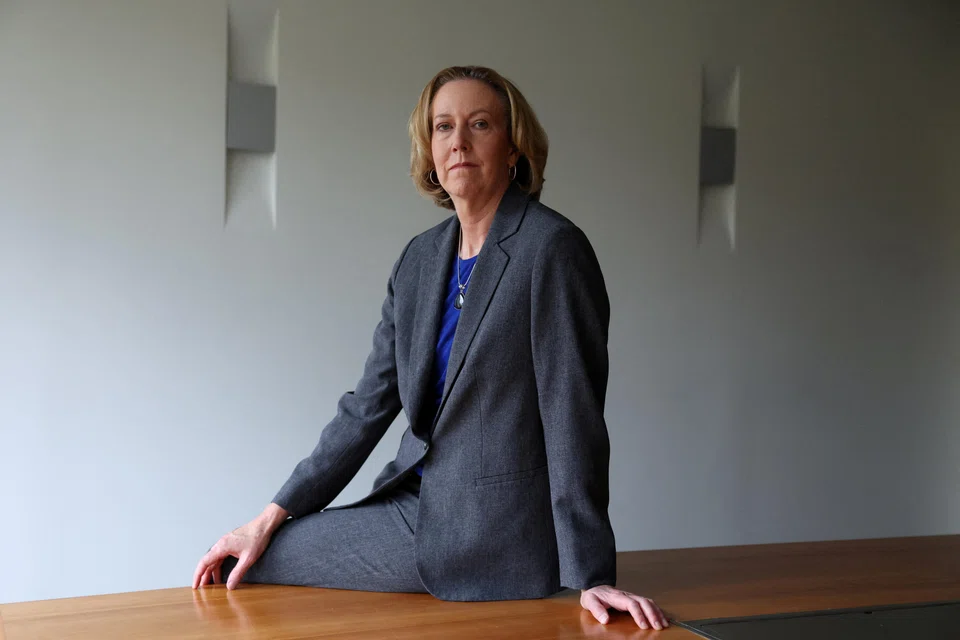
[LONDON] Oil and gas major BP has tapped Woodside Energy’s Meg O’Neill as its next CEO, its first external hire for the post in over a century and the first woman to lead a top-five oil major as the firm pivots back to fossil fuels.
O’Neill, an Exxon veteran, will take over in April following the abrupt departure of Murray Auchincloss, the second CEO change in just over two years as the British oil major strives to improve its profitability and share performance which for years lagged competitors like Exxon.
The company embarked on a major strategy shift earlier this year, slashing billions in planned renewable energy initiatives and shifting its focus back to traditional oil and gas. BP has pledged to divest US$20 billion in assets by 2027 and reduce debt and costs, including its Castrol lubricants unit.
“Progress has been made in recent years, but increased rigour and diligence are required to make the necessary transformative changes to maximise value for our shareholders,” new BP chair Albert Manifold said in a statement.
When Manifold took up his post in October, he emphasised the need for a deeper reshaping of BP’s portfolio to increase profitability.
Manifold faced pressure from activist investor Elliott Investment Management, one of BP’s largest shareholders, which called for him to urgently address the company’s shortcomings.
Elliott saw the latest move as a sign of BP’s willingness to act swiftly and hopes she is prepared to deliver on cost cuts and divestments to reduce debt, a person familiar with the situation said.
‘High-profile hire’
O’Neill, a 55-year-old American from Boulder, Colorado, has headed Woodside since 2021 and previously spent 23 years at ExxonMobil.
“This is clearly a high-profile hire, and probably some of the change that BP shareholders have been looking for,” said Dan Pickering, chief investment officer at Pickering Energy Partners.


Under O’Neill’s leadership, Woodside merged with BHP Group’s petroleum arm to create a top 10 global independent oil and gas producer valued at US$40 billion and doubled Woodside’s oil and gas production.
The acquisition took the company to the US, where it has expanded into onshore Louisiana liquefied natural gas.
“What this to me signals is we (BP) don’t want to sell, we want to pursue a firm-wide push in natural gas,” said Michael Alfaro, chief investment officer at Gallo Partners. “O’Neill is definitely respected, has a good track record of execution.”
Woodside shares fell as much as 2.9 per cent after her departure was announced. At 0919 GMT BP shares were up 0.27 per cent.
Like BP, Woodside shares have underperformed rivals. In absolute terms, however, the stock has risen around 10 per cent during O’Neill’s tenure.
BP’s executive vice-president, Carol Howle, will serve as interim CEO until O’Neill assumes the position. Auchincloss, 55, stepped down as CEO on Thursday (Dec 18) and will serve in an advisory role until December 2026 to ensure a smooth transition.
BP said O’Neill’s appointment was part of long-term succession planning, but it had not publicly announced a search process before it flagged his departure late on Wednesday evening.
Auchincloss became CEO in 2024, taking over from Bernard Looney, who was fired for lying about personal relationships with colleagues.
After an ill-fated foray into renewables under Looney, BP has vowed to increase profitability and cut costs while re-routing spending to focus on oil and gas.
BP in August launched a review of how best to develop and monetise its oil and gas production assets.
During BP’s third-quarter earnings call last month, the company did not give an update on the closely-watched sale process for its Castrol lubricants unit, the centrepiece of its US$20 billion asset-sale drive to slash its debt pile.
“We question whether this is set to change BP’s thinking once again on key strategic initiatives – should they defer the sale of Castrol? We think yes. Should they cut the buyback to zero and repair the balance sheet further? We think yes,” said RBC analyst Biraj Borkhataria.
Woodside said in a separate statement that O’Neill was leaving immediately, and it had appointed executive Liz Westcott as acting CEO, while intending to announce a permanent appointment in the first quarter of 2026. REUTERS
Decoding Asia newsletter: your guide to navigating Asia in a new global order. Sign up here to get Decoding Asia newsletter. Delivered to your inbox. Free.
Share with us your feedback on BT's products and services