
Chevron Oronite turns to IoT to boost safety at chemical plant
Singapore
AS SINGAPORE looks to the industrial Internet of Things (IOT) to enhance efficiency in the energy-intensive petrochemicals industry, an early adopter is discovering other benefits of the technology.
Fuel and lubricant additives manufacturer Chevron Oronite has started a pilot project using Big Data and sensing technology in its Jurong Island plant for personnel tracking and safety purposes.
The facility produces lubricant additives, which help to extend the life and improve the performance of engine oils and lubricating fluids.
Having completed a major expansion in 2014, which doubled its operating capacity, the plant is the group's largest lubricant-additive manufacturing site in the Asia-Pacific region - which also means there's more to manage.
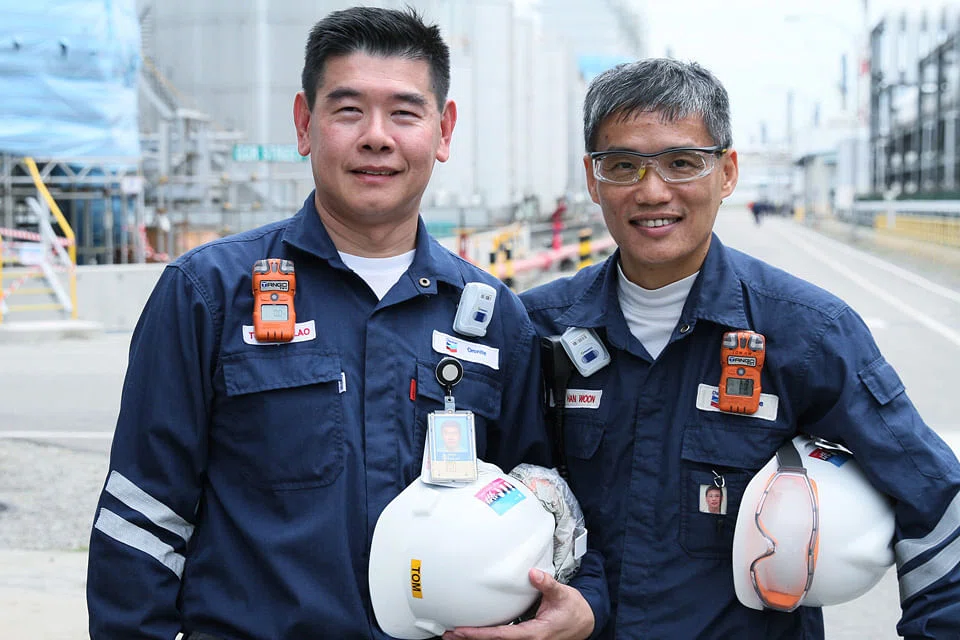
"We have grown, our size is bigger and the plant is getting more complex," operations general manager Tom Madilao told The Business Times in an interview. At times, there could be up to 1,000 workers, including external contractors, working in the plant, he said.
"So we wanted to make sure that we have the means of understanding where people are in an emergency because there have been many incidents when people walked into areas they are not supposed to and ended up hurting themselves."
The firm engaged US engineering and technology firm Emerson to install a wireless plant network. With it came mobile tracking devices that could be tagged to employees individually, and send location information wirelessly to the control centre.
This eliminated the need for the manual tracking system used previously, where workers had to sign in at the control room before heading to a particular section of the plant. When they were done, they then had to go back to the control room to sign out.
It became particularly inefficient when external contractors were brought in to work on multiple units in the plant, said plant superintendent Low Han Woon. Each time the contractors moved to a different area, they would have to go to the control room to register the change in movement. Now, with live tracking, the company knows who is located where at any time.
"The system offers real-time monitoring and obviously easy accounting when any situation develops," said Mr Low. The firm estimates that the personnel tracking system alone would save it 30,000 man hours a year.
Safety aside, Chevron Oronite expects the wireless plant network infrastructure to improve efficiency and allow its workers to be more mobile.
As the plant blends over 25 components to different products based on customers' requirements, saving the "recipes" in the programme and automating the blending process help to ensure consistency of the products, said the firm.
And by attaching sensors to the valves that control the components, those that are moving slowly or jammed can be detected early on for repairs. This is important because ill-functioning valves can result in products being off-specification, which means more work to reproduce that particular batch and additional time lost, said Mr Madilao. "It reduces our productivity and plant availability (for other orders). Small little things can add up to big things."
On top of these, the firm is also planning to equip its workers - who conduct surveillance and sometimes equipment audits - with tablets.
Currently, when there is a need to service a piece of equipment, a worker has to go to the control room to fill up a form. In time to come, this could be done on the tablet, which would also provide information on the correct repairs or other details, said Mr Madilao.
"We still do standard monitoring in the field, having field technicians go around and check to see if the pump is running okay, if the processes are running okay. But as the plant is getting bigger and more complex I'd like to move away from this to use something more intelligent, to make use of their time for something else that is more meaningful," he said.
Even as the company is still working out teething issues in the pilot phase, phone calls from colleagues in overseas plants - Chevron Oronite also has manufacturing facilities in Japan and the US - who are interested to learn more have already started streaming in, said Mr Madilao.
"Every day our operators' jobs get more and more difficult because there are many more requirements to monitor. My vision is that at some point in time we can be very efficient such that they can do things on the spot . . . so a lot of efficiency can be gained.
"You cannot keep adding people; it cannot be a solution," he said. "We have to work smarter using technology on how best to use the people where they are needed."
READ MORE: S'pore looks to cogen facilities, IoT to improve petchem energy efficiency
TRENDING NOW
Trump welcomes China’s Xi at airport to kick off three-day state visit
As the Fed hikes interest rates, S-Reits sector could be overdue for consolidation
He built the Vingroup empire. Now South-east Asia’s richest man is handing some key roles to his sons
Simba admits exceeding spectrum limits amid failed M1 deal; parent company Tuas’ full-year profit surges 277%



