

China benchmark iron ore futures tumble 6% on Beijing warning
 Add BT as a preferred source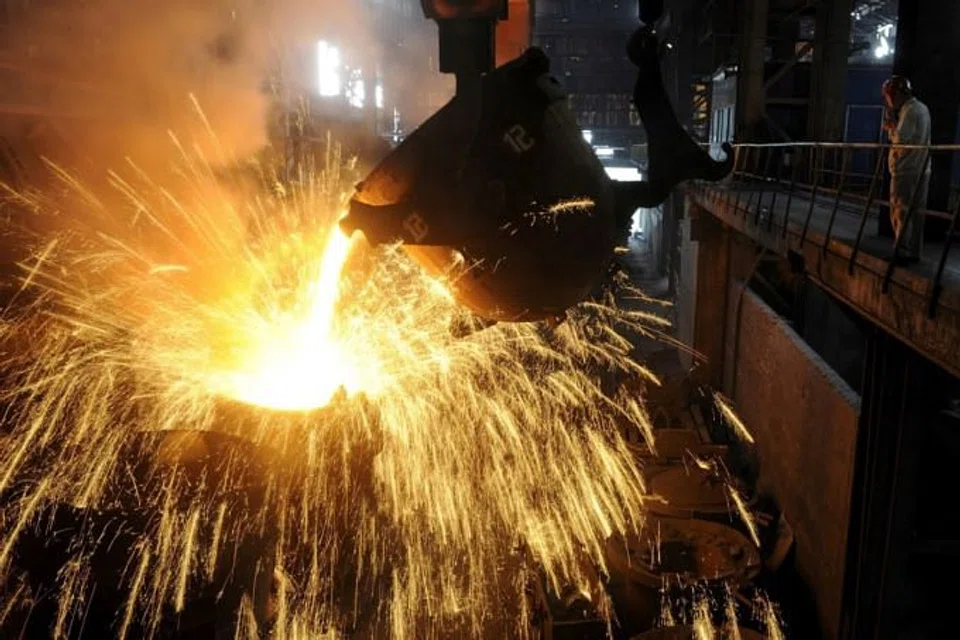
DeeperDive is a beta AI feature. Refer to full articles for the facts.
[BEIJING] Benchmark iron ore futures in China plunged more than 6 per cent on Wednesday (Feb 9), snapping a five-session rally, after authorities pledged to strengthen supervision of the market and crack down on any irregularities.
The state planner and market regulator said in a statement they had warned iron ore information providers to ensure the accuracy of their release and should not fabricate or drive up prices.
The most actively traded iron ore futures on the Dalian Commodity Exchange, for May delivery, dived as much as 6.2 per cent to 779 yuan (S$164.53) a tonne, the biggest percentage loss since Nov 26. The contract closed 5.9 per cent lower at 781 yuan per tonne.
"As authorities are paying close attention to iron ore, prices could weaken affected by market sentiment," GF Futures analysts wrote in a note.
Other steelmaking ingredients also declined, with Dalian coking coal futures falling 3.9 per cent to 2,320 yuan a tonne, while coke prices stepped back from gains in morning trade and ended down 1.5 per cent to 3,026 yuan per tonne.
Construction material steel rebar on the Shanghai Futures Exchange slipped 1.3 per cent to 4,843 yuan a tonne.
Navigate Asia in
a new global order
Get the insights delivered to your inbox.
Hot-rolled coils futures fell 1.2 per cent to 4,980 yuan per tonne at close.
Shanghai stainless steel futures, for March delivery, rose 1.1 per cent to 18,210 yuan a tonne. REUTERS
Decoding Asia newsletter: your guide to navigating Asia in a new global order. Sign up here to get Decoding Asia newsletter. Delivered to your inbox. Free.
Share with us your feedback on BT's products and services
TRENDING NOW

Shelving S$5 billion office redevelopment plan proved ‘wise’ as geopolitical risks mount: OCBC chairman

China pips the US if Asean is forced to choose, but analysts warn against reading it like a sports result

Beijing’s calculated silence on the Iran war
Middle East-linked energy supply shocks put Asean Power Grid back in focus

