

China considers buying stakes in Russian energy, commodity firms
 Add BT as a preferred source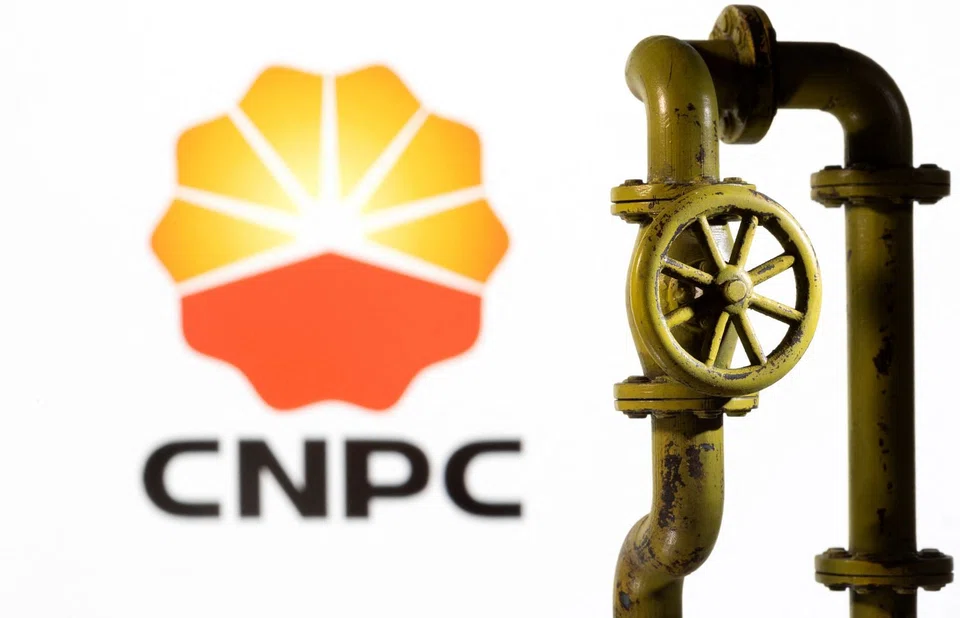
DeeperDive is a beta AI feature. Refer to full articles for the facts.
[BEIJING] China is considering buying or increasing stakes in Russian energy and commodities companies, such as gas giant Gazprom and aluminum producer United, Rusal International PJSC, according to people familiar with the matter.
Beijing is in talks with its state-owned firms, including China National Petroleum, China Petrochemical, Aluminum of China and China Minmetals, on any opportunities for potential investments in Russian companies or assets, the people said.
Any deal would be to bolster China's imports as it intensifies its focus on energy and food security - not as a show of support for Russia's invasion in Ukraine - the people said. The discussions are at an early stage and won't necessarily lead to a deal, the people said, requesting anonymity as the discussions aren't public. Some talks between Chinese and Russian energy companies have started to take place, according to separate sources.
CNPC and China Petrochemical - known as Sinopec Group - declined to comment, according to the companies' media officials. Chinese state-asset regulator Sasac, Aluminum Corp of China and Minmetals didn't immediately respond to requests for a comment. Representatives for Gazprom and Rusal didn't immediately comment during a national holiday in Russia.
Russia's war in Ukraine has increased the pressure on Beijing to secure imports as the cost of energy, metals and food skyrocket to unprecedented levels. Worried about the impact surging prices will have on the economy, China's top government officials issued orders to prioritise commodities supply security, Bloomberg reported last week.
China has vowed to continue normal trade relations with Russia despite a massive corporate exodus from European and American firms. BP, Shell and Exxon Mobil took the energy industry by surprise by walking away from Russian assets worth billions of dollars.
Navigate Asia in
a new global order
Get the insights delivered to your inbox.
Meanwhile, China Foreign Minister Wang Yi said earlier this week that China-Russia ties remain "rock solid," even as Beijing expressed concern about civilian casualties and called for peace talks to end the war. Among China's current energy investments in Russia, CNPC has a 20 per cent stake in the Yamal LNG project and a 10 per cent state in Arctic LNG 2, while Cnooc Ltd. also owns 10 per cent of Arctic.
The two countries had already been strengthening ties, with Presidents Xi Jinping and Vladimir Putin last month signing a series of deals to boost Russian supply of gas and oil, as well as wheat. Gazprom and Rosneft PJSC were among Russian energy giants sealing agreements as the two leaders met in Beijing ahead of the Winter Olympics.
Still, any investment in Russia is fraught with risks that go beyond the geopolitical balancing act that Beijing faces. Russia has become a nearly un-investable market for global firms as the nation's economy rapidly deteriorates. Sanctions have wiped billions of dollars from Russian assets and bonds have plummeted as default risks intensify. The yuan has surged against the rouble, raising questions over the strategic relationship of both countries.
An investment by China could help solidify Moscow's effort to accelerate a so-called "Pivot to Asia" with oil and gas supply deals. China has doubled purchases of Russian energy products to nearly US$60 billion over the last five years.
The Power of Siberia pipeline began sending gas to China in 2019, and Gazprom is already in talks with China over another route that could be signed this year, eventually allowing it to ship fuel from gasfields that supply Europe. BLOOMBERG
Decoding Asia newsletter: your guide to navigating Asia in a new global order. Sign up here to get Decoding Asia newsletter. Delivered to your inbox. Free.
Copyright SPH Media. All rights reserved.
TRENDING NOW

Autobahn Rent A Car directors declared bankrupt over S$50 million each owed to DBS

Amazon’s MGM Studios gains creative control over ‘James Bond’ franchise
UOB’s Wee Ee Cheong says S$4.9 billion Citi deal ‘paying off’ as Asean push accelerates
In taxing wealth, how far can Singapore push property owners?

