

China to favour Brazilian soybean imports in H1 despite renewed US inflows
Brazilian soybeans are cheaper than US soybeans
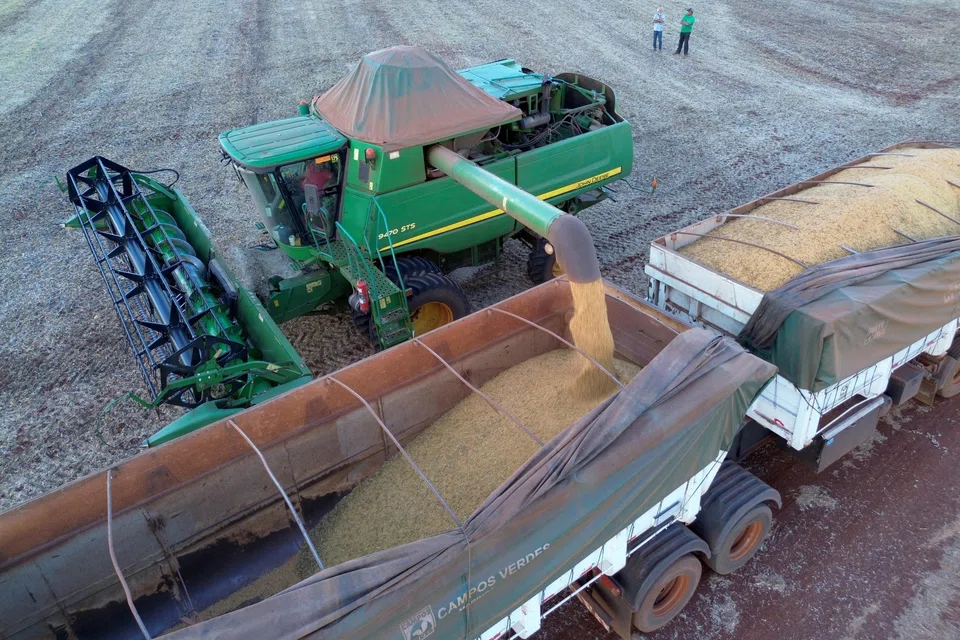
[SINGAPORE] China is expected to boost imports of Brazilian soybeans in the first half of 2026, as record production and competitive prices propel shipments, reinforcing South America’s dominance in the world’s biggest oilseed importer, even as US supplies return.
Private soybean processors in China are locking in deals for Brazilian soybeans to be shipped from February onwards as the harvest gathers pace, swelling supplies and squeezing prices, trade sources said.
Such activity could hit demand for US cargoes when the North American export season begins in September.
Purchases of about 12 million tons of US soybeans following a thaw in ties between Beijing and Washington since late October were made entirely by state-owned Sinograin and COFCO, as higher US prices sidelined private traders.
Even if Beijing orders more purchases by state-run grain traders and stockpiler Sinograin to meet trade deal commitments to Washington, China’s 13 per cent tariff on US soybeans makes them costlier for private crushers than Brazilian supplies facing a duty of 3 per cent.
“China’s current purchase volumes of US soybeans are limited, sufficient only to maintain a positive political atmosphere ahead of the April meeting between the two countries’ leaders,” said Dan Wang, China director at Eurasia Group, a global political risk consultancy.
“If the April meeting yields further tariff reductions and certain assurances on the Taiwan issue, China may commit to soybean purchases, but volumes are likely to remain limited.”
Crush margins for Brazilian soybeans shipped between March and June remain favourable to clinch deals, traders and analysts told Reuters.
“We will probably see higher exports (from Brazil) to China in the period from March to June, higher than last year,” said a trader for a large global company. “Brazil’s soybeans are way cheaper than US soy in this period.”

All the sources spoke on condition of anonymity as the matter is a sensitive one.
Earlier, the market had expected China’s purchases of Brazilian soybeans to decline this year, as it bought US cargoes.
Expensive US soybeans
Chinese state-owned firms have bought about 12 million metric tons of US soybeans since late October, fulfilling a US-stated pledge, but volumes remain well below China’s purchases of roughly 23 million tons in the 2024/25 crop year.
On Nov 18, Brazilian soybeans for shipment in December to China were priced at US$507.90 per metric ton, below US$516.90 for US Gulf supplies and US$510.50 for US Pacific Northwest origin, on a cost-and-freight basis, excluding tariffs.
At those levels, China would have paid roughly US$31 million to US$108 million more for 12 million tons of US soybeans than for Brazilian cargoes.
China resumed US soybean purchases after the leaders of both countries met in late October, with the White House saying China had also agreed to buy at least 25 million tons a year over the next three years, starting in 2026.
On Thursday, US President Donald Trump said he would visit China in April while his counterpart Xi Jinping would travel to the United States toward the end of 2026.
Bumper harvest in South America
Traders do not expect further US bookings, citing higher prices and anticipated bumper crops in major producers Brazil and Argentina.
“Our large crop makes our product cheaper than the US one, and this tends to last until the arrival of the new US soy from September,” said Adelson Gasparin, a grain broker in southern Brazil, who expects China to keep up import levels.
Brazilian soybeans shipped in February are at least 50 cents a bushel cheaper than US Gulf shipments on a free-on-board basis and up to 75 cents cheaper for March shipments, say traders and analysts.
As the harvest accelerates, Brazilian prices are likely to face further pressure.
“I think the difference is going to widen out,” said Dan Basse, president of AgResource. “Maybe to something like a dollar.”
Traders said some purchases are possible during the peak South American export season, though probably minimal unless China issues a directive to buy US supplies or South American corn shipments flood ports in Brazil, they said.
“I don’t think it works without a government enforcement,” said one trader.
Brazil’s 2025/26 soybean production is forecast at a record 182.2 million tons, according to agribusiness consultancy Agroconsult.
Marcela Marini, senior grain and oilseeds analyst at Rabobank, expects Brazil to export about 85 million tons to China over the period from September 2025 to August 2026, an increase of 6 million tons over the prior year.
China has booked roughly 42 million to 44 million tons of Brazilian soybeans for September to August, including 23 million to 25 million tons for February to August, two Asian traders said.
China’s pig herd remains large, defying government efforts to reduce overcapacity, and analysts say a meaningful decline is unlikely before the end of the second quarter, keeping soymeal demand strong in the first half of 2026.
For 2024/25, China imported 109.37 million metric tons of soybeans, and imports for 2025/26 are expected to drop to 95.8 million, the farm ministry says. REUTERS
Decoding Asia newsletter: your guide to navigating Asia in a new global order. Sign up here to get Decoding Asia newsletter. Delivered to your inbox. Free.
Share with us your feedback on BT's products and services
TRENDING NOW

Once staunchly pro-China, Malaysian Chinese businesses are now distancing themselves from Beijing

Looking beyond looming CEO succession, should UOB potentially pursue a transformative merger?

Could stablecoins be the future of money?

Grab CEO’s wife Chloe Tong on life with Anthony Tan and finding her purpose

