China may open share markets to Saudi Aramco: Saudi Arabia's Falih
 Add BT as a preferred source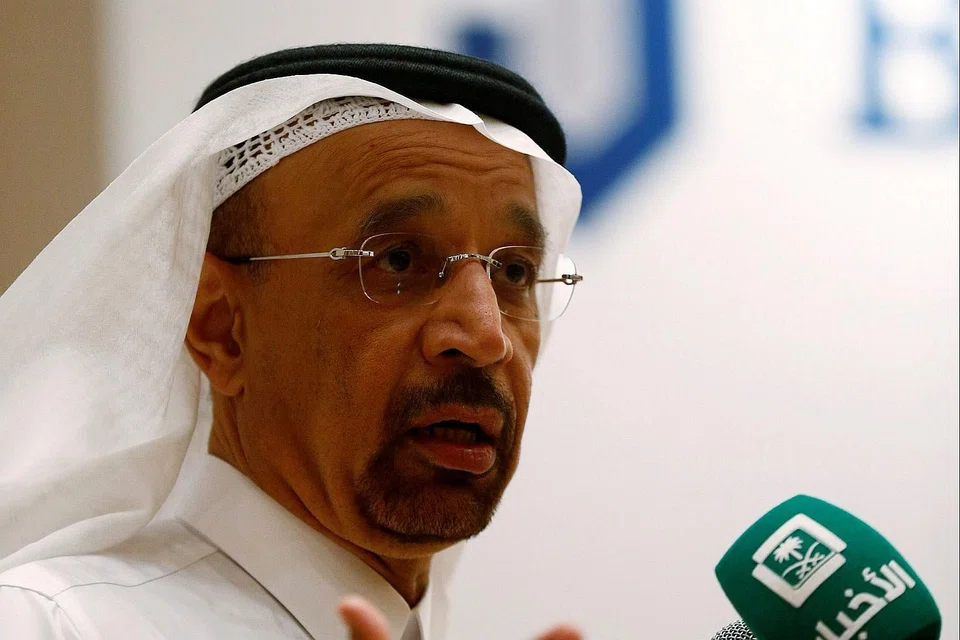
[KHOBAR, Saudi Arabia] China has shown interest in opening its stock markets to Saudi Aramco when the national oil giant conducts an initial public offer of its equity, the kingdom's energy minister Khalid al-Falih said on Wednesday.
"For sure, all the stock markets in every country we visit, and every country whose officials visit us, are very keen and wish the most valuable and most important company in the world to be listed on their markets," Mr Falih told the Saudi-owned al-Arabiya television channel during a visit to China.
"It is normal that China discusses these options and for sure we will take it into consideration," he said, adding that no details had been discussed so far.
Under sweeping economic reforms, the Saudi government plans to offer up to 5 per cent of Saudi Aramco for sale, possibly raising tens of billions of dollars; Saudi officials have estimated the company's total value at over US$2 trillion.
Officials have said Saudi Aramaco might obtain multiple listings in Riyadh and other markets such as London and New York. The Saudi bourse alone might be too small to absorb such a giant offer.
Mr Falih told Reuters last week that Riyadh hoped to conduct the IPO by early 2018 and that an international listing had not yet been decided. There are no plans for Aramco to take on a strategic partner, he said.
On Wednesday, he said the IPO was still being studied carefully.
"All I can say is that it is under study and it will be the most successful and best listing in the world."
REUTERS
Share with us your feedback on BT's products and services