

China mulls oil asset spinoffs as part of reforms: sources
NDRC has held talks since last year on sale of assets with biggest pipeline owners and utilities that buy most of the fuels
Hong Kong
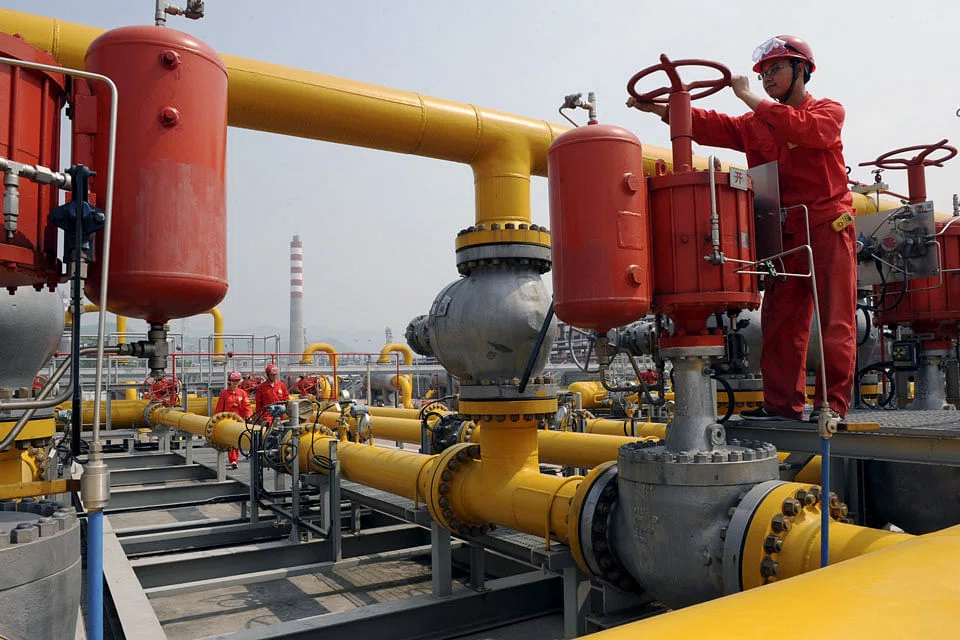
THE Chinese government is looking at stripping its biggest energy companies of their oil and gas pipelines, as part of sweeping industry reforms that would see the assets spun off into independent businesses, according to people with knowledge of the plans.
China's economic planning agency, the National Development and Reform Commission (NDRC), is leading talks on the initiative, according to four people, who asked not to be named as they aren't authorised to speak publicly on the issue.
The separation of the pipeline units would be part of President Xi Jinping's reforms to allow markets a more decisive role in the economy.
The NDRC has held talks since last year on the sale of the assets with the biggest pipeline owners and the utilities that buy most of the fuels, the people said. A final decision on the plan or the number of companies to be created hasn't been made.
The assets could be worth as much as US$300 billion, according to an estimate by Neil Beveridge, a Hong Kong-based analyst at Sanford C Bernstein.
"China should push to strip out pipeline assets from oil companies and allow those facilities to run independently from explorers," said Lin Boqiang, director at the Energy Economics Research Center at Xiamen University. "This is reform that China can do now."
China National Petroleum Corp and its listed arm PetroChina Co is the country's biggest owner of pipelines, controlling about 77,000 kilometres. China Petrochemical Corp and its listed unit China Petroleum & Chemical Corp, or Sinopec, are the next largest with more than 30,000 kilometres.
Any cash from pipeline sales would benefit the companies as it could be re-channelled to more profitable upstream businesses, said Bloomberg Intelligence Asia Oil & Gas analyst Grace Lee.
While China's oil and gas pipeline network of about 120,000 kilometres is only around a fifth of the size of the natural gas network in the US, it's expanding fast and will be bigger than the US by 2040, said Mr Beveridge.
The equity value of PetroChina's pipelines is worth about US$147 billion based on a price to earnings ratio of 25 times, Mr Beveridge estimated in an emailed research note.
China has invested a lot of money to expand its pipelines and that will continue as demand for natural gas grows, according to Mr Beveridge. It should separate energy exploration from pipelines to encourage more competition and investment, he said.
The discussion to spin off the pipelines is taking place amid sweeping change in China's energy industry after the top officials of China's biggest explorers were replaced earlier this month.
PetroChina and Sinopec's dominance of pipeline infrastructure makes it difficult for others to enter the energy exploration business as they have to ask China's No 1 and No 2 explorers to share resources, said Xiamen University's Mr Lin, who is also an adviser to China's National Energy Commission, chaired by Premier Li Keqiang.
"The pipeline business is like the power-transmission business that should be run by independent companies that allow equal access to all market players," he said. "By allowing one or two companies to dominate the market, you create a huge barrier for other companies to compete."
Power-transmission is a precedent for the kind of pipeline reform China is considering. In 2002, it created two state grid companies, China Southern Power Grid and the State Grid Corp, by separating the transmission businesses of energy utilities.
However, it may be more complicated as both PetroChina and Sinopec are listed companies with global shareholders, who will demand fair value for the pipelines, Mr Lin said.
Options include setting up a national pipeline company that would buy and hold all the assets, or establishing several companies based around their location, according to two of the people.
PetroChina sold 50 per cent of its western pipelines for 20 billion yuan (S$4.28 billion) to outside investors including Taikang Asset Management Ltd and Beijing Guolian Energy Industry Investment Fund in June 2013.
Its attempt to do the same with its eastern pipelines was called off by the government last year until a clear decision on their future could be taken, two of the people said.
While the NDRC has ordered Sinopec and PetroChina to allow equal pipeline access to others, the policy was difficult to implement because the companies could decide pipeline capacity utilisation and turn down usage requests, Mr Lin said.
PetroChina has completed auditing and accounting for its pipeline units in anticipation of an asset sale or a spin off, two of the people said. BLOOMBERG
TRENDING NOW

He built the Vingroup empire. Now South-east Asia’s richest man is handing some key roles to his sons

Floods compound Philippine growth woes from public-works scandal

Tokyo reverses baby bust with AI matchmaking and generous subsidies
More interest in ETFs, low-cost funds but Singapore still lacks pressure to further lower fund fees

